Two of Wands: upright, reversed, love & yes or no
Choosing a horizon while keeping one foot in the life you have.
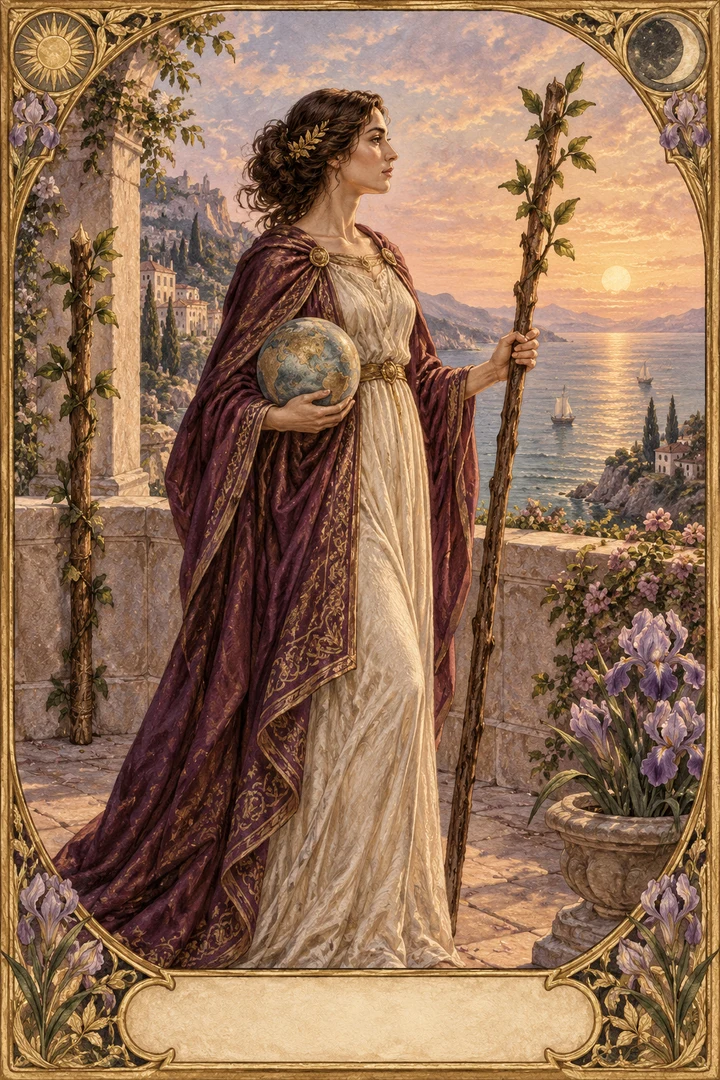
If this feels familiar
Wanting more does not make you ungrateful for what you have. You can be attached to a place and still be curious about another way to live. Let both truths inform the choice. You may notice a quiet pull toward something different while also valuing the stability you have built. That tension is not a failure; it is information you can use.
A line to keep
I can choose a direction without knowing the whole map.
- Upright meaning
- Planning · agency · perspective · direction · a considered choice
- Two of Wands reversed
- Indecision · borrowed ambition · fear of the unknown · plans without a next step
Upright meaning
The Two of Wands is often read as a moment of planning and perspective: you can see more than one path ahead, and you have enough stability to consider them. The globe and the view beyond the wall make room for possibility, while the two staffs also mark a present position. Compare actual paths using your own values, time and obligations; you need not abandon everything to explore. Agency here is not about having all the answers, but about choosing a direction you can test.
Two evening courses interest you. Compare their schedules and the skill you want to learn, then attend one introductory session before committing. The action is gathering real information about one option, while keeping the other in view and staying honest about your weekly capacity.
Two of Wands reversed
Reversed, the Two of Wands can fit indecision, a plan built around someone else's idea of success, or fear of the unknown that keeps you circling. Planning can become a way to avoid choosing, or a plan can lack a next step. Name what information is missing and what is already sufficient for a modest next step. Borrowed ambition may look impressive but feel hollow; check whether the direction is yours.
You keep researching a career change but never book a conversation with someone in that field. Notice whether the research is protecting you from a small, reversible step. You might send one message asking for a fifteen-minute chat, then decide what to do with the answer.
Two of Wands in love and relationships
In love, the Two of Wands brings a question about direction and pace. Discuss the direction and pace each person wants. Imagining a shared future cannot substitute for hearing the other person's preference now. Upright, you may be considering how a relationship fits with your other commitments. Reversed, check whether you are planning around an imagined version of someone rather than their actual words and behaviour.
You and your partner have different ideas about moving in together. Instead of assuming, ask what each of you wants in the next six months. The conversation may not resolve everything, but it gives you both real information to work with.
Two of Wands: yes or no?
In a yes/no convention, upright often leans yes to exploring a considered option, after checking what you can actually do. For an irreversible move, the card cannot replace evidence or agreement. Reversed, pause and check whether you are avoiding a choice or following a borrowed ambition. Neither orientation guarantees a specific outcome; tarot readers do not share one universal yes/no rule.
For ‘Should I apply for the course?’, an upright yes can support gathering information and applying, as long as you have checked the time and cost. For ‘Will it lead to a new career?’, the result depends on many factors beyond the card. Reversed, you may need more clarity before acting.
A yes/no lean is a storytelling convention, not a probability or reliable prediction. Check real information before acting, especially about safety, money or another person's intentions.
Work, study and creative life
At work and in study, the Two of Wands supports putting two realistic options side by side, including their costs in time and attention. A plan becomes usable when a next step and a review date are named. Upright, you may be weighing a role, a course or a project against your current life. Reversed, watch for plans that stay abstract or that follow someone else's definition of progress.
You are considering a new project that would take two evenings a week. Before saying yes, compare it with your current commitments and decide on a trial period. Naming a review date makes the choice reversible and easier to assess.
How this card differs from nearby cards
The Ace is interest; the Two considers direction; the Three watches an initiative meet the wider world. The Two of Pentacles manages current demands rather than an outward horizon. These are different questions rather than guaranteed stages. The Two of Wands is about choosing a direction, not about juggling everything at once.
Common misreadings
The globe does not promise travel, international work or the right decision. Remaining where you are can also be a deliberate choice. The card does not guarantee that a plan will succeed or that a particular opportunity is meant for you. Keep the interpretation near your actual options and values rather than treating the image as a prediction.
Reading lens, not a verdict
These readings use symbols to reflect on experiences you recognise. They cannot establish events, financial outcomes or another person's private feelings. Reversed meanings explore how a theme may be internal, blocked or overused; they are a separate reference, since the one-card draw uses upright cards. Yes/no interpretations are conditional editorial conventions, not guarantees or a universal rule.
Traditional symbolism
The traditional Two of Wands shows a figure on a castle wall holding a globe and a staff, with another staff fixed beside them, looking out over land and sea. Selfetti keeps those recognisable elements in a rose-stone garden terrace. We read the globe and the view beyond the wall as an invitation to consider possibility, while the two staffs mark a present position. The plum silk cloak, garden flowers and distant hills belong to our original setting; they do not add a separate prediction to the card.
A question to keep
Which possibility fits my own priorities, rather than someone else's picture of progress?
One small experiment
Compare two paths on three things that matter to you. Choose one reversible way to learn more this week.
Questions worth asking
Does the globe mean travel?
The globe is a symbol of perspective and possibility, not a guarantee of travel or international work. It can also represent exploring a new idea, skill or direction from where you are. Look at what you are actually curious about.
How does Two differ from Three?
The Two is about considering direction and making a plan. The Three is about watching that plan meet the wider world and seeing how others respond. The Two is more inward and preparatory; the Three is more outward and active.
What does a reversed Two suggest?
Reversed, it can suggest indecision, borrowed ambition or fear of the unknown. It may also point to plans without a next step. Check whether you are avoiding a choice or following someone else's idea of success.
Is staying a failure to grow?
No. Staying can be a deliberate and wise choice. The Two of Wands is about considering direction, not about leaving. You can explore new possibilities while keeping the life you have, if that fits your values and circumstances.
How to use this interpretation
These are symbolic prompts, not measured personality traits or predictions. Keep a real example beside any interpretation; you can disagree. Do not infer another person's feelings, health or financial outcomes from a card or sign.
Sources and method
V&A · Tarot · Selfetti · A. E. Waite · 1910
Historical image reference: A. E. Waite, The Pictorial Key to the Tarot (1910), illustrated by Pamela Colman Smith. The contemporary readings, life examples, recognition passages and keepsake lines are Selfetti's own editorial interpretation, including the conditional yes/no and reversed themes. Our original celestial garden illustrations adapt the traditional scenes with inclusive figures; ornamental flowers and frames do not add predictions. The one-card draw uses upright cards; reversed meanings are a separate reference.
Selfetti ·
Keep exploring
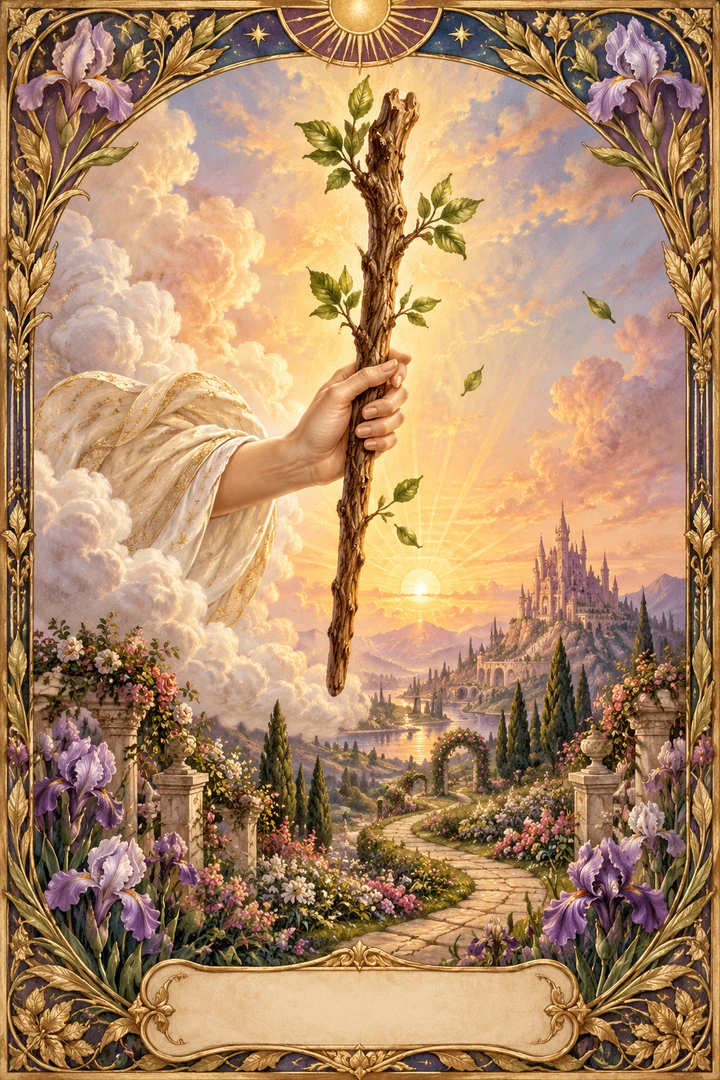
Ace of Wands
A spark deserves a small beginning, before it becomes a promise.
Read the full guide ↗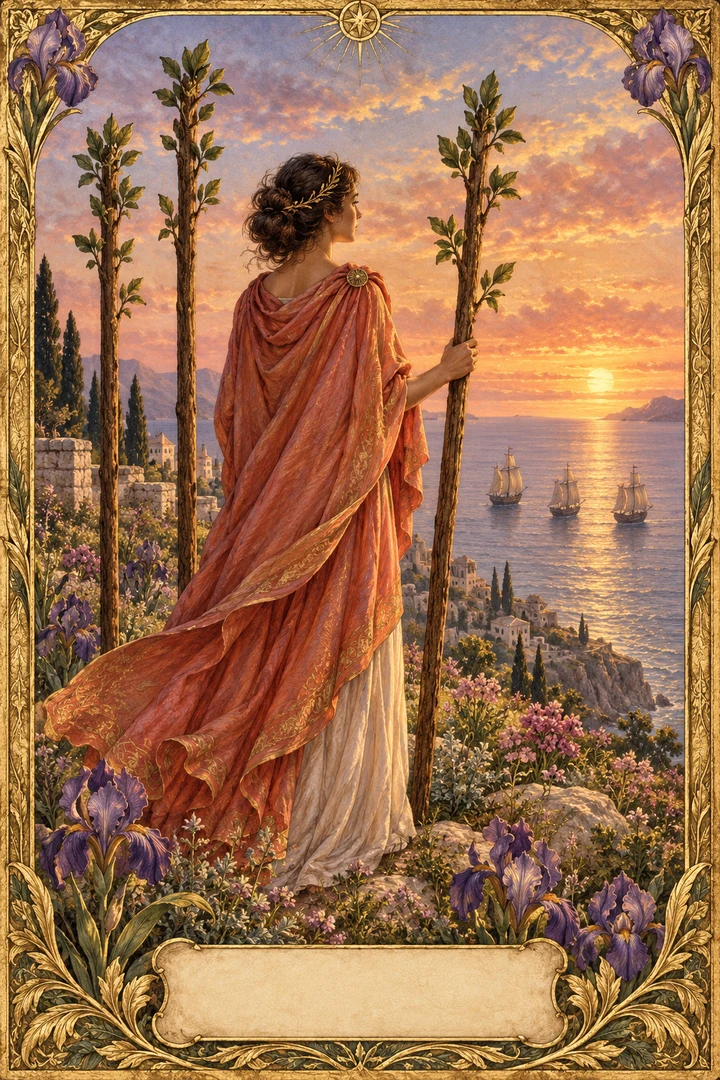
Three of Wands
Letting a first effort meet the world, and noticing what comes back.
Read the full guide ↗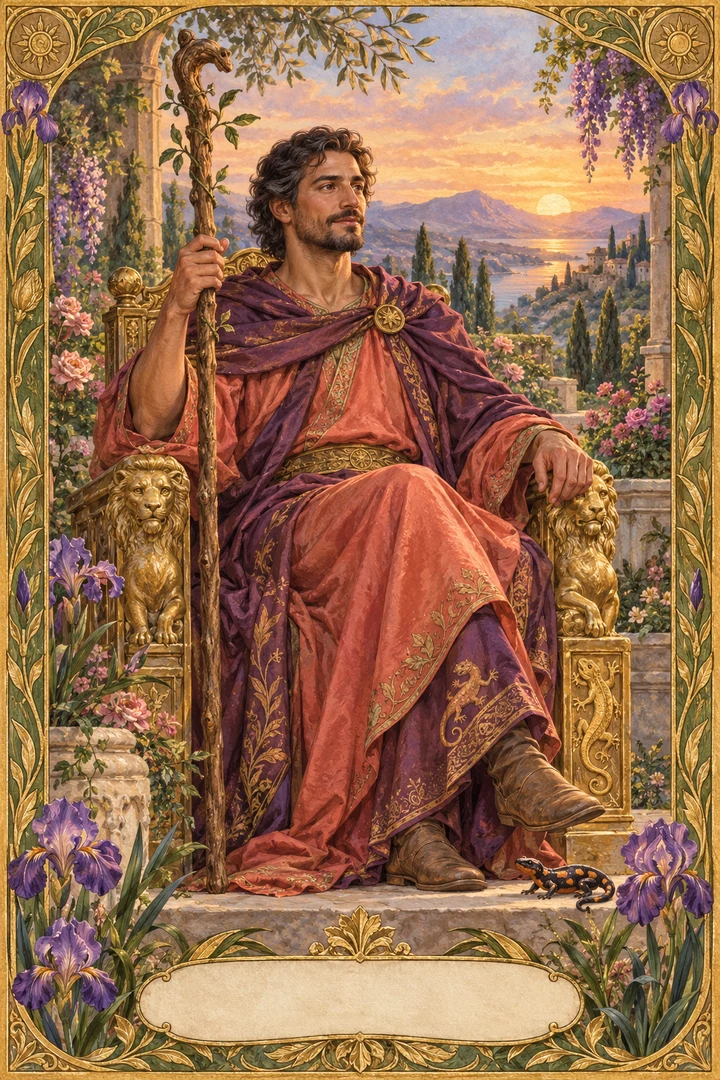
King of Wands
A direction becomes trustworthy when the person setting it also carries responsibility.
Read the full guide ↗