Swords and Cups: room for a clear mind and a feeling heart
You can want a clear answer and still need to be heard. Swords and Cups offer two languages for the same lived situation. Neither has to win before you can take a next step.
Selfetti ·
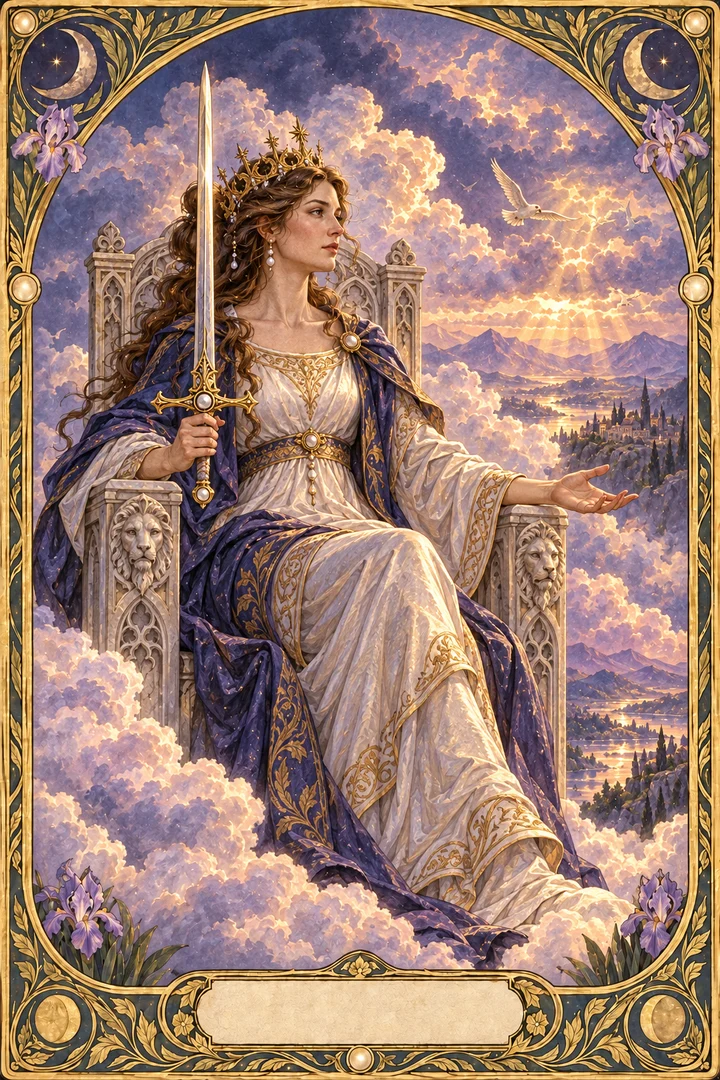
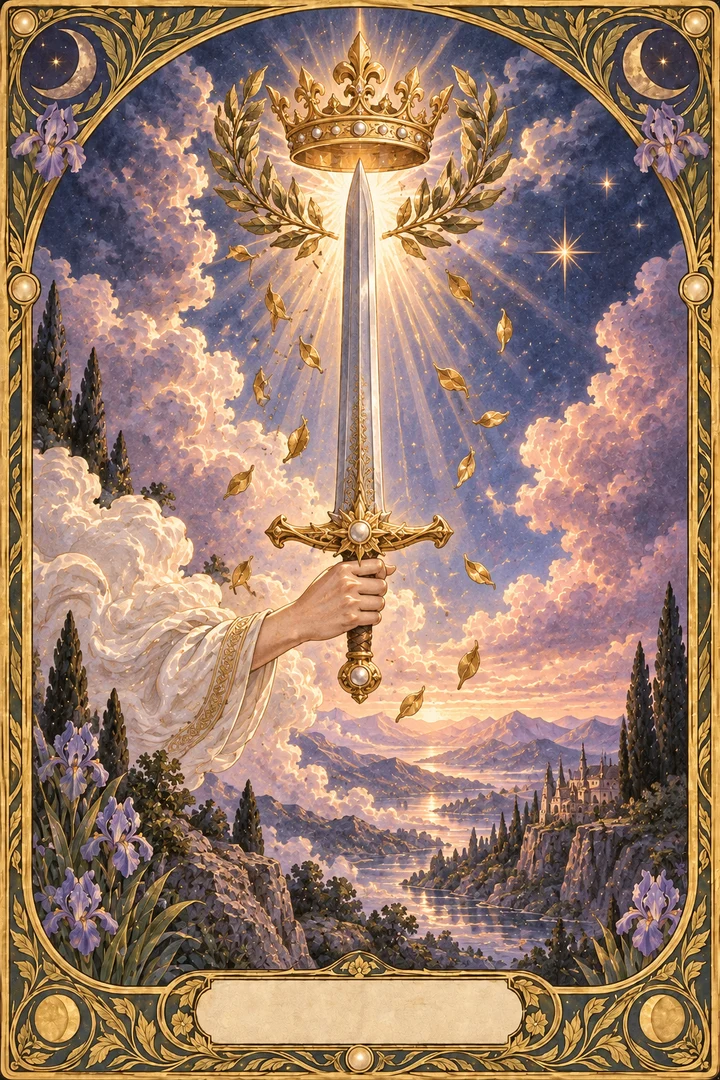
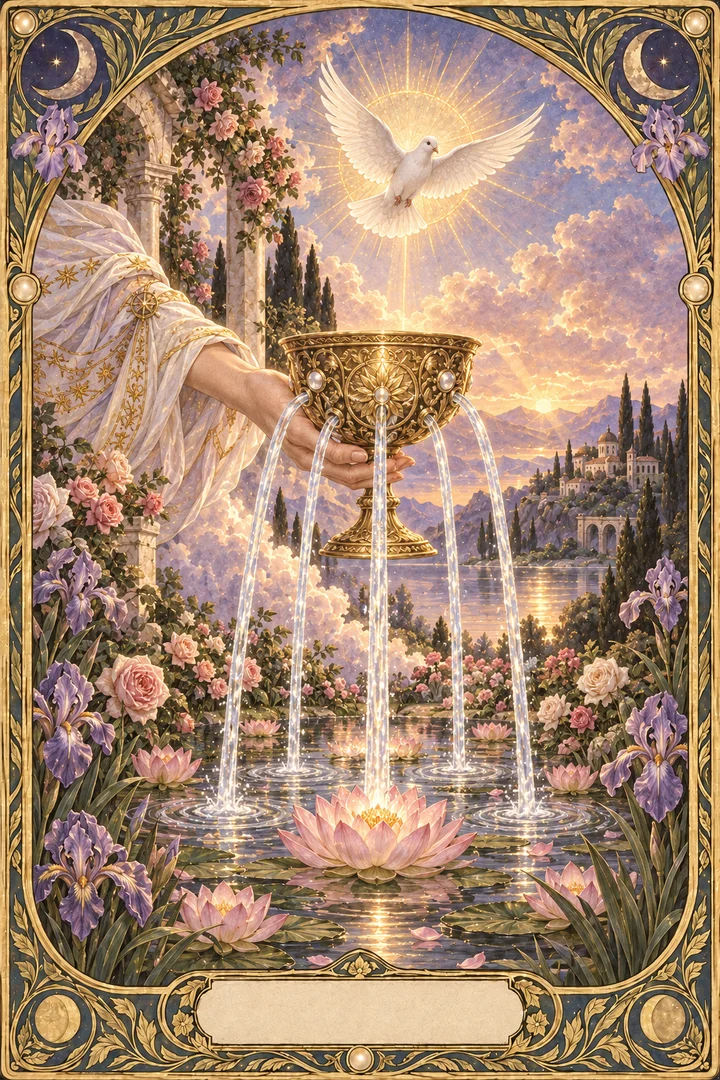
Ace of Swords and Ace of Cups: a sentence and a feeling
The Ace of Swords gives a thought a clear outline. The Ace of Cups gives feeling room to begin. A conversation may need both: the thing that happened and what it meant to you. Start with a sentence small enough to examine, then add the feeling without treating it as proof of the other person's intention.
‘Our plans changed twice’ names an observation. ‘I felt disappointed because I was looking forward to being together’ names your experience. ‘Could we choose a time we can both keep?’ makes a request. All three can belong in one gentle conversation.
Two of Swords and Two of Cups: deciding and meeting
The Two of Swords holds two positions still; the Two of Cups creates an exchange. When a shared plan is difficult, ask whether you have named your own position and whether you have heard the other person's. Mutual care does not require having identical preferences. A clear choice can make an honest meeting possible.
You want to see a friend but cannot manage a long outing. Say what you can offer, then ask what would suit them. A short walk may work; another day may work better. Both people can affect the arrangement.
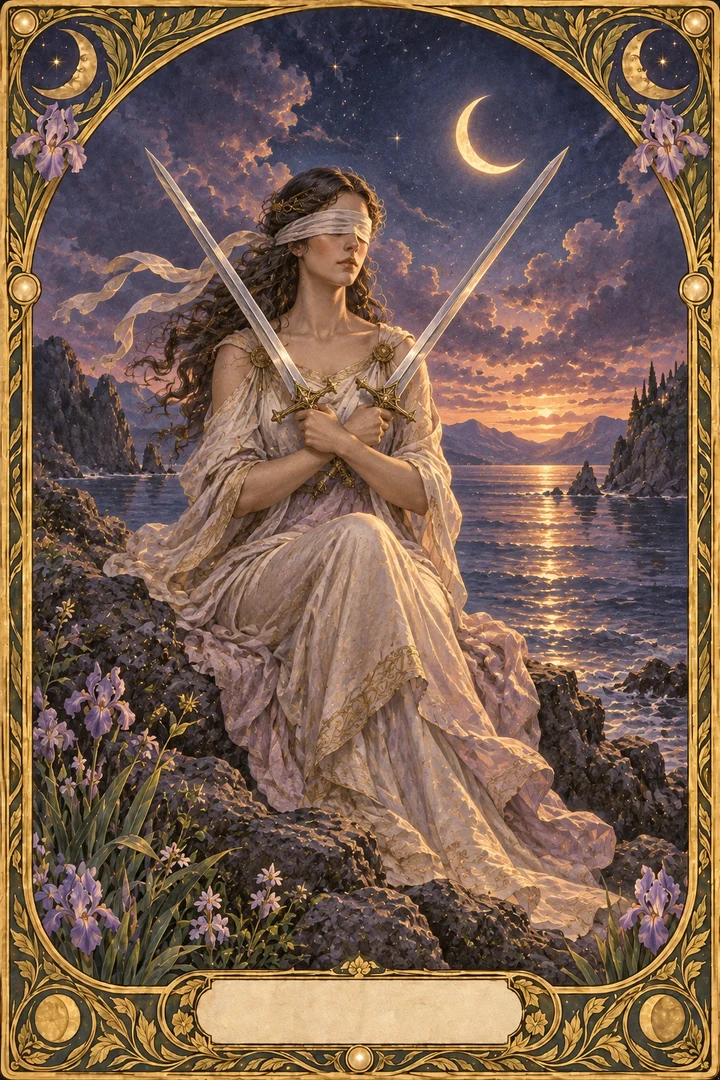
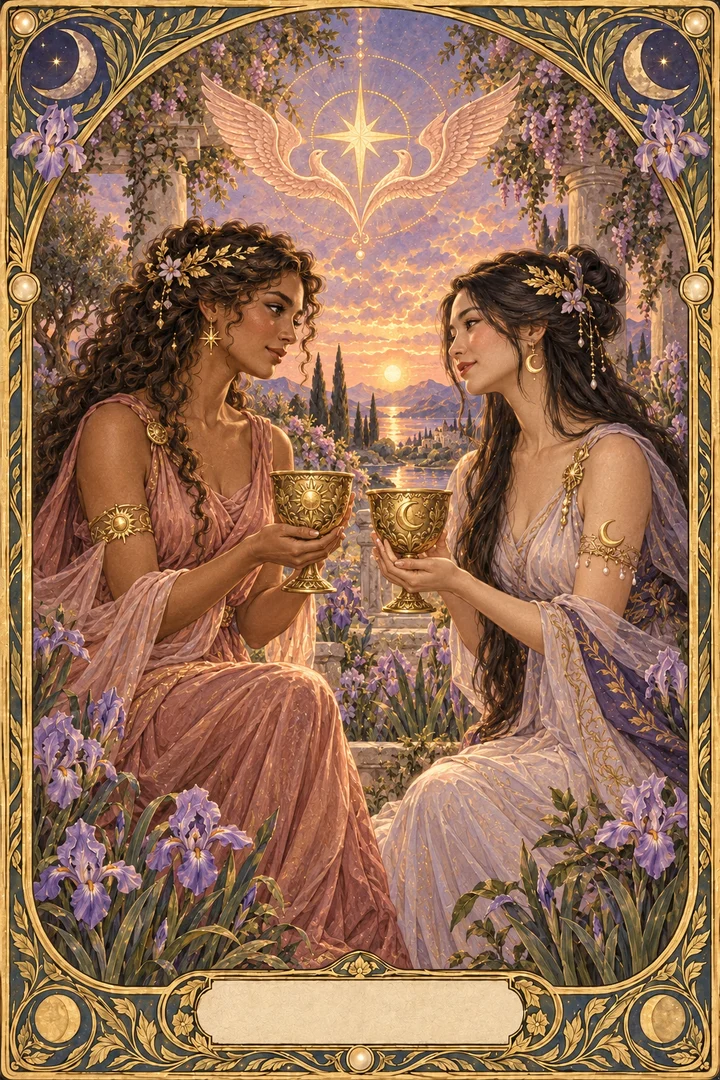
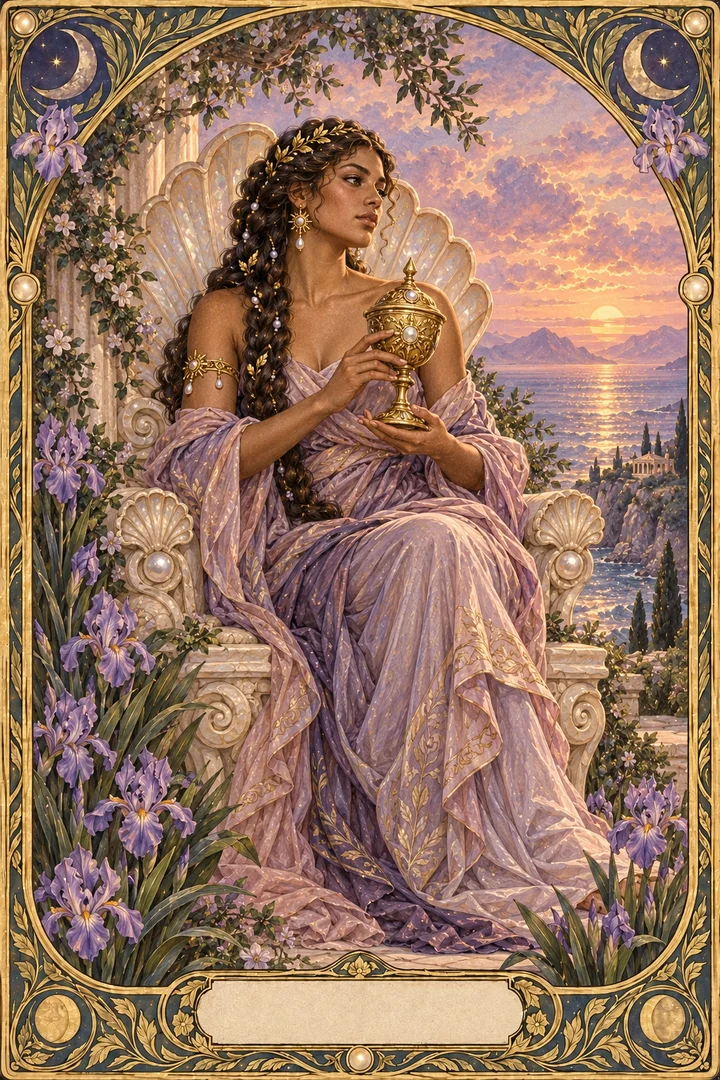
Queen of Swords and Queen of Cups: a line and a shore
One Queen holds a blade with an open hand; the other attends to a covered cup beside water. Read them as clarity and receptive care rather than two kinds of women. A listener can have a boundary. A clear speaker can be tender. Together, the images suggest a way to remain present without making your own needs disappear.
‘I want to hear what happened. I have half an hour now; would that help, or shall we find more time tomorrow?’ The sentence offers real attention and an honest limit. It does not make you less caring to say when you are available.
Four of Swords and Four of Cups: rest and readiness
The Four of Swords makes room away from demands. The Four of Cups asks what you are ready to receive. These can overlap, but they are different questions. You may need fewer inputs, or you may need a different kind of company. Check the ordinary conditions before explaining a quiet mood as a permanent withdrawal from life.
If an invitation feels unappealing, ask whether you want to decline, shorten it or suggest something quieter. If every request feels like too much today, a period of rest may be the more useful starting point.
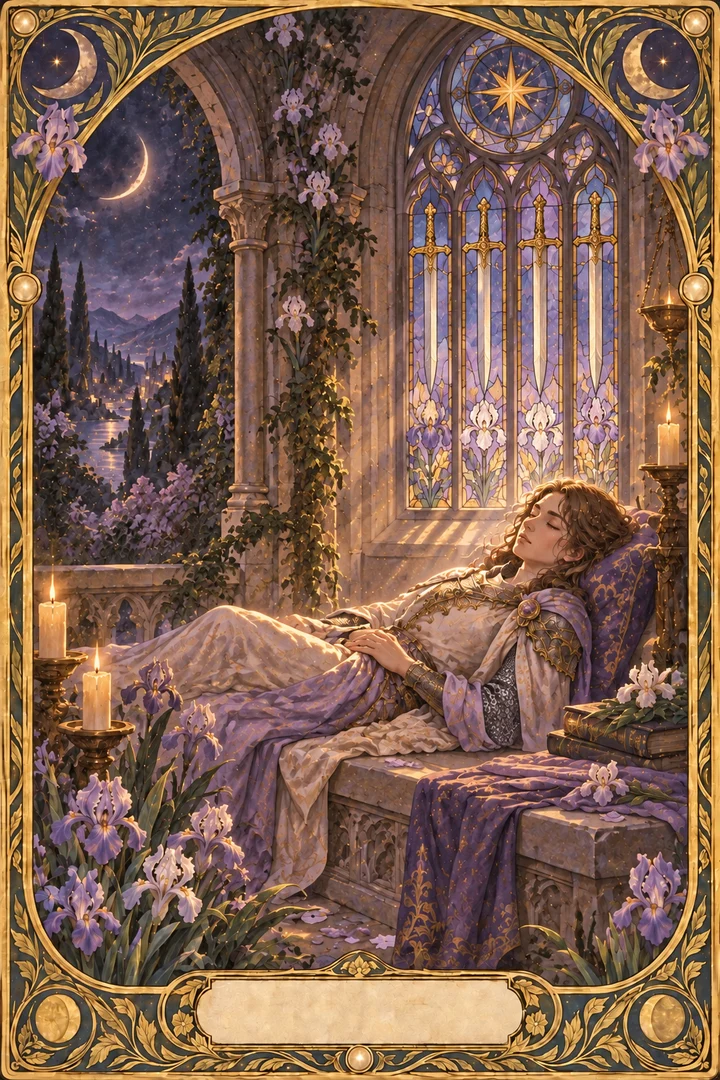
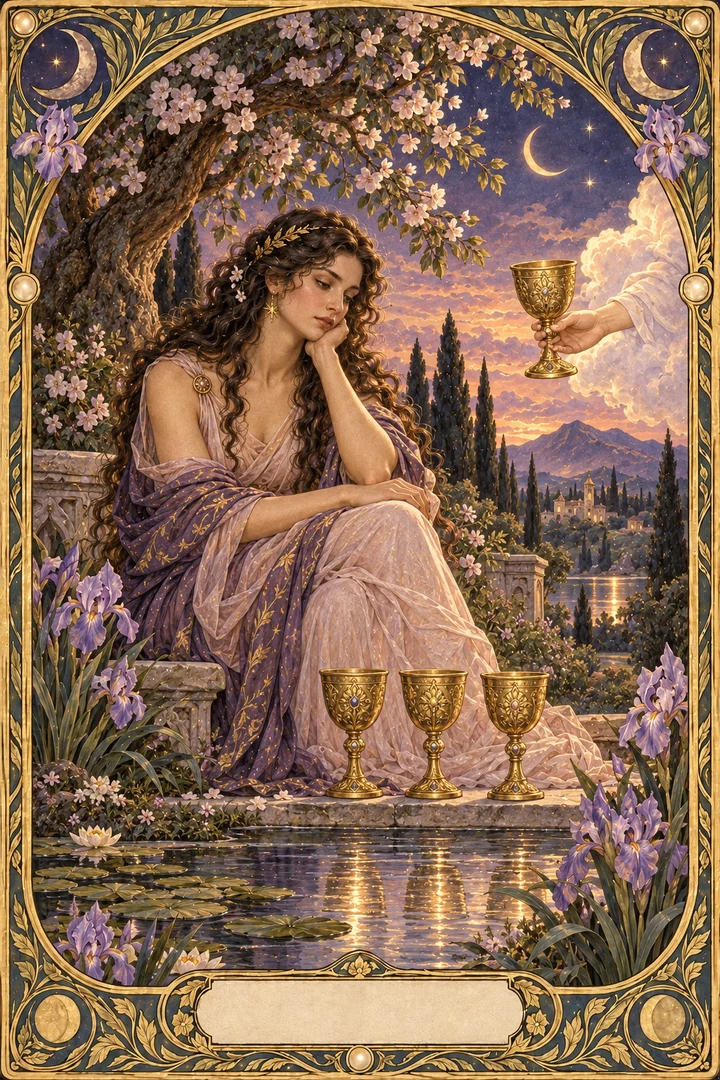
Six of Swords and Eight of Cups: moving with what you carry
The Six shows a passage with passengers; the Eight leaves a set of standing cups behind. Both can accompany reflection on change. The Six highlights how a transition is carried and what support is available. The Eight highlights the mismatch that makes leaving worth considering. Neither requires pretending that the old place had no value.
When leaving a familiar role, distinguish the reason for leaving from the plan for transition. You may have a sound reason and still need time, a handover or help with the practical costs. Care for what mattered can remain part of the departure.

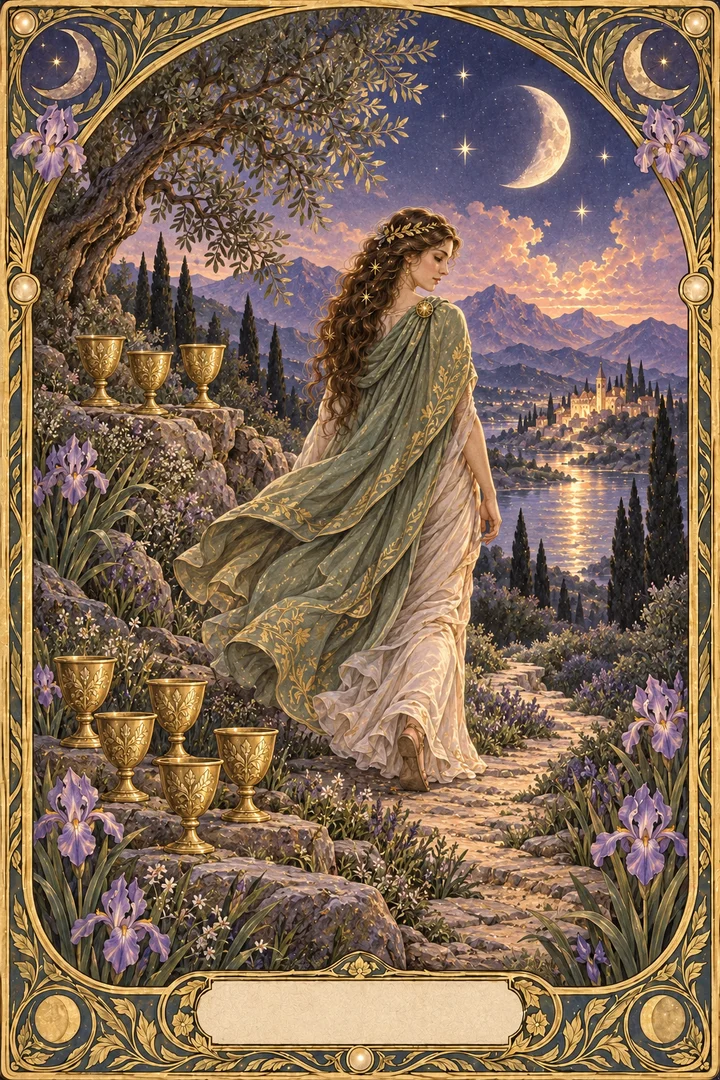
King of Swords and King of Cups: reasons and feelings can share a room
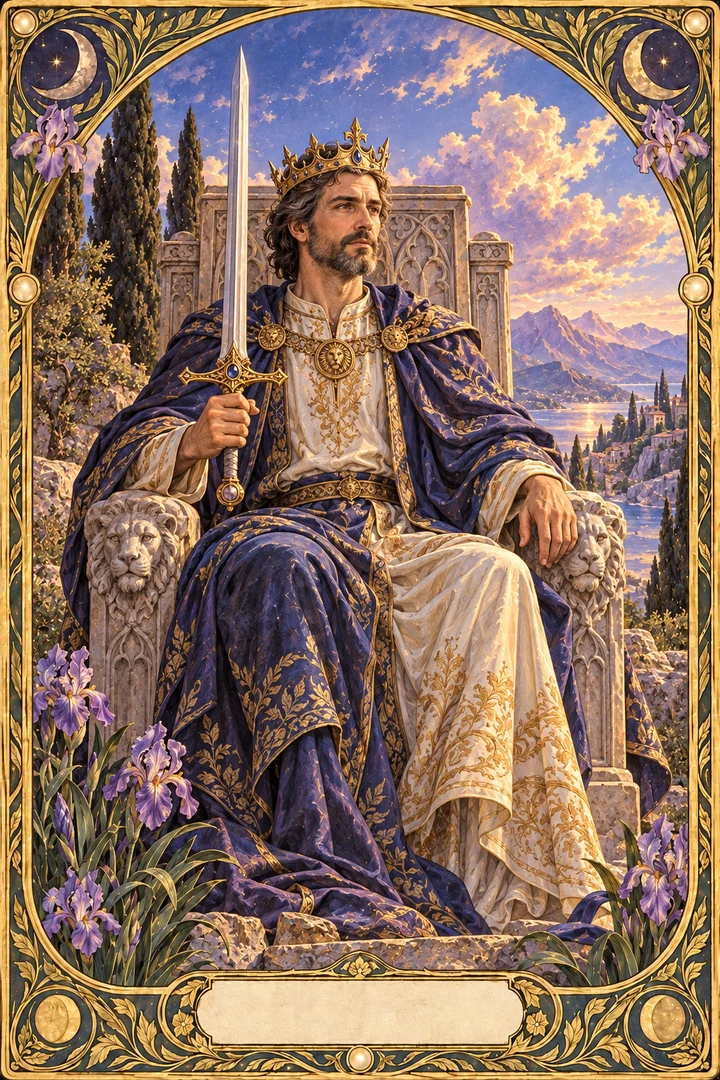
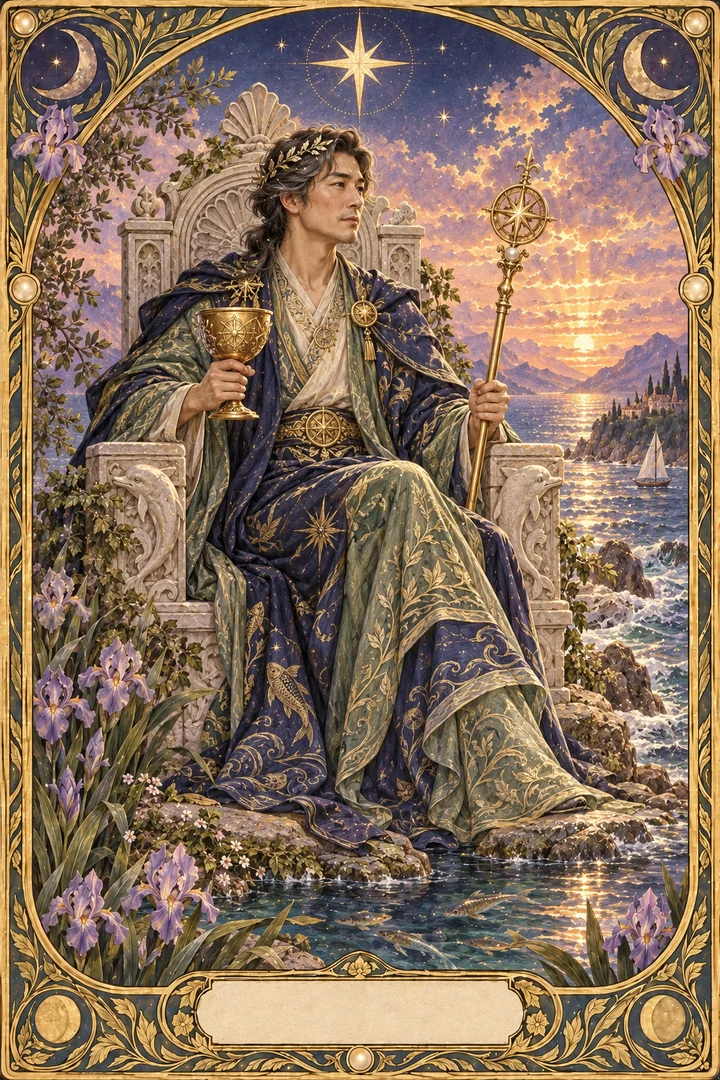
The King of Swords asks for a standard that can be explained. The King of Cups offers steadiness while feelings move. A difficult decision may need both an accountable reason and room to acknowledge its effect. Composure need not hide sadness; empathy need not make every rule disappear. These court themes are available to any adult.
A team must reduce a project's scope. Explain the constraint and the criteria, then let people name what feels disappointing. Keep the standard clear while discussing a workable next step. Being responsible includes how the decision is communicated.
A line to keep
My clear mind and my feeling heart can have room together.
A question for you
Does this moment need clearer words, more room for feeling, or both?
One small next step
Write one observation, one feeling and one request about a situation you know. Let each sentence do its own work.
Questions you may have
What is the difference between Swords and Cups?
In this modern reading, Swords offers themes of thought, words, conflict and judgment; Cups offers feeling, relationship and receiving. The themes overlap in real situations. They do not divide people into thinkers and feelers.
Are Swords negative and Cups positive?
Both suits contain warmth, difficulty and change. Swords can bring clarity and rest; Cups can bring disappointment, uncertainty or overgiving. Read the particular card and situation rather than assigning one mood to an entire suit.
Does a Cups card mean I am an emotional person?
A card does not establish a fixed personality. It can offer a question about feeling or relationship in a particular moment. You can recognise a theme today without accepting it as your identity forever.
Can I reflect with both suits together?
Yes. Use one image to name an observation and another to make room for feeling. The paired examples on this page show how the questions can complement each other. You can explore the individual guides directly without treating the pair as a prediction.
Background and our interpretation
Historical imagery reference: A. E. Waite, The Pictorial Key to the Tarot (1910), illustrated by Pamela Colman Smith. The life examples, letters, comparisons, keepsake lines and interpretations here are original Selfetti editorial content. Our illustrations adapt traditional arrangements with a celestial garden setting and inclusive adult figures; they are described separately from the historical images.
A. E. Waite · 1910 ↗