The Selfetti symbol garden: water, swords, flowers and a place to belong
A card can be worth lingering over before you read its meaning. Look at a hand, a small fish or an open patch of sky. This garden explains which details come from the tradition and which belong to our own artwork.
Selfetti ·
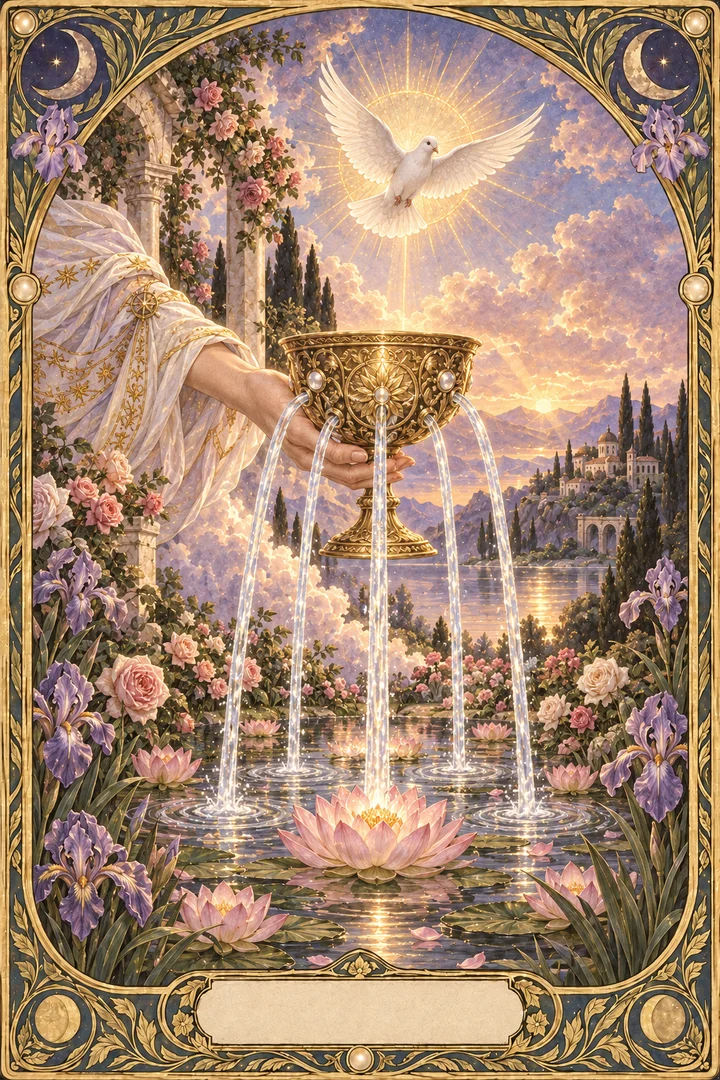
Water: a feeling can have movement
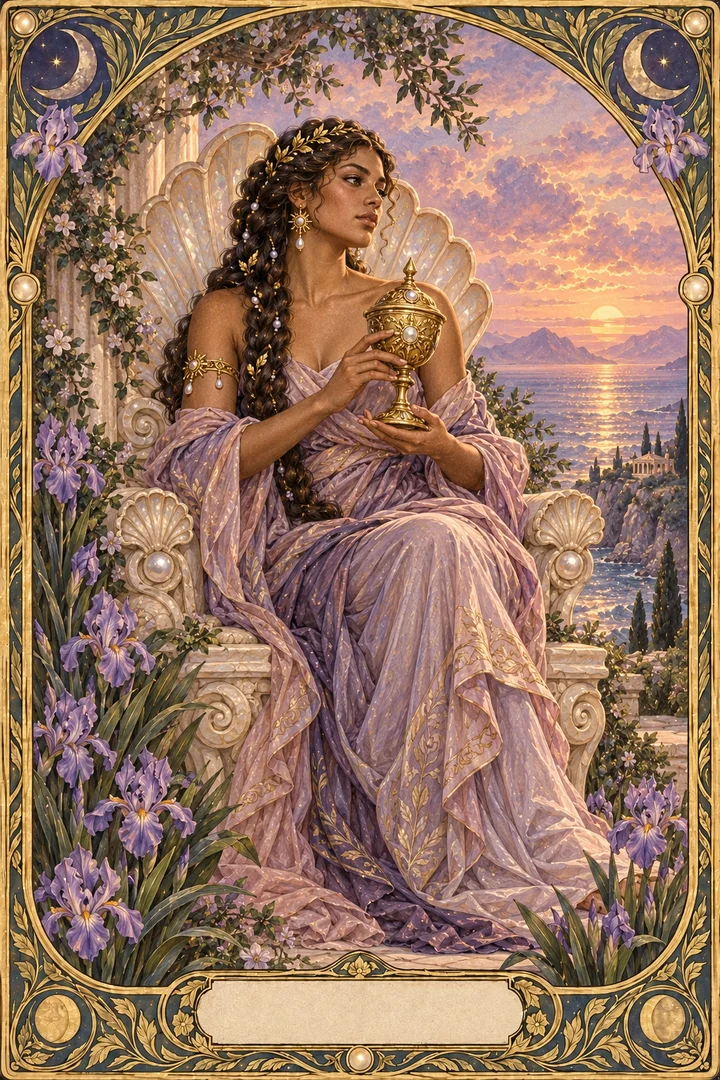
Cups images often place people near water. In the Queen of Cups, the shore gives the cup a quiet setting; in the King, the sea moves around the throne. In our reading, these are two ways to give feelings space: attending to what is present and holding a steady place while things change. Water is a visual prompt, not a measurement of emotional depth.
Look at the difference between a shore and an open sea. Which setting feels closer to your day? Name what the image makes you notice before choosing a meaning from a guide.

Hands and cups: care takes a form
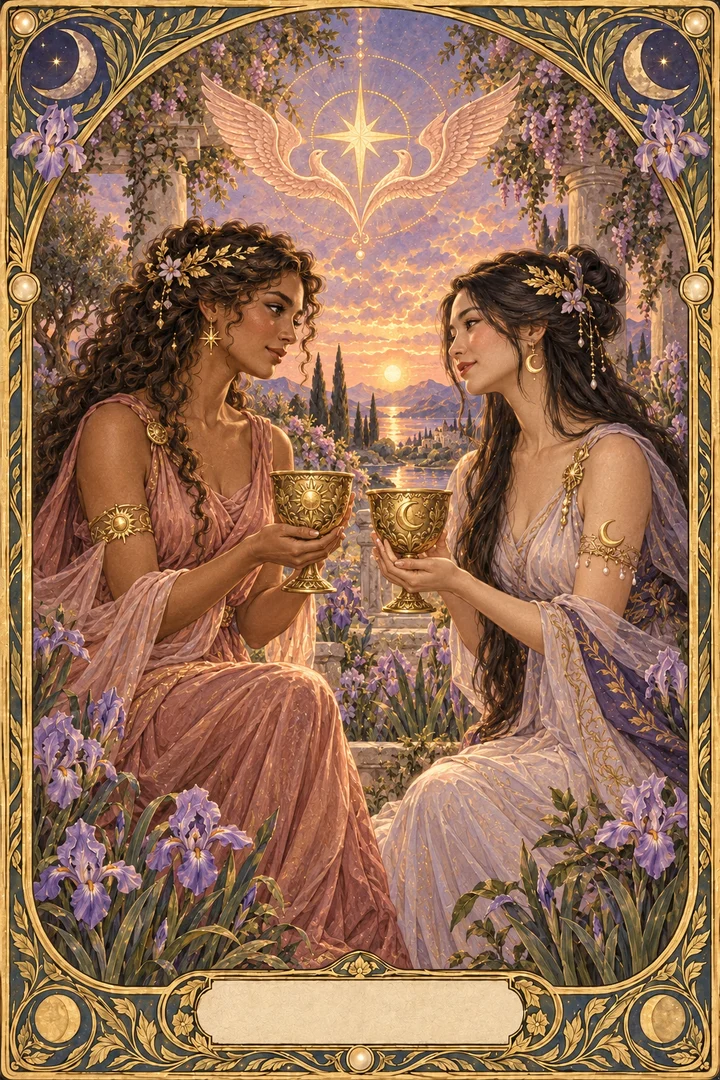
The Ace receives a cup from a cloud. The Two shows an exchange. The Queen holds a covered vessel. These familiar arrangements offer different questions: what can I receive, what can we offer each other, and what do I want to keep close? The covered cup does not establish a secret. It gives the illustration a shape through which to think about attention and privacy.
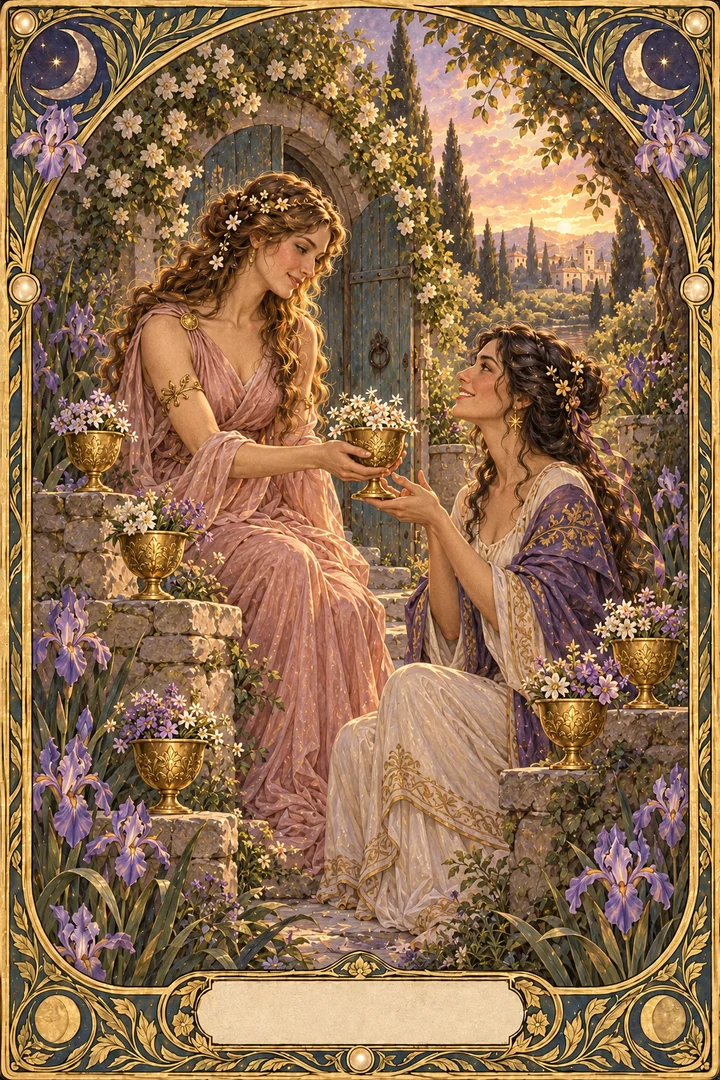
In the Two of Cups, notice that neither figure has to reach down to meet the other. Selfetti depicts two adult women as an original adaptation of the traditional two-person scene; their identities do not change the invitation to mutual care.
A blade and an open hand: clarity can remain warm
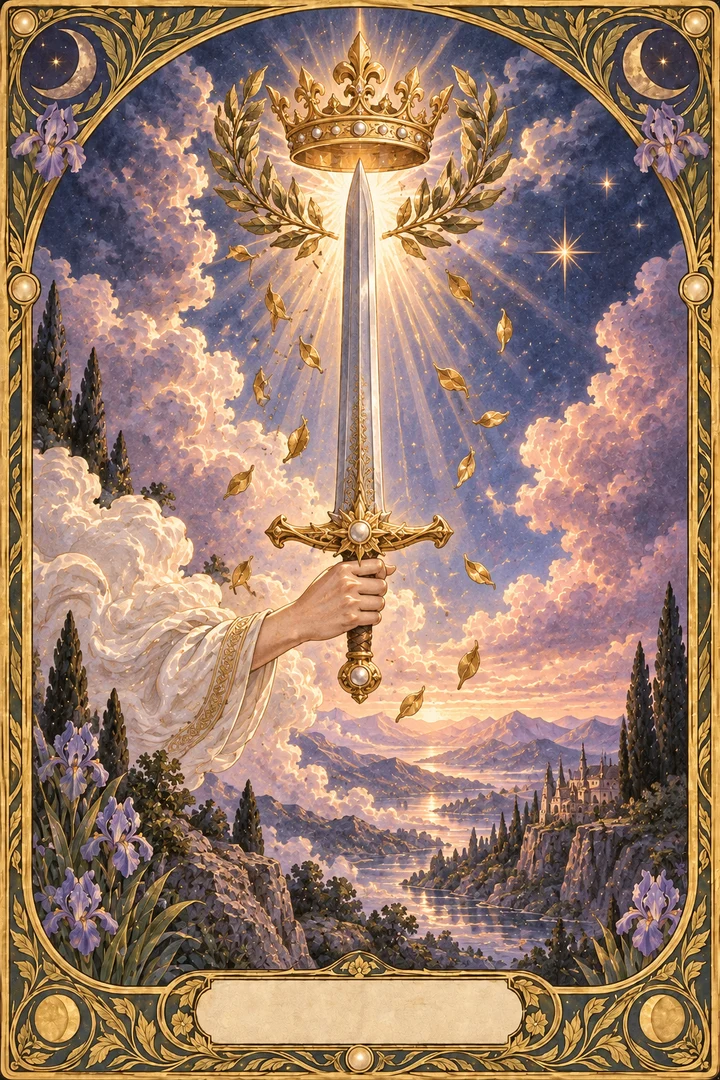
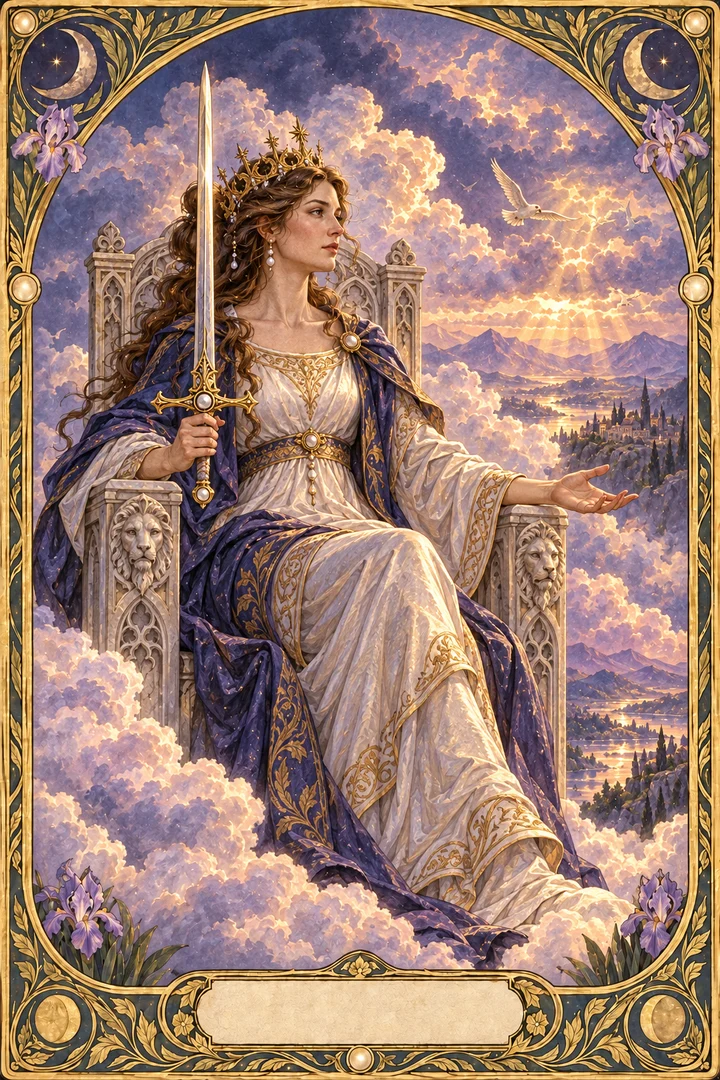
The Swords suit offers images of thought, language and conflict. A sword can divide a crowded sky into a distinct line; crossed swords can hold a tension still. The Queen's other hand remains open. In our interpretation, the pairing is useful for clear words that leave room for a response. A sharp shape need not become a harsh voice.
Compare the Ace's first raised blade with the Queen's seated composure. Ask whether you need a new sentence or a boundary you can continue to hold. Our flowers around the frame soften the setting without changing the number or identity of the card.
The fish: make room for a small surprise
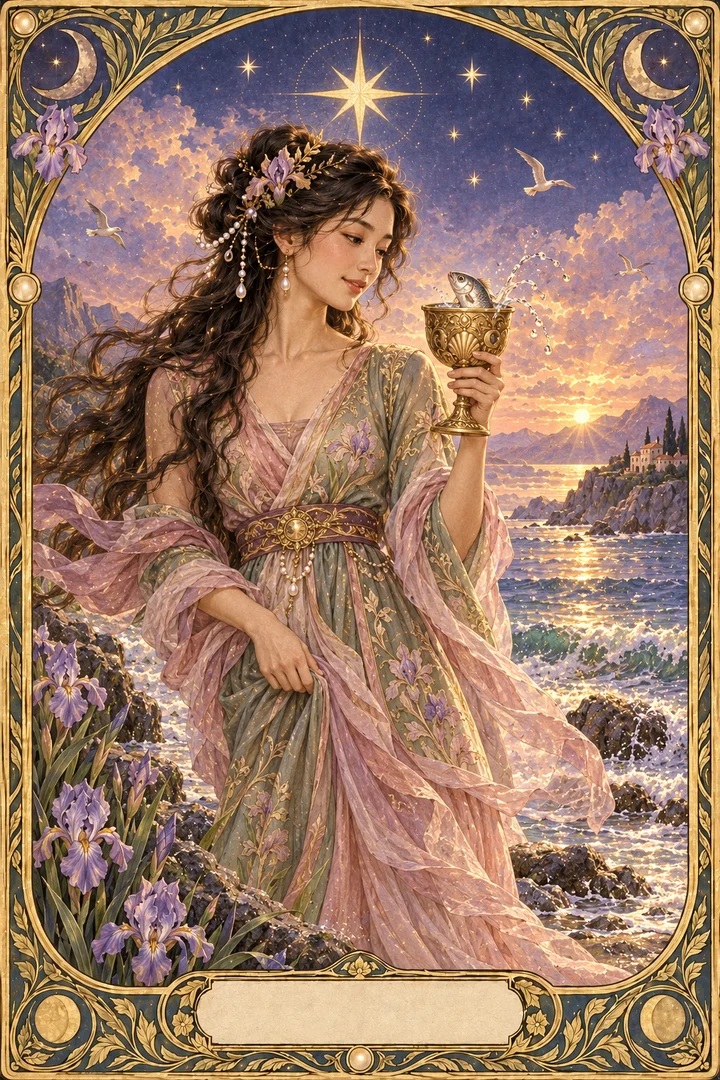
The Page of Cups looks toward a fish in a cup, a detail inherited from the Rider–Waite–Smith image. We keep its oddness visible. It can invite creative curiosity or the discovery of a feeling you did not expect. You do not have to turn every unusual detail into a hidden prediction. Sometimes an image is useful because it interrupts the familiar way you describe yourself.
Think of a small interest that surprised you recently: a colour, a song, a kind of conversation. You can follow the curiosity for a few minutes without making it a new identity.
Flowers: some are traditional, some are ours
Flower-filled cups belong to the traditional Six of Cups; water lilies belong to the Ace. Selfetti also adds roses, irises and botanical gold frames across the collection. Those decorative additions create our celestial garden setting. We do not assign every added flower a universal tarot meaning. Their role is to make the page a welcoming place to pause and look.
In our Six of Cups, adult childhood friends meet in the garden in place of the traditional children. The six flower-filled cups remain. The reunion is our illustration's story; the historical picture and our modern reflection are described separately in the guide.
A bridge and a path: change has a distance
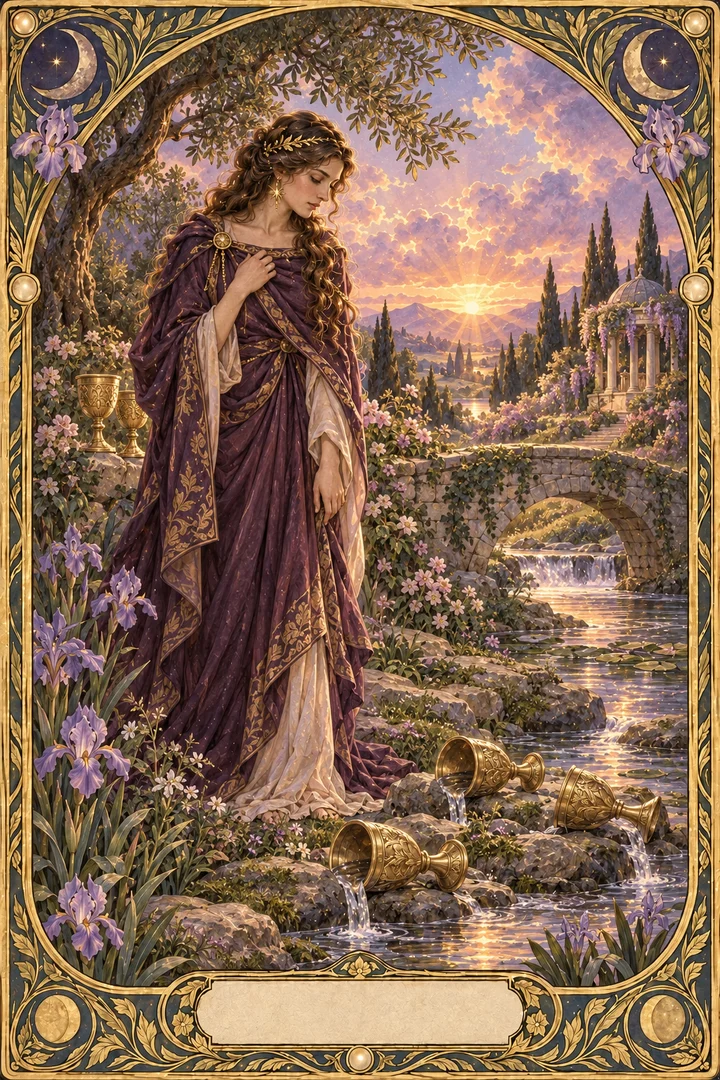
The Five of Cups keeps a bridge and a distant home beyond the fallen vessels. The Eight shows a figure taking a path away from standing cups. A picture can hold the thing that matters and the possibility of movement at the same time. Our readings make space for that complexity without promising that a journey will end well.
Compare the bridge in the Five with the hillside in the Eight. One may make you notice available support; the other may help you name a mismatch. Begin with what is actually present in your circumstances.
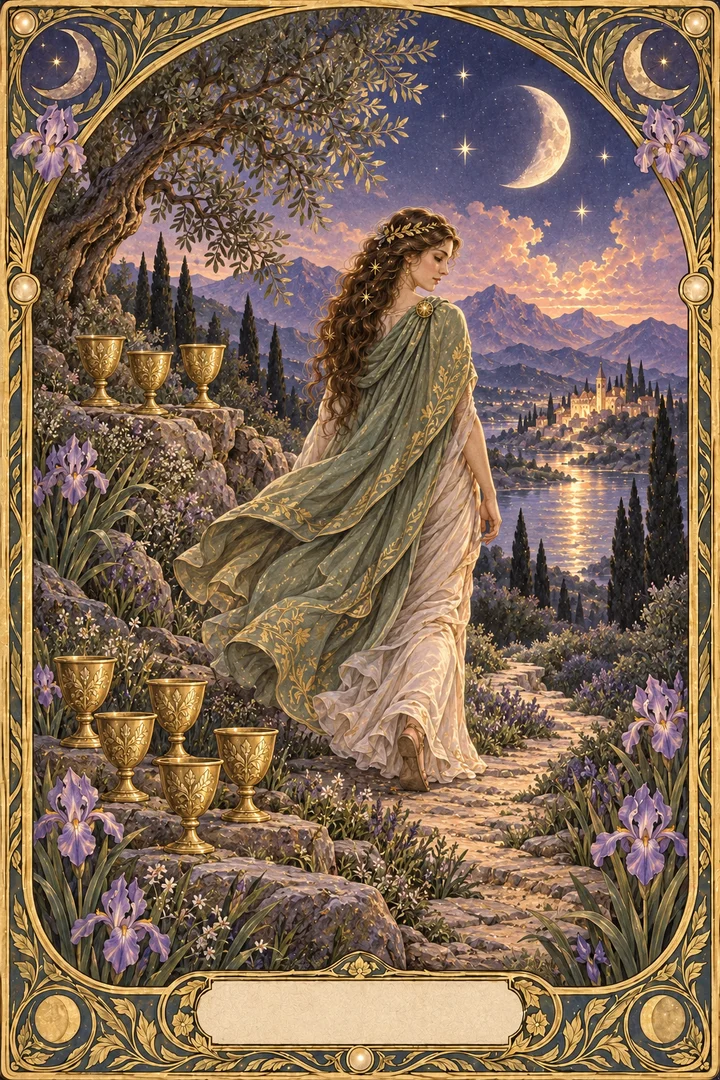
Who belongs in the garden?
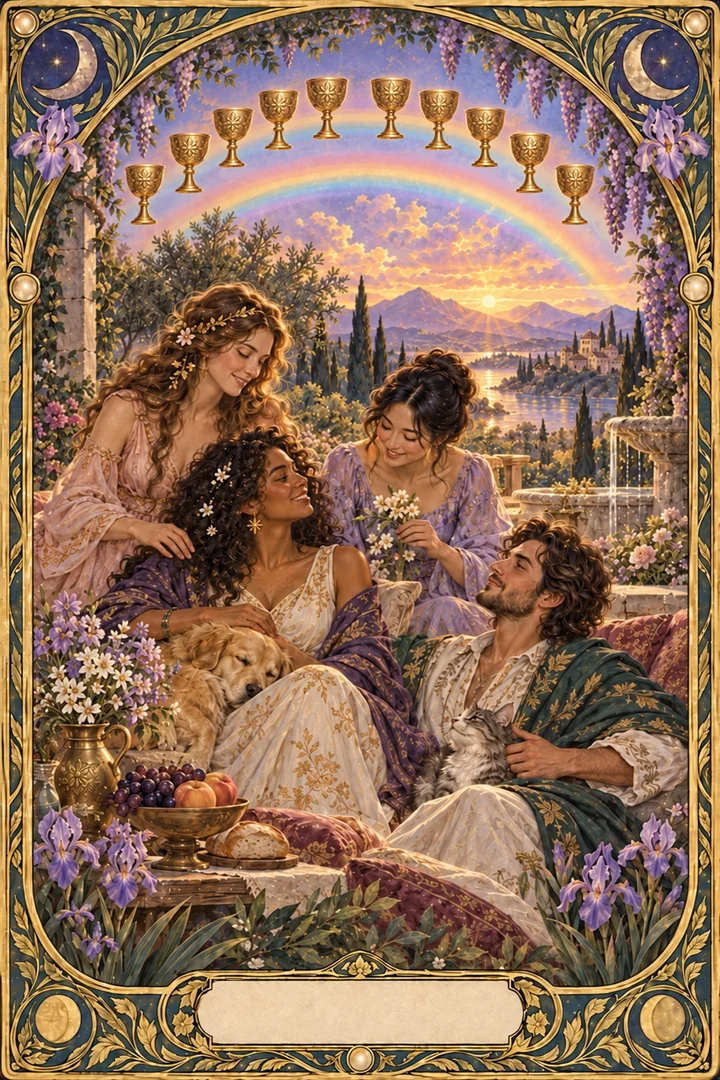
Selfetti's figures include different skin tones, adult friendships and chosen family. Our Ten of Cups places four adults with a dog and cat beneath the ten-cup arc, adapting the traditional household scene. A reader need not have a spouse or children to recognise shared belonging. The court cards are ways of acting and attending that any adult can explore, rather than assignments based on gender.
When a figure's life looks different from yours, try describing the relationship in the scene: receiving, offering, resting or keeping company. There may be a point of recognition in the action rather than the biography.
A simple way to look before interpreting
Start with three visible details, then one association of your own. Check the guide for the traditional background and Selfetti's adaptation. You are allowed to like a card's colours before you understand its symbols. You are also allowed to disagree with a reading that does not fit. Beauty can give your attention somewhere gentle to begin.
Try the Page: ‘A cup, a fish, a person by the water. The surprise makes me think of…’. Keep the association in your own words. It becomes a reflection when you connect it with an experience you know.
A line to keep
I can begin with what catches my eye.
A question for you
Which small detail would I like to linger over?
One small next step
Choose an illustration. Describe three visible details before reading its guide, then add one association from your own life.
Questions you may have
Are Selfetti's tarot images copies of the Rider–Waite–Smith deck?
They are original illustrations drawing on recognisable traditional arrangements and symbols. The guides distinguish that background from Selfetti's changes, such as our garden setting, adult reunion in the Six and chosen family in the Ten of Cups.
Does every flower in a tarot picture have a fixed meaning?
No. Some floral details belong to the traditional card image; many flowers in Selfetti's frames are decorative additions. We describe them as part of our art rather than inventing a universal meaning for every petal.
Why do the court cards have kings and queens?
These are inherited card names. Selfetti reads their themes as ways an adult can attend, act or make a decision. A Queen's care or a King's steadiness is not restricted to a gender or family role.
Can I understand tarot through the pictures first?
Yes. Describe what you see, note an association and then check the guide's background. Keep observation separate from your interpretation. Your association can be personal without becoming a prediction.
Background and our interpretation
Historical imagery reference: A. E. Waite, The Pictorial Key to the Tarot (1910), illustrated by Pamela Colman Smith. The life examples, letters, comparisons, keepsake lines and interpretations here are original Selfetti editorial content. Our illustrations adapt traditional arrangements with a celestial garden setting and inclusive adult figures; they are described separately from the historical images.
A. E. Waite · 1910 ↗