A card for your feeling: six small letters for an ordinary day
You do not need to draw the right card to deserve a little understanding. Start with a feeling you recognise, read its letter and leave any sentence that does not fit.
Selfetti ·
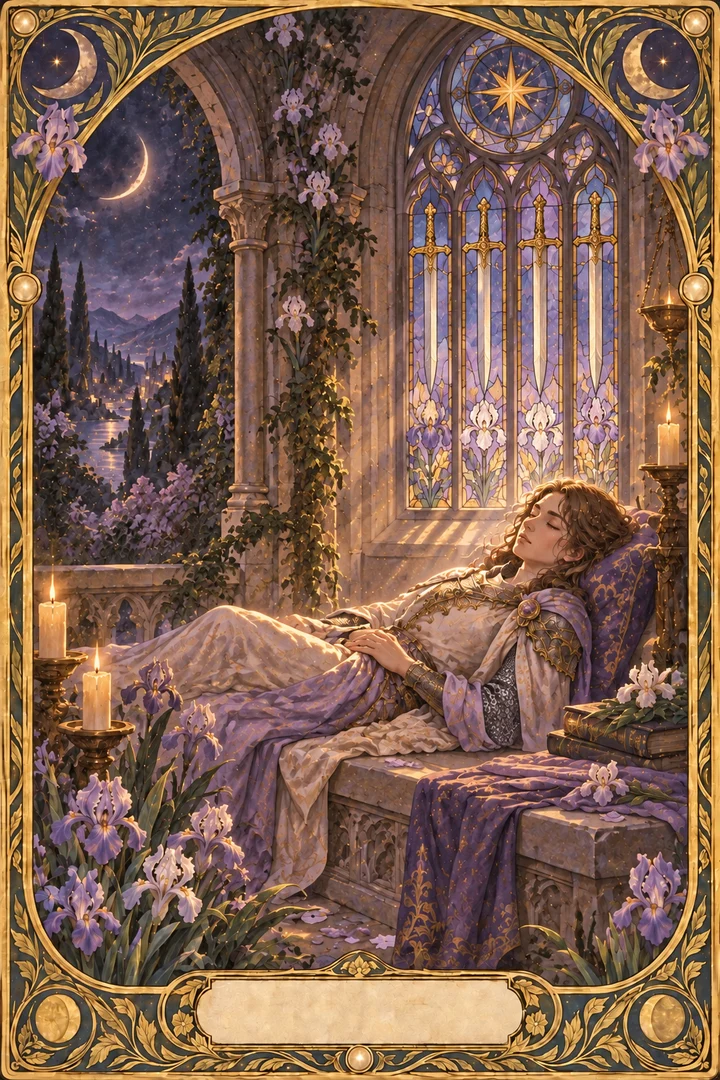
When you are tired of being useful · Four of Swords
Perhaps the day was filled with small requests. None seemed large enough to explain why you now want silence. The Four of Swords gives that accumulation a quiet image: a person at rest, the blades set apart. You do not need to turn this evening into another chance to improve yourself. A few unfinished things can remain unfinished while you recover some space.
A small next step: put tomorrow's first task in one sentence, then close the list. If you need to answer someone, ‘I have seen this and will respond tomorrow’ can give the pause a clear edge.
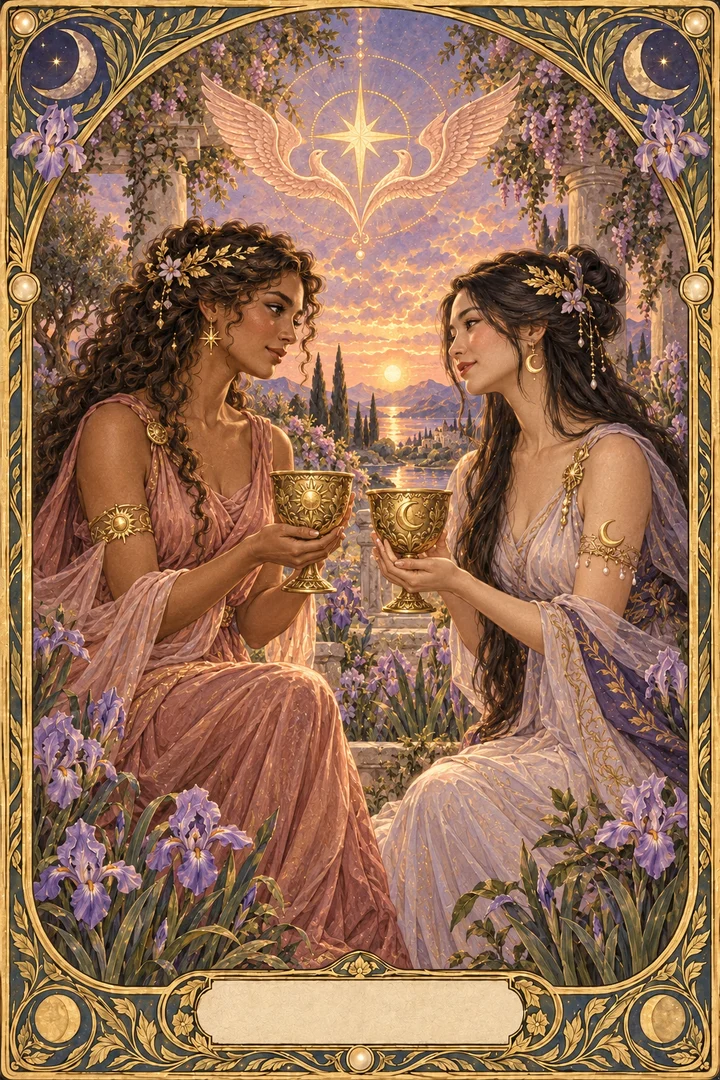
When you would like to be met halfway · Two of Cups
You may have people around you and still miss the feeling of being specifically wanted. The Two of Cups offers an exchange at equal height. Let it remind you of the kind of company you would welcome: a conversation, a familiar walk, somebody who also asks a question. Wanting company is an ordinary human need. You can name it without promising to be cheerful throughout the meeting.
A small next step: invite one person to something concrete and easy to answer. ‘Would you like a short walk this weekend?’ leaves less guessing than ‘We should catch up.’ Give them room to respond and notice the answer you actually receive.
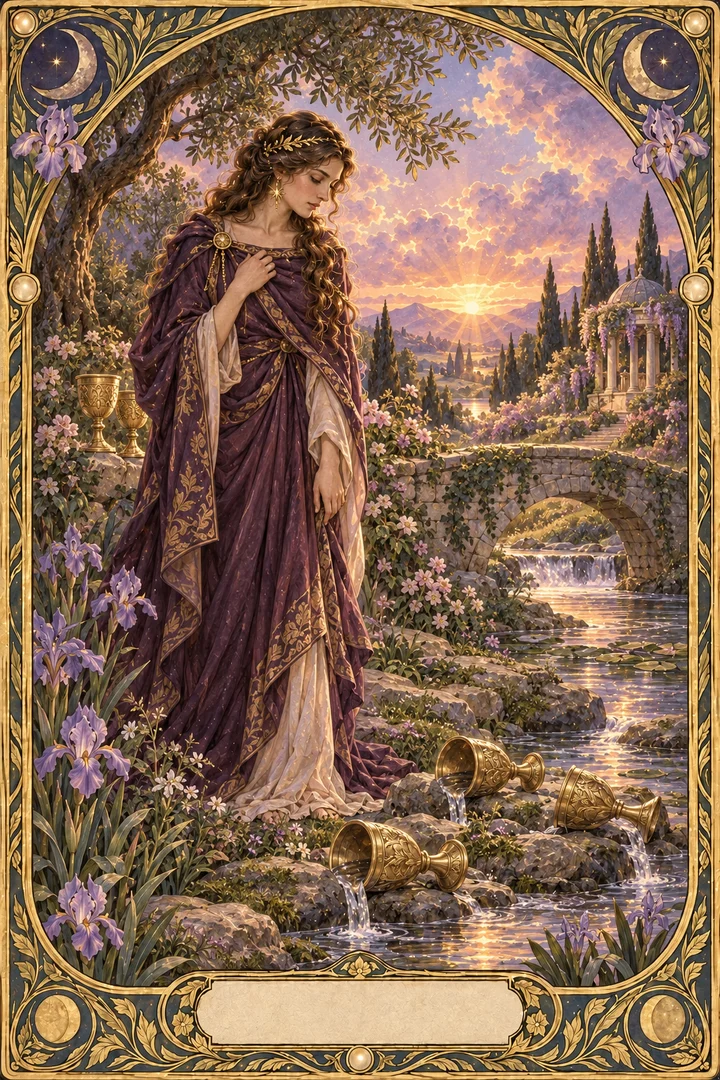
When a small loss feels large · Five of Cups
A cancelled plan, a missed opportunity or an unanswered invitation may have carried more hope than anybody saw. The Five of Cups lets the fallen cups remain visible. Before asking yourself to appreciate what is left, name what you thought might happen. Disappointment can be proportionate to the meaning you placed in something, even when the event looks small from outside.
A small next step: finish ‘I had hoped for…’ in your own words. Then choose one available form of support, if you want it. You can accept company without claiming that everything now feels fine.
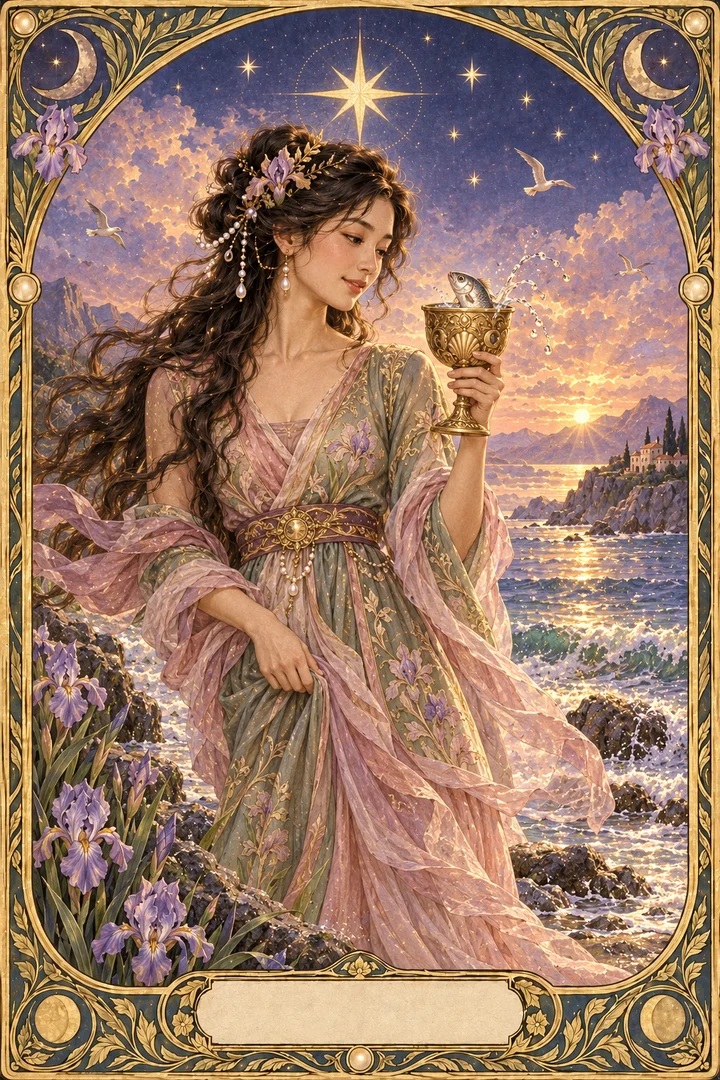
When something in you wants to begin · Page of Cups
There may be a drawing you want to make, an invitation you want to send or a feeling still looking for words. The fish in the Page's cup is a small surprise held close enough to notice. An unfinished beginning can have charm of its own. You can offer a modest expression without asking the response to decide whether you are talented, lovable or brave.
A small next step: make the invitation specific, share one sketch with somebody kind or write the first two lines privately. Let the gesture stay small. Beginning does not oblige you to announce a whole new version of yourself.
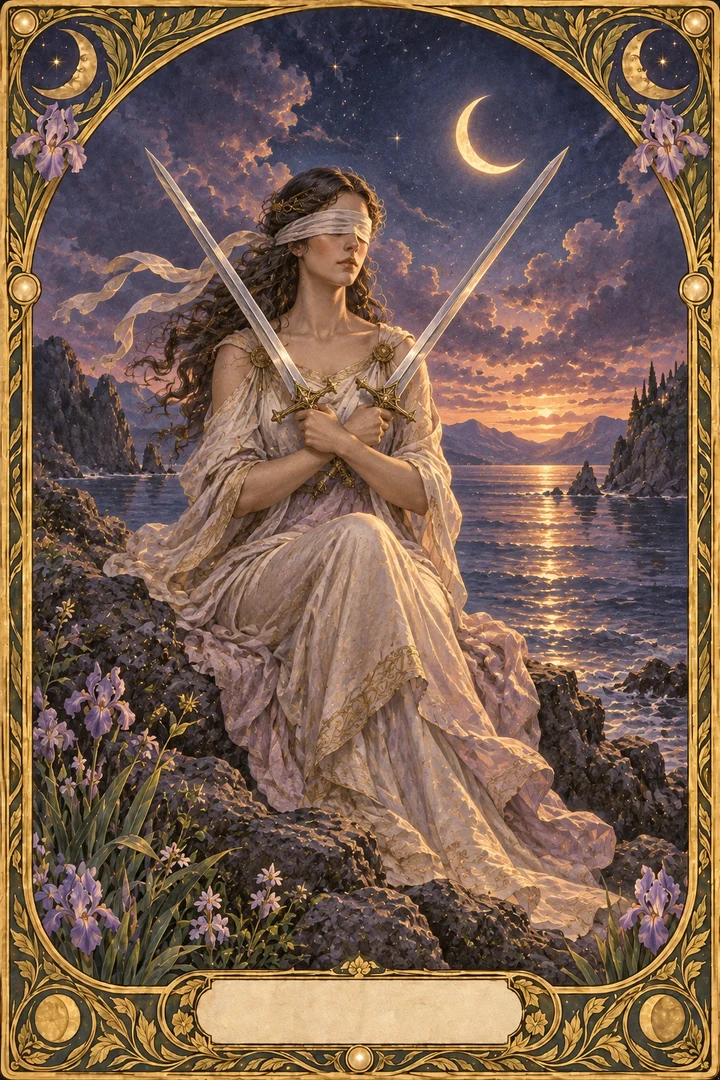
When you can see both sides · Two of Swords
You may be carrying two reasonable needs and hearing a different answer from every person you ask. The crossed swords hold the question still for a moment. Your attention to complexity can be useful. Give it a boundary so you do not have to hold every possible consequence at once. One missing fact or one honest priority may help more than another round of opinions.
A small next step: write each option in one sentence, then add the need you are trying to protect. Ask one factual question or choose a small trial. You can make a careful decision before every uncomfortable feeling disappears.
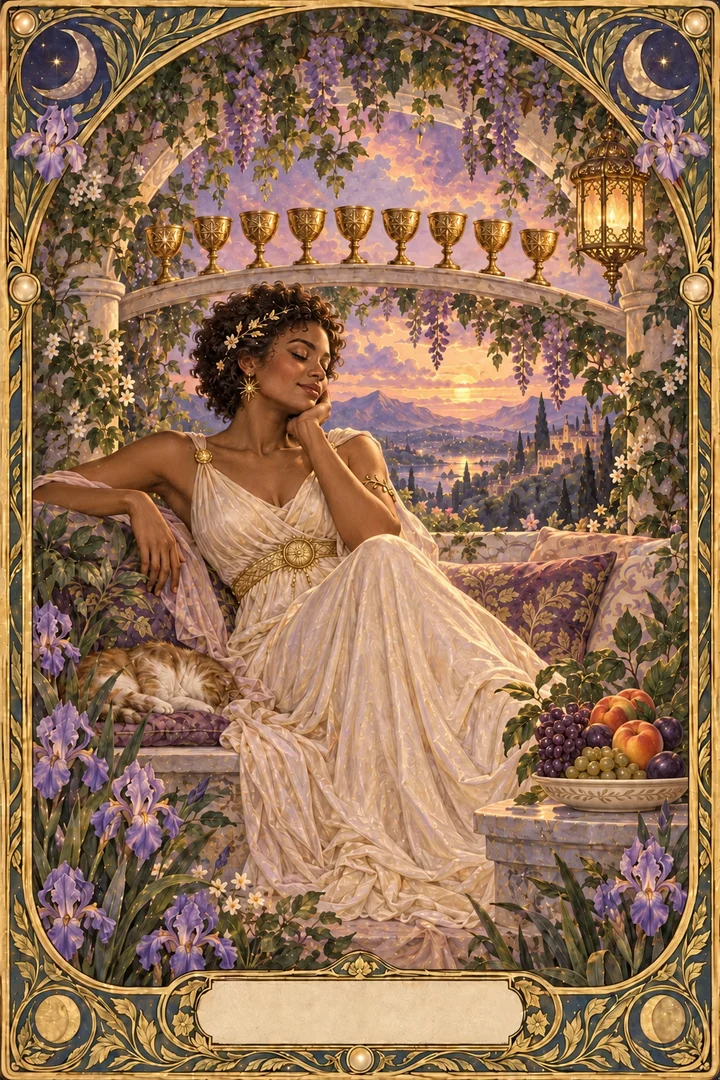
When an ordinary moment feels enough · Nine of Cups
A warm meal, a quiet room or a conversation that did not ask you to perform can leave a modest feeling of contentment. The Nine of Cups gives that feeling a place to sit. Enjoyment does not need an impressive story attached. You can let the moment be good while other parts of life remain unresolved. Nothing has to be posted for the pleasure to count.
A small next step: name one detail you liked and give it a few more unhurried minutes. Save a sentence for yourself if you wish. You do not need to turn a pleasant evening into a new routine to justify enjoying it.
A line to keep
There is room for the day I am actually having.
A question for you
Which sentence felt close to my own day?
One small next step
Keep one sentence that fits. Change its wording until it sounds like something you would say to yourself.
Questions you may have
Do I need to draw a card before reading these letters?
No. This is an illustrated reading collection. Choose the feeling you recognise and read its letter. The cards give the passages images; they are not a test of which emotion you ought to have.
What if more than one feeling fits?
Read more than one letter if you want. Tiredness can coexist with hope, and contentment with disappointment. You do not have to reduce a day to one label.
Are these letters a mental health assessment?
No. They are original reflective prose about everyday experiences. Persistent distress or a need for support deserves attention beyond a card reading. Use the help appropriate to your circumstances.
Can I share a letter with a friend?
Yes. Share the page or copy a sentence that you think they might welcome. You can introduce it with ‘This made me think of what you said’ and let them decide whether it fits. Avoid assigning a feeling to them.
Background and our interpretation
Historical imagery reference: A. E. Waite, The Pictorial Key to the Tarot (1910), illustrated by Pamela Colman Smith. The life examples, letters, comparisons, keepsake lines and interpretations here are original Selfetti editorial content. Our illustrations adapt traditional arrangements with a celestial garden setting and inclusive adult figures; they are described separately from the historical images.
A. E. Waite · 1910 ↗