Six of Wands: upright, reversed, love & yes or no
Let recognition reach you, and remember the people behind the visible moment.
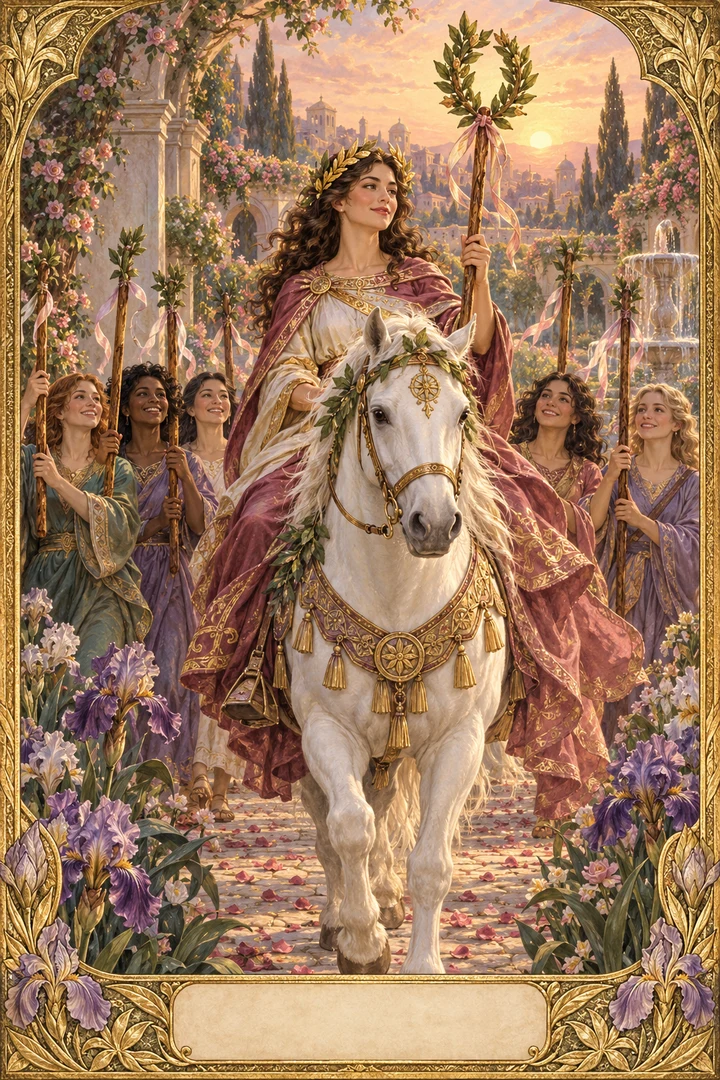
If this feels familiar
Perhaps you answer praise by explaining why it was easy, lucky or not enough. Let one kind observation land before making it smaller. You can receive credit and still be generous. Notice if you are waiting for a crowd before you count your own progress. A private marker or a single thank-you can be enough. The people behind the visible moment are part of the story too.
A line to keep
I can let a kind word reach me.
- Upright meaning
- Recognition · visible progress · encouragement · shared credit · confidence
- Six of Wands reversed
- Unnoticed work · dependence on applause · private progress · uneven credit
Upright meaning
A rider with a wreath is met by supporters. Take in a specific acknowledgement without turning it into a requirement to remain impressive. The people around the rider remind us that visible work has support behind it. You might notice the wreath near the top of the wand and the five separate wands held by others. Those details frame a human tension: the wish to be seen and the quiet truth that no one arrives alone. Let one kind word land before you explain it away. You can receive credit and still be generous.
A colleague praises a presentation. Say thank you, name the help you received and keep one piece of feedback for your next attempt. The action is letting the compliment reach you while making the support visible. You do not have to perform humility or claim you did everything alone.
Six of Wands reversed
Work may go unnoticed, or your attention may have become tied to reactions. Ask what progress you can recognise yourself and where credit needs a clear conversation. Silence does not erase the task you completed. Reversed, the theme can turn inward, feel blocked or become overused. You might be waiting for applause before you count a step as real, or you might be giving credit away too quickly. Notice whether you need a private marker of progress or a direct request for acknowledgement.
You finished a difficult report, but no one mentioned it. Instead of assuming it did not matter, write down what you completed and what it took. If credit is uneven, ask a specific person for a specific correction rather than hoping they will notice.
Six of Wands in love and relationships
Appreciation matters when it names something real. Public admiration cannot replace private respect, and a compliment is not proof of lasting commitment. In love, the Six can show a moment when your effort or presence is acknowledged. Let that be pleasant without making it the whole measure of the relationship. If recognition is uneven, say what you noticed and what you would value hearing. The other person's feelings still belong to their own words and behaviour.
Your partner thanks you for handling a difficult week. You can say, ‘That means a lot,’ and also mention one thing you need from them. The exchange stays warm without turning their appreciation into a promise about the future.
Six of Wands: yes or no?
A conditional yes to presenting or acknowledging work when you can do so honestly. Recognition is possible, never guaranteed by the card. In a yes/no convention, upright often leans yes to sharing a result or accepting a compliment. The condition is that you can do it without needing a particular reaction. Reversed, pause and check whether you are seeking applause or avoiding a needed conversation. Tarot readers do not share one universal yes/no rule.
For ‘Should I share my project update?’, an upright yes can support a clear, honest post. For ‘Will everyone praise it?’, the card cannot promise that. Reversed, you might share it privately first or ask one trusted person for feedback.
A yes/no lean is a storytelling convention, not a probability or reliable prediction. Check real information before acting, especially about safety, money or another person's intentions.
Work, study and creative life
Document a contribution with an outcome and the collaborators involved. If credit is uneven, request a specific correction rather than waiting for others to infer what you did. The Six supports visible progress, but it also asks you to name the people behind the moment. A clear record helps you speak about your work without inflating it. If applause is absent, you can still mark the step you took and decide what conversation is worth having.
After a successful launch, write a short note: what you contributed, what the team achieved and who helped. If a manager overlooks your part, ask to add one sentence to the record. That is a practical correction, not a demand for praise.
How this card differs from nearby cards
Three reaches outward; Six recognises a contribution; Seven asks what deserves protection afterwards. Nine of Pentacles enjoys personal space rather than public acknowledgement. The Three of Wands looks toward future expansion, while the Six marks a moment that has already arrived. The Seven of Wands follows with a question about defending what you built. These are different questions, not guaranteed stages.
Common misreadings
A wreath is not a promise of victory, fame, promotion or being chosen over another person. Recognition does not rank human worth. The Six does not guarantee that your work will be seen by everyone, nor does it mean someone else's lack of praise is a verdict on you. Keep the interpretation near a real moment of acknowledgement rather than turning the wreath into a prediction.
Reading lens, not a verdict
These readings use symbols to reflect on experiences you recognise. They cannot establish events, financial outcomes or another person's private feelings. Reversed meanings explore how a theme may be internal, blocked or overused; they are a separate reference, since the one-card draw uses upright cards. Yes/no interpretations are conditional editorial conventions, not guarantees or a universal rule.
Traditional symbolism
The traditional Six of Wands shows a rider with a laurel wreath on a wand, greeted by supporters. Selfetti keeps that scene in a garden courtyard: an adult woman in a modest laurel crown rides a calm white horse, carrying one wooden wand with a wreath near its top. Five supporters each hold a separate wand behind her, all five shafts visible. The rose-gold late afternoon light and the welcoming garden belong to our original setting. We read the wreath as a moment of acknowledgement, not a promise of victory. The supporters remind us that visible work has support behind it.
A question to keep
What contribution can I acknowledge without comparing it with anyone else's?
One small experiment
Write one completed contribution and one person who supported it. Accept or offer a specific thank-you.
Questions worth asking
Does Six guarantee success?
No. The Six of Wands often reflects recognition or visible progress, but it does not promise victory, fame or promotion. It can support a moment of acknowledgement when you present your work honestly. The outcome still depends on real-world factors.
How can I read it when my work is unnoticed?
Reversed, the Six can fit unnoticed work or uneven credit. Ask what progress you can recognise yourself and where a clear conversation might help. Silence does not erase what you completed. A private marker or a specific request can be a practical next step.
What does the wreath represent here?
The wreath is a traditional symbol of acknowledgement, not a guarantee of victory. In Selfetti's scene, it sits near the top of the rider's wand and is met by supporters. We read it as a moment of recognition that still includes the people behind the visible work.
Does it mean someone will choose me?
No. The Six of Wands does not predict that a particular person will choose you, in love or work. It can reflect a moment when effort is seen, but another person's feelings and decisions belong to them. Keep the interpretation near your own experience.
How to use this interpretation
These are symbolic prompts, not measured personality traits or predictions. Keep a real example beside any interpretation; you can disagree. Do not infer another person's feelings, health or financial outcomes from a card or sign.
Sources and method
V&A · Tarot · Selfetti · A. E. Waite · 1910
Historical image reference: A. E. Waite, The Pictorial Key to the Tarot (1910), illustrated by Pamela Colman Smith. The contemporary readings, life examples, recognition passages and keepsake lines are Selfetti's own editorial interpretation, including the conditional yes/no and reversed themes. Our original celestial garden illustrations adapt the traditional scenes with inclusive figures; ornamental flowers and frames do not add predictions. The one-card draw uses upright cards; reversed meanings are a separate reference.
Selfetti ·
Keep exploring
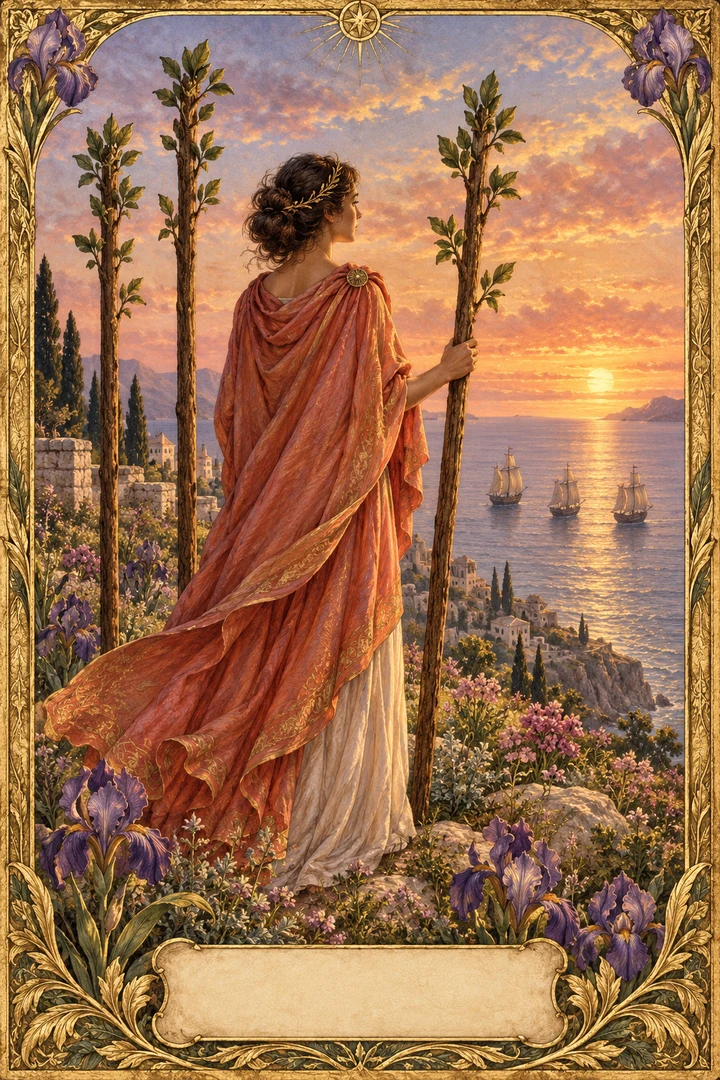
Three of Wands
Letting a first effort meet the world, and noticing what comes back.
Read the full guide ↗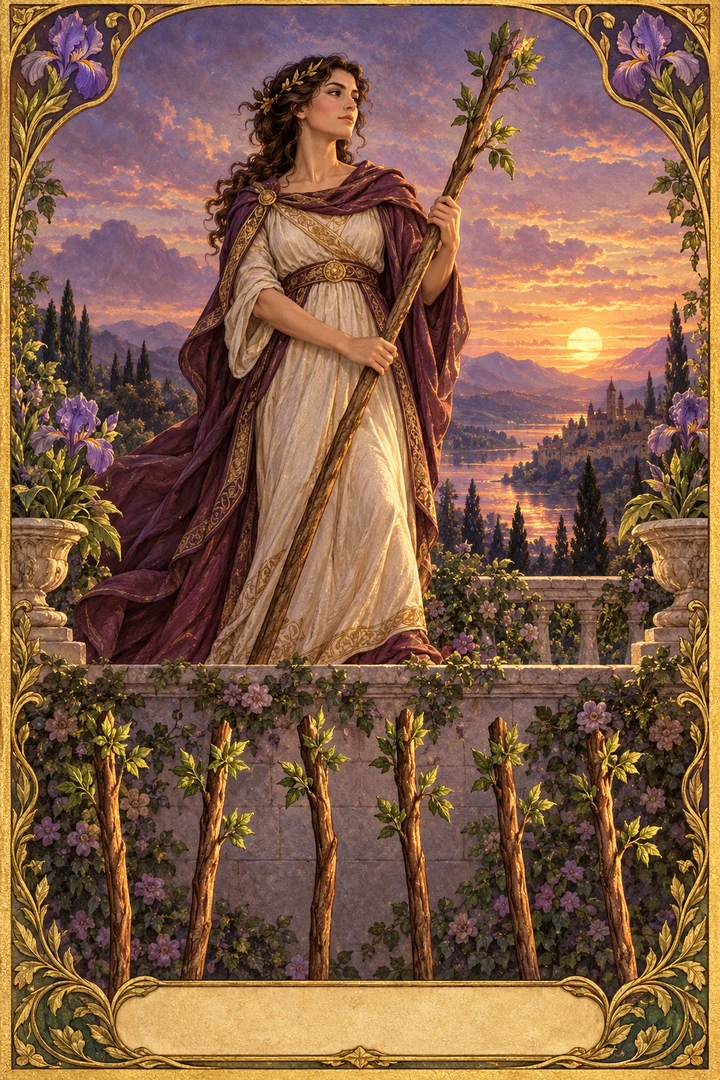
Seven of Wands
A boundary can be firm without becoming your whole way of meeting the world.
Read the full guide ↗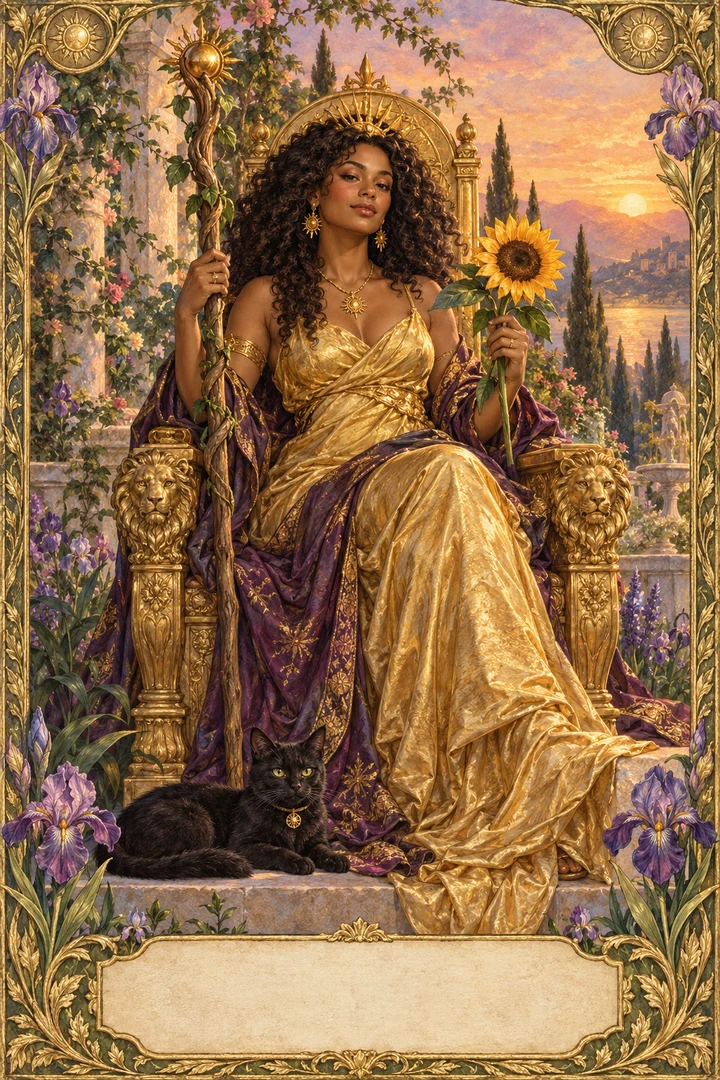
Queen of Wands
Taking up space with warmth, without making yourself smaller to make others comfortable.
Read the full guide ↗