Seven of Wands: upright, reversed, love & yes or no
A boundary can be firm without becoming your whole way of meeting the world.
If this feels familiar
You may have learned to explain a no until it sounds like a yes. Your limits can be ordinary, specific and still worth respecting. You do not have to win a debate to name your capacity. Perhaps you notice yourself over-justifying a simple preference, or bracing for a fight that has not arrived. The Seven invites a steadier version: one clear sentence, one chosen staff, and permission to leave the rest.
A line to keep
My boundary can be clear and kind.
- Upright meaning
- A chosen boundary · conviction · a position to protect · steadiness · discernment
- Seven of Wands reversed
- Defensiveness · exhaustion · a boundary to revise · pressure to justify everything
Upright meaning
The Seven of Wands is often read as standing by a position you have chosen: a limit, a value or the time a task actually needs. One staff is held above six others, which suggests discernment rather than endless defence. You do not have to answer every challenge or win every disagreement. Holding a boundary can be quiet, specific and kind. The card asks what genuinely needs protecting now, and what can be left unanswered. Firmness here is not hostility; it is knowing which conversation matters and which one you can release.
A request arrives during a planned rest evening. You reply that you can look at it tomorrow, and give the time you can realistically offer. The boundary is one sentence, not a debate. You have protected the evening without turning the other person into an opponent.
Seven of Wands reversed
Reversed, the Seven can fit defensiveness, exhaustion or a boundary that needs revising. You may be arguing for every small preference, or you may have too little support to hold a reasonable limit. Check which discussion actually matters and who can help. Changing a boundary thoughtfully is not the same as giving it up under pressure. Sometimes the revision is smaller: fewer explanations, a clearer no, or asking someone to share the load. Notice whether you are protecting something real or simply bracing against everything.
You have explained the same limit three times and feel worn down. Instead of another long justification, you say, ‘I am not able to take this on.’ You also ask a colleague to cover one part. The boundary stays, but the defence becomes lighter.
Seven of Wands in love and relationships
In love, the Seven asks you to state the limit and the behaviour involved. A relationship can include both warmth and a no. You might protect time alone, a need for honesty or a pace that feels sustainable. The card cannot identify an enemy or decide whether the other person respects you. Reversed, notice if you are defending every preference or if a boundary needs a kinder, clearer form. The other person's feelings remain theirs to name.
You tell your partner, ‘I want to hear about your day, and I need twenty minutes of quiet first.’ The limit is specific and warm. It does not accuse them of anything, and it leaves room for them to respond without turning the evening into a contest.
Seven of Wands: yes or no?
In a yes/no convention, upright leans toward a conditional yes to protecting a considered boundary, when doing so is appropriate and safe. Pause before turning a disagreement into a contest. Reversed, the answer may be to revise the boundary or to stop defending a position that no longer fits. Tarot readers do not share one universal yes/no rule, and the card cannot guarantee another person's response.
For ‘Should I hold this limit?’, an upright yes can support a clear, kind no. For ‘Will they agree?’, the card cannot say. Reversed, you might ask whether the limit needs a smaller, more workable form before you decide.
A yes/no lean is a storytelling convention, not a probability or reliable prediction. Check real information before acting, especially about safety, money or another person's intentions.
Work, study and creative life
At work and in study, the Seven supports protecting an agreed priority with a clear explanation of capacity. If demands exceed your role, ask for a trade-off or support rather than treating endurance as the only option. You may need to hold a deadline, a scope or a decision you have already made. Reversed, check whether you are defending everything at once or whether the boundary itself needs renegotiating. A firm no can sit beside a practical alternative.
A colleague asks you to add an extra task to an already full week. You say, ‘I can do this if the report moves to Friday, or I can keep the report and pass this on.’ The boundary is the capacity, not the person.
How this card differs from nearby cards
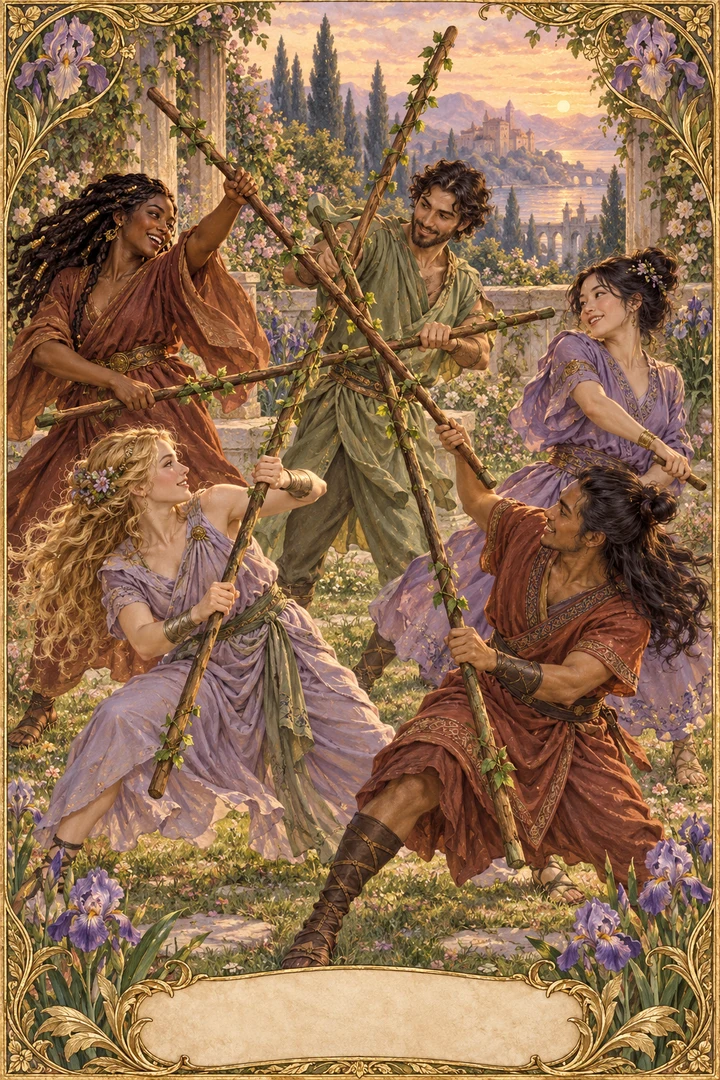
The Five of Wands has several competing approaches; the Seven protects a position; the Nine considers the cost of continuing to guard it. The Seven of Swords addresses discretion rather than open defence. These are different questions, not stages of a fight. The Seven of Wands is about choosing what to stand behind, not about proving that you are right.
Common misreadings
The six lower staffs are not evidence of six enemies or people attacking you. A symbolic higher position does not prove you are morally right. The card does not identify an aggressor, diagnose a relationship or promise that holding a boundary will be easy. It describes a moment of protecting something chosen, with all the ordinary uncertainty that involves.
Reading lens, not a verdict
These readings use symbols to reflect on experiences you recognise. They cannot establish events, financial outcomes or another person's private feelings. Reversed meanings explore how a theme may be internal, blocked or overused; they are a separate reference, since the one-card draw uses upright cards. Yes/no interpretations are conditional editorial conventions, not guarantees or a universal rule.
Traditional symbolism
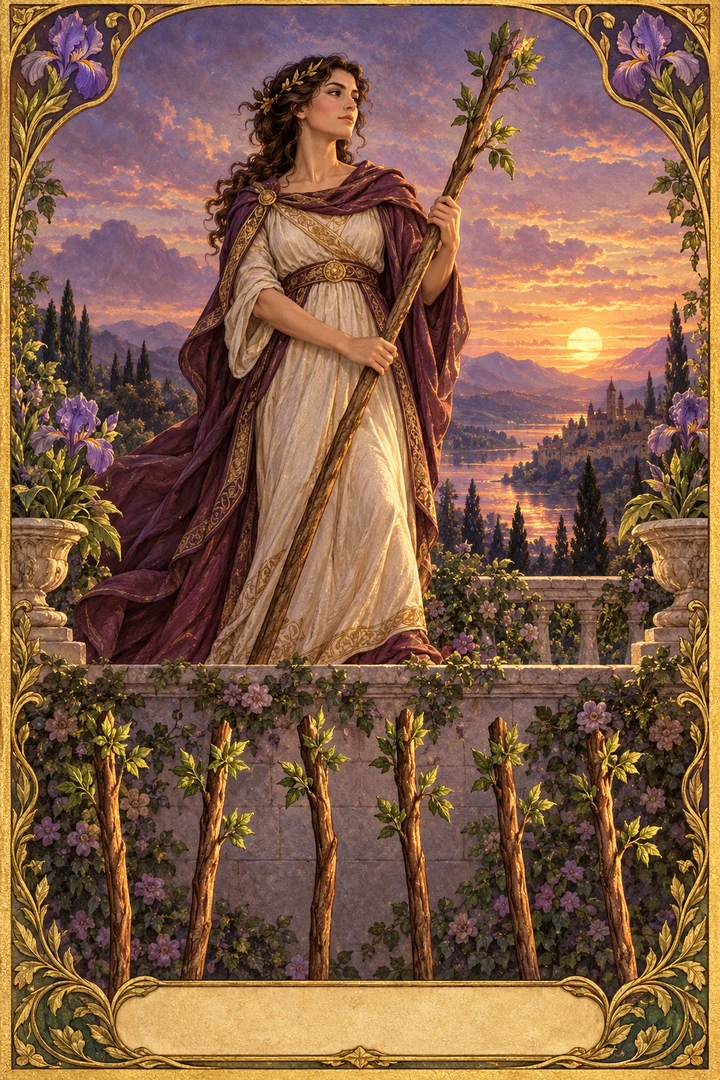
The traditional Seven of Wands shows a figure on high ground, one staff held above six others rising from below. Selfetti keeps that recognisable tension in an original scene: an adult woman stands steadily on a raised flower-lined terrace, holding one long wooden staff diagonally across her body. Exactly six other staffs rise from the lower edge, no owners visible. The aubergine and gold dusk, garden and flowers belong to our setting. We read the single staff as a chosen boundary and the six below as pressures or questions that do not all require the same answer. The image does not show attackers; it shows a position being held.
A question to keep
Which limit matters enough to hold, and which argument can I leave?
One small experiment
State one limit in one or two sentences. Offer only the alternative you can actually keep.
Questions worth asking
Does Seven mean I am being attacked?
No. The six staffs below are symbolic pressures or questions, not evidence of attackers. The card asks what you are protecting and whether every challenge needs an answer. It cannot identify enemies or confirm that someone is against you.
How is it different from Nine?
The Seven protects a chosen position with one staff held above six. The Nine considers the cost of continuing to guard it after a long struggle. Seven is about discernment in the moment; Nine is about endurance and what it has taken from you.
Is a reversed Seven weakness?
Not necessarily. Reversed can fit defensiveness, exhaustion or a boundary that needs revising. Changing a limit thoughtfully is not the same as giving it up under pressure. It may be a sign to ask for support or to stop arguing every small point.
Can a boundary change?
Yes. A boundary can be revised as circumstances, capacity or information change. The Seven invites you to check which limit still matters and which argument you can leave. A thoughtful change is different from abandoning a limit under pressure.
How to use this interpretation
These are symbolic prompts, not measured personality traits or predictions. Keep a real example beside any interpretation; you can disagree. Do not infer another person's feelings, health or financial outcomes from a card or sign.
Sources and method
V&A · Tarot · Selfetti · A. E. Waite · 1910
Historical image reference: A. E. Waite, The Pictorial Key to the Tarot (1910), illustrated by Pamela Colman Smith. The contemporary readings, life examples, recognition passages and keepsake lines are Selfetti's own editorial interpretation, including the conditional yes/no and reversed themes. Our original celestial garden illustrations adapt the traditional scenes with inclusive figures; ornamental flowers and frames do not add predictions. The one-card draw uses upright cards; reversed meanings are a separate reference.
Selfetti ·
Keep exploring
Five of Wands
Different energies need a way to work together, rather than a winner at any cost.
Read the full guide ↗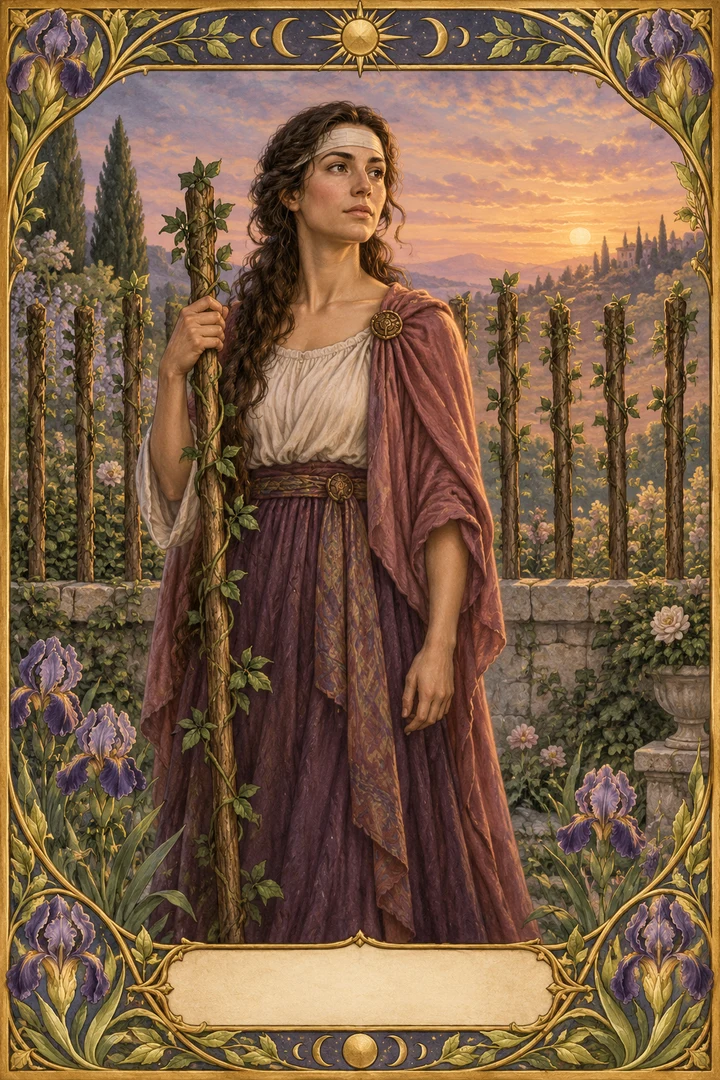
Nine of Wands
Experience can protect you; it can also leave you needing a place to rest.
Read the full guide ↗
Ten of Wands
What you carry can be important and still be too much for one person.
Read the full guide ↗