Ten of Pentacles: upright, reversed, love & yes or no
What endures is shaped by care, shared arrangements and the people they include.
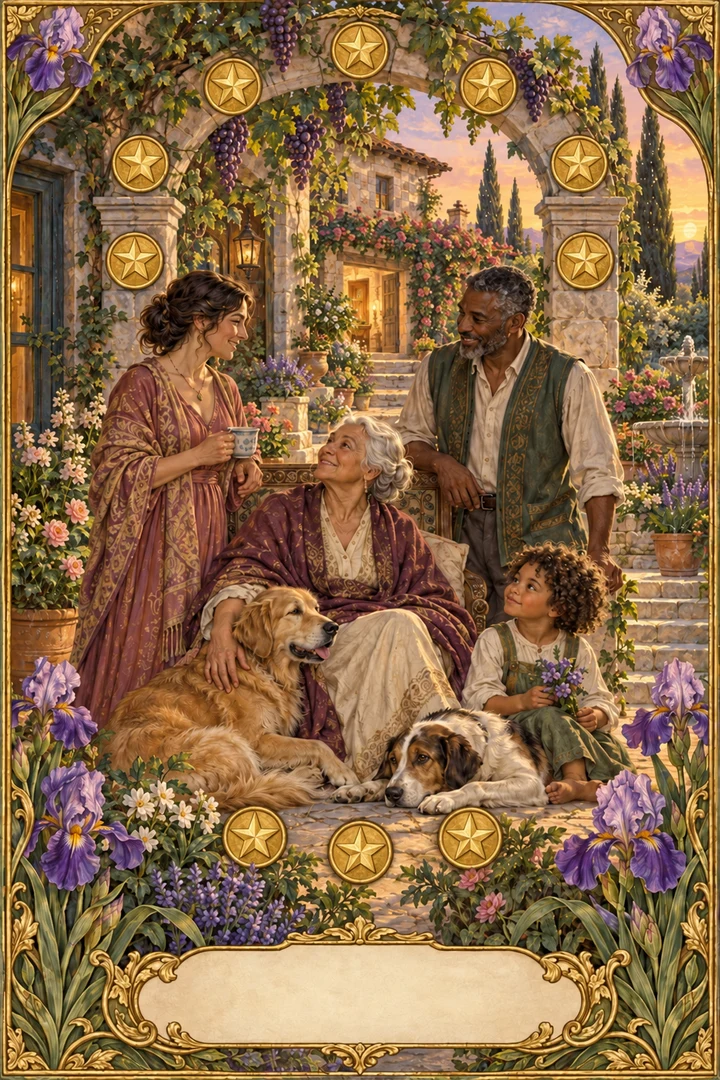
If this feels familiar
You may care about making life steadier for people who come after you. Your own place in that care matters too. A home or community becomes more generous when the arrangement can hear each person. You might notice yourself taking on the role of keeper, or assuming that your preferences can wait. The Ten invites you to include yourself in the foundation you are building.
A line to keep
Belonging can make room for the life I actually have.
- Upright meaning
- Shared foundations · continuity · belonging · stewardship · long-term arrangements
- Ten of Pentacles reversed
- Exclusion · inherited expectations · unsettled agreements · unequal access to support
Upright meaning
The Ten of Pentacles is often read as a shared foundation: the practical arrangements, habits and resources that hold a household or community together over time. Several generations, dogs and an arch widen the image from one person to a household. Ask what practical foundations help people belong and who is included in decisions. A lasting arrangement can be built with chosen family as well as relatives. Stewardship here means tending what you have inherited or built, while leaving room for others to shape it too.
A household creates a shared plan for chores, visitors and quiet time. Revisit it with everyone who lives there, including the person whose preferences are usually assumed. The action is making the arrangement visible and open to adjustment, so that belonging is not just a feeling but a practice.
Ten of Pentacles reversed
An established arrangement may leave someone outside or attach help to expectations they cannot freely choose. Name the specific agreement and who has a voice. Tradition alone does not make a rule fair. Reversed, the Ten can also point to internalised pressure to continue a family pattern, or to support that comes with strings attached. The question is not whether tradition is good or bad, but whether the people affected can speak and be heard.
You are expected to host a family gathering because it has always been done that way. Before agreeing, you say, ‘I can host if we share the work and I can leave by nine.’ The action is naming a limit and inviting a real conversation about what the arrangement requires.
Ten of Pentacles in love and relationships
Discuss everyday foundations and long-term wishes without assuming a single model of family. A warm image cannot guarantee marriage, children, inheritance or relationship security. In love, the Ten asks what kind of shared life you are actually building, and whether both people have a say in it. Reversed, notice if one person's needs are treated as optional while the other's expectations set the terms.
You and your partner talk about how you want to handle holidays, money and time with relatives. Instead of assuming you will follow one family's tradition, you each name what matters and look for a workable compromise that includes you both.
Ten of Pentacles: yes or no?
A conditional yes to a shared arrangement with clear terms and room for everyone affected. Pause when belonging is made dependent on obedience or unequal sacrifice. In a yes/no convention, upright often leans yes to building or reviewing a shared structure, provided the terms are fair and open to discussion. Reversed, the answer may be no until the agreement is renegotiated. Tarot readers do not share one universal yes/no rule, and no card can guarantee a specific outcome.
For ‘Should we move in together?’, an upright yes can support the next conversation about practicalities. For ‘Will this arrangement make everyone happy?’, the result depends on whether each person's needs are heard. Reversed, you may need to pause and renegotiate before saying yes.
A yes/no lean is a storytelling convention, not a probability or reliable prediction. Check real information before acting, especially about safety, money or another person's intentions.
Work, study and creative life
Consider the structures that sustain work beyond one person: documentation, shared knowledge and fair access. In a money or inheritance context, use real records and appropriate professional guidance. At work, the Ten can point to the value of mentorship, clear processes and making sure that credit and opportunity are not reserved for a few. Reversed, check whether informal rules or unspoken hierarchies keep some people from contributing fully.
A team relies on one person's undocumented knowledge. You suggest a shared file where everyone can add notes and ask questions. The action is making the foundation visible so that the work does not depend on one person's memory or goodwill.
How this card differs from nearby cards
Nine of Pentacles enjoys personal space; Ten considers shared continuity. Four of Wands marks a welcome or milestone, while Ten asks about the foundation behind repeated everyday life. The Ten is not simply a bigger Nine; it shifts the focus from individual comfort to the structures that hold a group over time. Four of Wands celebrates a moment, while Ten tends the ordinary routines that follow.
Common misreadings
Ten coins cannot promise wealth, inheritance, a wedding or a future family. A traditional household is not the only legitimate source of belonging. The card does not guarantee that an arrangement will last, nor does it mean that everyone involved is equally supported. Keep the interpretation near what you can actually observe and discuss, rather than treating the image as a promise.
Reading lens, not a verdict
These readings use symbols to reflect on experiences you recognise. They cannot establish events, financial outcomes or another person's private feelings. Reversed meanings explore how a theme may be internal, blocked or overused; they are a separate reference, since the one-card draw uses upright cards. Yes/no interpretations are conditional editorial conventions, not guarantees or a universal rule.
Traditional symbolism
The traditional Ten of Pentacles shows an older figure, a couple, a child and dogs beneath an arch, with ten coins arranged in a tree-like pattern. Selfetti keeps those recognisable elements in a flowering stone courtyard. We read the arch and the gathered figures as a question about who belongs and who decides. The garden, vines and golden frame belong to our original setting; they do not add a separate prediction to the card.
A question to keep
Who is supported by this arrangement, and whose needs have not been heard?
One small experiment
Review one shared household or team agreement. Invite a specific affected person to name one change that would make it more workable.
Questions worth asking
Does Ten guarantee inheritance or marriage?
No. The Ten of Pentacles is a symbolic image, not a promise of money, property or a wedding. It can point to shared foundations and long-term arrangements, but real outcomes depend on actual circumstances, decisions and information you can verify.
Can it apply to chosen family?
Yes. The card's theme of belonging and shared foundations can describe friends, chosen family or community as well as relatives. The question is who is included in decisions and whether the arrangement can hear each person's needs.
How is it different from Four of Wands?
Four of Wands often marks a welcome, celebration or milestone. Ten of Pentacles asks about the everyday foundation behind that moment: the routines, agreements and structures that sustain a shared life over time.
What does a reversed shared foundation mean?
Reversed, the Ten can point to exclusion, inherited expectations or agreements that leave someone without a voice. It may also suggest internalised pressure to continue a pattern. The invitation is to name the specific arrangement and who is affected.
How to use this interpretation
These are symbolic prompts, not measured personality traits or predictions. Keep a real example beside any interpretation; you can disagree. Do not infer another person's feelings, health or financial outcomes from a card or sign.
Sources and method
V&A · Tarot · Selfetti · A. E. Waite · 1910
Historical image reference: A. E. Waite, The Pictorial Key to the Tarot (1910), illustrated by Pamela Colman Smith. The contemporary readings, life examples, recognition passages and keepsake lines are Selfetti's own editorial interpretation, including the conditional yes/no and reversed themes. Our original celestial garden illustrations adapt the traditional scenes with inclusive figures; ornamental flowers and frames do not add predictions. The one-card draw uses upright cards; reversed meanings are a separate reference.
Selfetti ·
Keep exploring
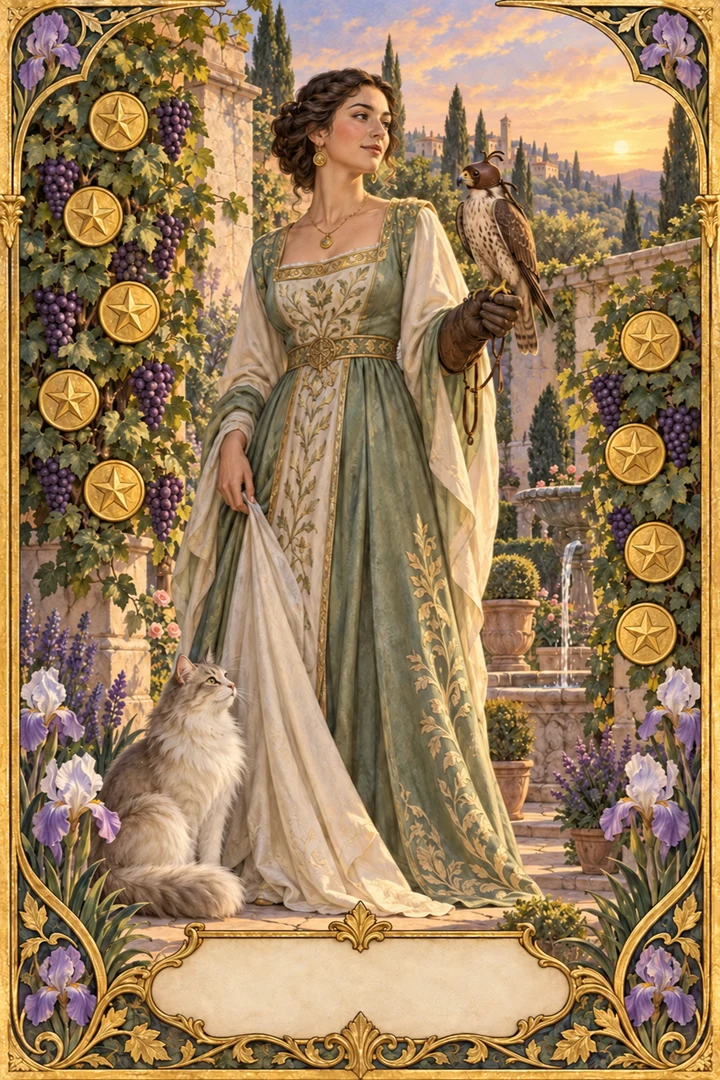
Nine of Pentacles
Enjoying space you have helped make, without needing to earn every moment again.
Read the full guide ↗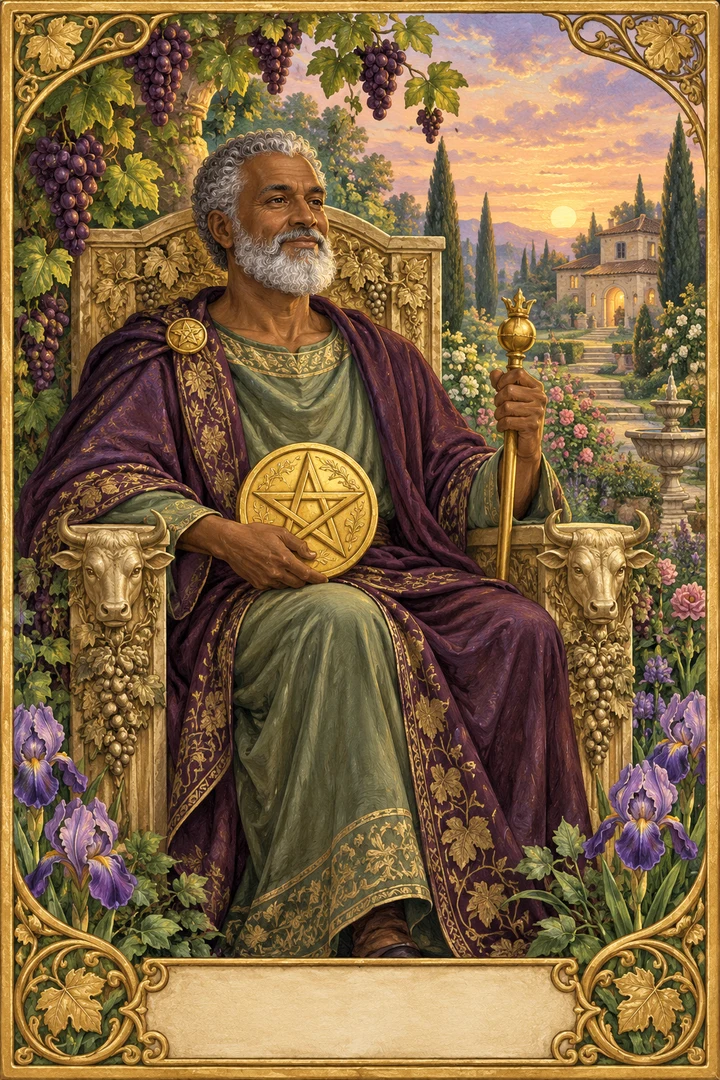
King of Pentacles
Resources become trustworthy through clear terms, care and responsibility for their effects.
Read the full guide ↗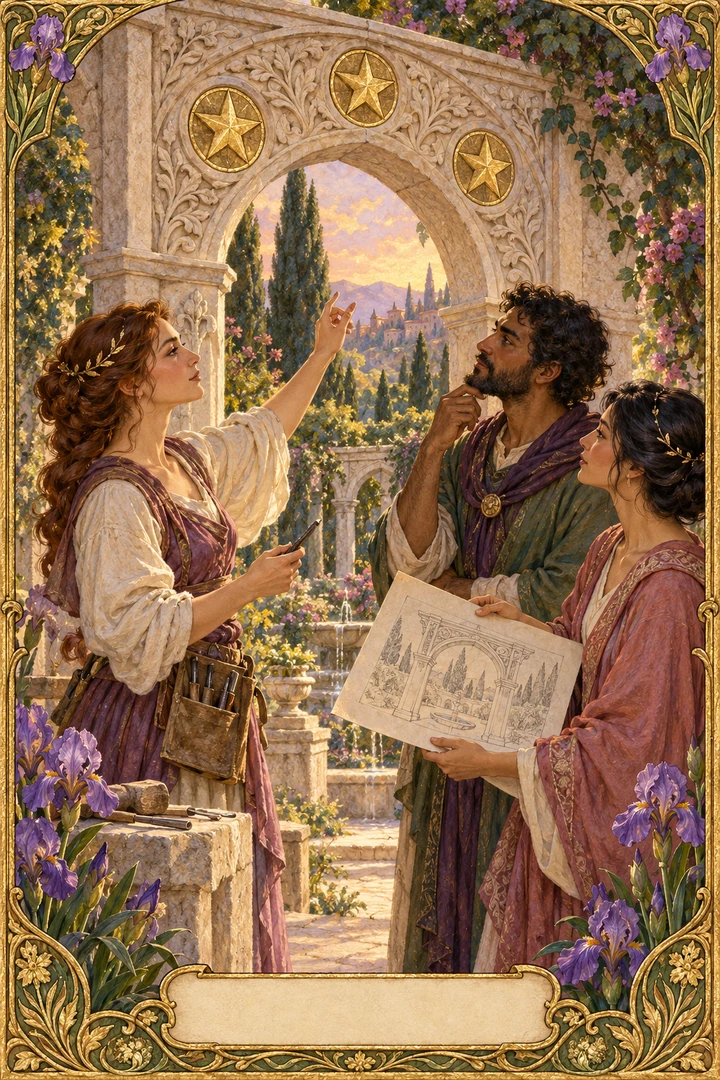
Three of Pentacles
Good work grows when different skills can speak to one another.
Read the full guide ↗