Five of Cups: upright, reversed, love & yes or no
What you hoped for can matter, even when the loss looks small to somebody else.
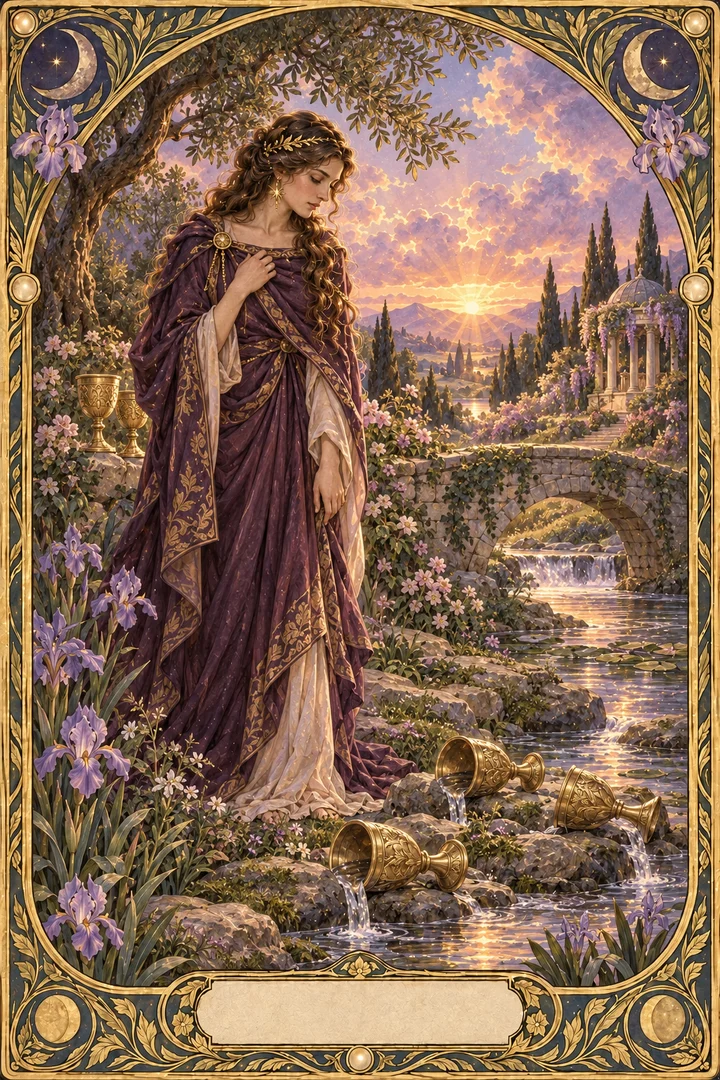
If this feels familiar
You may be carrying a loss that other people describe as minor: a plan that never happened, a quiet ending or a possibility you had begun to imagine. They may not know what you placed in it. You can let that hope matter in your own words, without having to persuade everybody that it was large enough.
A line to keep
What I hoped for is allowed to matter.
- Upright meaning
- Disappointment · loss · regret · a hope unmet · remaining support
- Five of Cups reversed
- Gradual reconnection · receiving support · a changed perspective · grief being hurried
Upright meaning
Upright, the Five of Cups often describes disappointment and attention drawn toward what was lost. A plan can carry hope that other people never saw, so its cancellation may feel larger than the event appears. Begin by naming what mattered. Then, when useful, examine what remains available. You do not have to produce gratitude on demand. The fallen and upright cups give the reading two things to notice without requiring one to cancel the other.
A reunion you had looked forward to is cancelled. Write what you hoped the evening would give you: familiarity, company or time to talk. That detail can help you explain the disappointment and consider another way to meet the need.
Five of Cups reversed
Reversed, the Five can fit a gradual willingness to receive support, a different perspective on a loss or pressure to move on too quickly. Look at the change you can actually notice. You may be ready for a little company without feeling ready to discuss everything. Reconnection need not restore the original situation, and accepting help does not erase what mattered.
After a project ends, a colleague offers to review one reusable piece of your work. If you want the help, accept that specific offer. The draft can have another use while the disappointment about the cancelled project remains real.
Five of Cups in love and relationships
In love, the Five can frame an unmet hope, a missed plan or a loss in the relationship. Say what disappointed you before deciding what it means about the whole connection. Reversed, ask whether there is actual support, changed behaviour or willingness to talk. The card itself cannot establish that affection remains or that somebody will return.
‘I know the change was unavoidable, and I was still disappointed because I had been looking forward to time together’ makes room for both facts. If you want another plan, ask for one and listen to the response.
Five of Cups: yes or no?
In a yes/no convention, upright often leans toward pause or not yet when the question repeats an unmet hope without new information. It may support a yes to receiving available care. Reversed, a small next step can fit if you are ready for it. State the condition clearly; disappointment does not automatically make every action unwise.
For ‘Should I keep asking for the same opportunity?’, check whether anything has changed. For ‘Should I accept a friend's company?’, the answer may be yes if you want it. These are different questions despite sharing a feeling of loss.
A yes/no lean is a storytelling convention, not a probability or reliable prediction. Check real information before acting, especially about safety, money or another person's intentions.
Work, study and creative life
At work and in study, the Five can fit a rejected application, an unsuccessful attempt or a project that will not be completed. Keep the result specific. One refusal does not describe every future opportunity. Reversed, review what can be reused, what feedback is available and whether you want support with another attempt.
After an application is declined, separate the result from the work you did to prepare. Your notes, practice and confirmed skills may still be useful. You can review them when you have the capacity rather than immediately filling the disappointment with another task.
How this card differs from nearby cards
The Three of Swords highlights a painful truth or hurt that needs words. The Five of Cups highlights the hope or experience that feels lost. The Eight of Cups concerns a considered departure. The Six of Cups offers memory and familiar care. These can overlap while drawing attention to different parts of an experience.
Common misreadings
The two upright cups are often reduced to ‘look on the bright side’. That can rush past the meaning of the fallen cups. The image also does not guarantee a reunion. Examine what is truly available rather than inventing a reassuring person or outcome behind the figure.
Reading lens, not a verdict
These readings use symbols to reflect on experiences you recognise. They cannot establish events or another person’s private feelings. Reversed meanings explore different ways a theme may be held, blocked or overused; they need not be a simple opposite. Yes/no readings are conditional conventions rather than guarantees.
Traditional symbolism
The traditional Five of Cups shows a cloaked figure facing three fallen cups, with two still upright behind. A stream, bridge and distant home are part of that historical scene. Selfetti keeps these details in a twilight garden with warm flowers. The two upright cups make something remaining visible; they do not tell us what support exists in a particular reader's life.
A question to keep
What did I hope this would give me?
One small experiment
Finish ‘This mattered because…’. If you want, name one available form of support without asking it to replace what was lost.
Questions worth asking
Does the Five of Cups mean I should focus on the positive?
It invites attention to what was lost and what remains. You can acknowledge disappointment first. The remaining cups are not a demand to be grateful before you are ready.
Does the reversed Five of Cups mean someone will return?
No orientation guarantees a return. Here the reversal can fit receiving support or a changed perspective. A reunion would need evidence from the actual people and circumstances.
How is it different from the Three of Swords?
The Three draws attention to hurt or a painful truth. The Five draws attention to loss and an unmet hope. Consider which part you are trying to understand, without treating either as a diagnosis.
Can I read this card after a small disappointment?
Yes. The meaning you placed in the event may matter more than its public size. Name that meaning and keep any next step proportionate to the real circumstances.
How to use this interpretation
These are symbolic prompts, not measured personality traits or predictions. Keep a real example beside any interpretation; you can disagree. Do not infer another person's feelings, health or financial outcomes from a card or sign.
Sources and method
V&A · Tarot · Selfetti · A. E. Waite · 1910
Historical image reference: A. E. Waite, The Pictorial Key to the Tarot (1910), illustrated by Pamela Colman Smith. Selfetti uses the traditional image as a starting point. The contemporary interpretations, including reversed and conditional yes/no readings, life examples, recognition passage and keepsake line are our own editorial treatment. Our original illustrations adapt the scenes with a celestial garden setting and inclusive adult figures.
Selfetti ·
Keep exploring

Eight of Cups
Something can have mattered and still no longer fit. Leaving can make room for care as well as change.
Read the full guide ↗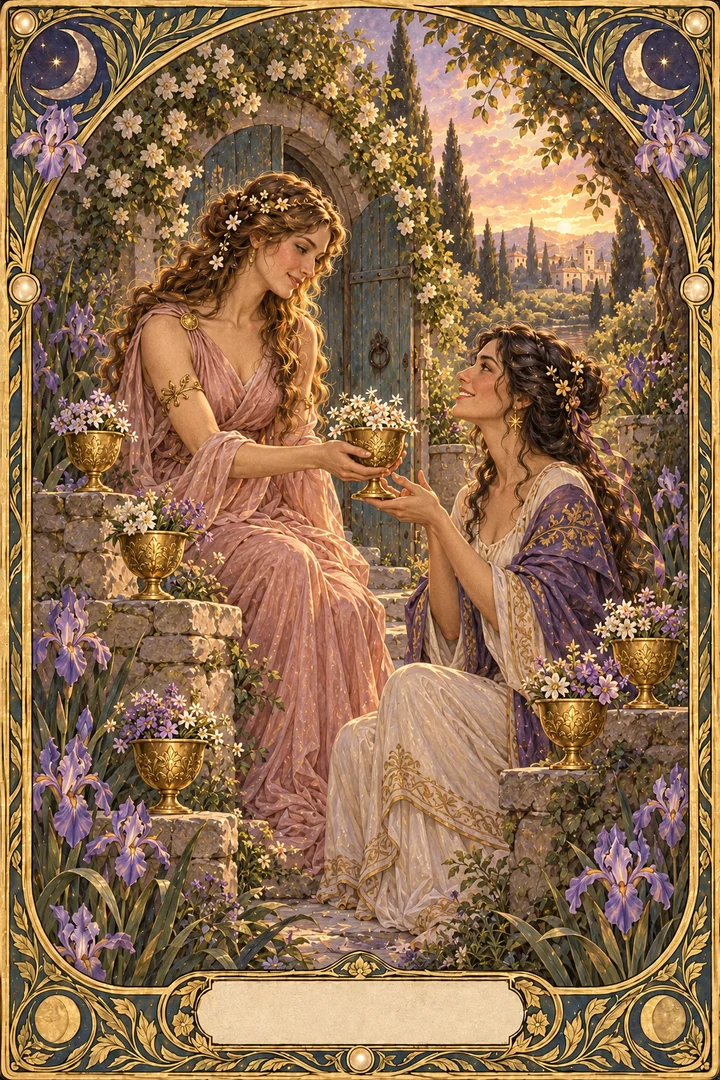
Six of Cups
Familiar kindness and small memories, with room for the person you have become.
Read the full guide ↗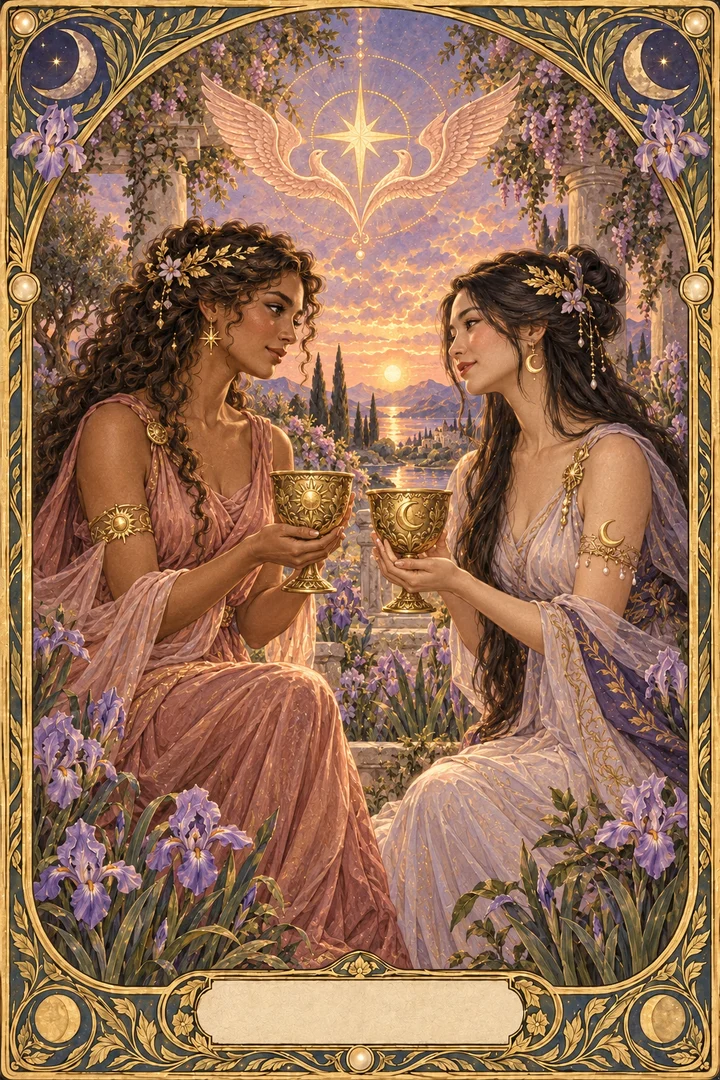
Two of Cups
Meeting at the same height: mutual attention, affection and enough room for two different people.
Read the full guide ↗