Five of Wands: upright, reversed, love & yes or no
Different energies need a way to work together, rather than a winner at any cost.
If this feels familiar
Having a different preference does not make you difficult. You can care about harmony and still contribute an idea that changes the plan. The room needs a fair way to hear you. You may notice that you often hold back your view to keep the peace, or that you jump in competitively without listening. Both patterns are worth seeing. The Five of Wands invites you to bring your energy without turning the conversation into a battle.
A line to keep
My difference can have a place in the conversation.
- Upright meaning
- Different approaches · lively friction · practice · competition · coordination
- Five of Wands reversed
- Avoided disagreement · hidden friction · unhelpful rivalry · a need for shared rules
Upright meaning
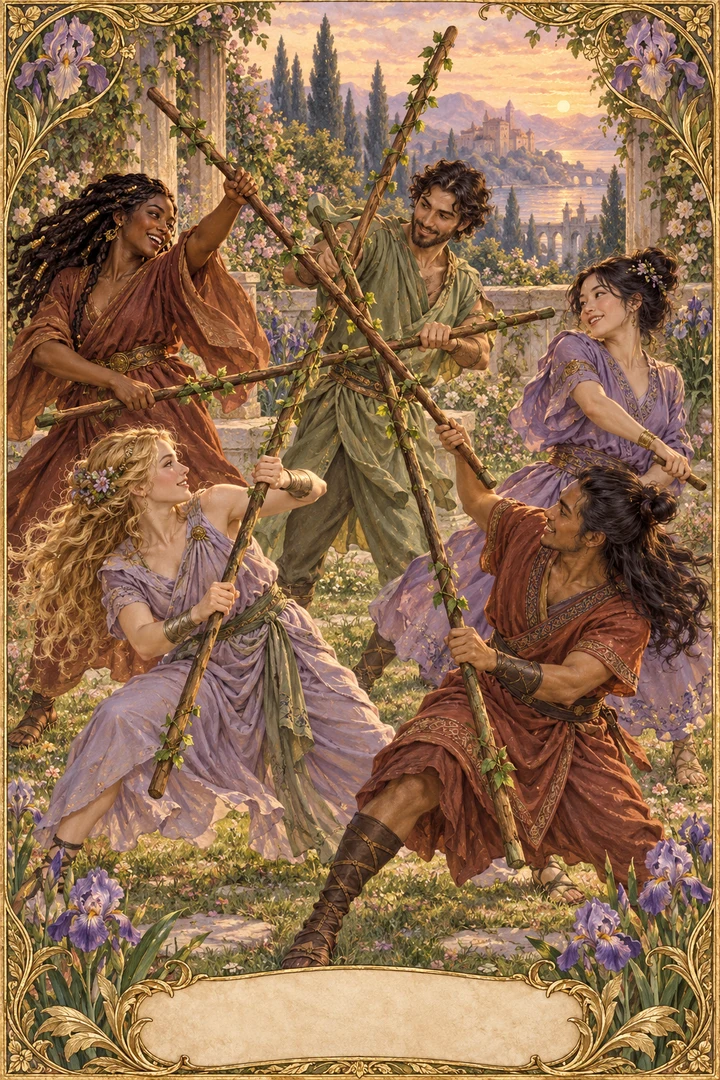
The staffs cross without a settled pattern. Several people may be trying to contribute in different ways, and the friction is not automatically hostile. First distinguish useful debate from a situation that leaves someone unsafe or silenced. Lively disagreement can sharpen an idea, reveal a blind spot or show where coordination is missing. The task is not to eliminate every clash but to give the different energies a fair way to meet. A shared rule, a clear decision and a turn for each voice can turn scattered effort into something workable.
A group has five suggestions for a weekend plan. Agree on budget and travel time before deciding whose idea to use. Each person gets two minutes to make their case, then the group chooses one plan and one backup. The friction stays lively rather than personal, and everyone knows how the decision will be made.
Five of Wands reversed
A quiet room may hide disagreement, or competition may have become exhausting. Name one difference that can be discussed and one rule that helps people take turns. Leaving a hostile setting can be more appropriate than improving the debate. Reversed does not simply mean peace; it can point to avoided conflict, simmering tension or rivalry that has worn everyone down. The useful question is whether the silence protects anyone or only postpones a needed conversation. Shared rules can make disagreement safer, but they cannot fix a situation where someone is being mistreated.
You notice you have stopped suggesting ideas because a colleague always overrides them. Instead of staying quiet, you ask for a simple rule: each person presents one option before the group decides. If that request is ignored or mocked, you may need to step back from the discussion rather than keep absorbing the friction.
Five of Wands in love and relationships
Compare the actual disagreement: time, attention, plans or how decisions are made. A difference is not proof of betrayal. Both people need a chance to speak without intimidation. In love, the Five of Wands can show two people with different rhythms or preferences trying to find a shared way forward. The friction may be about logistics, energy or how much togetherness feels right. Name the specific issue rather than turning it into a verdict on the relationship. A fair conversation includes room for both voices and a willingness to adjust.
One of you wants a quiet night in; the other wants to see friends. Instead of arguing about who cares more, you agree on a simple trade: this Friday is quiet, next Friday is social. The disagreement becomes a coordination problem, not a measure of love.
Five of Wands: yes or no?
Pause until the terms and participants are clear. A conditional yes can fit a fair challenge; the card cannot guarantee that competition will be healthy. In a yes/no reading, the Five of Wands often leans toward a qualified answer: yes, if the rules are fair and everyone can speak; no, if the situation is already hostile or someone is being silenced. The card does not promise that friction will resolve well. It asks you to check whether the disagreement has a workable structure before you commit.
For ‘Should I join the debate team?’, an upright yes may fit if you enjoy lively practice and the coaches keep it fair. For ‘Will this argument end well?’, the card cannot promise that. Reversed, you might ask for clearer rules before saying yes.
A yes/no lean is a storytelling convention, not a probability or reliable prediction. Check real information before acting, especially about safety, money or another person's intentions.
Work, study and creative life
Use clear criteria and roles to turn competing suggestions into a decision. Check whether the pressure to win is replacing the task everyone agreed to do. At work or in study, the Five of Wands often appears when several people have good ideas but no shared method for choosing. A deadline, a budget or a clear owner can help. Watch for the moment when debate stops serving the work and starts serving egos. The goal is not to silence anyone but to give the group a way to move.
Two teammates propose different designs for the same project. You suggest scoring each option against three agreed criteria: cost, timeline and user need. The discussion becomes a comparison rather than a contest, and the team can choose without someone losing face.
How this card differs from nearby cards
Five explores several energies crossing. Seven protects a position. Five of Swords concerns the cost of winning; these are not interchangeable forms of conflict. The Five of Wands is about coordination and lively friction among peers. The Seven of Wands is about defending a stance when you feel outnumbered. The Five of Swords is about the aftermath of a win that leaves others diminished. Each card asks a different question about how conflict is handled.
Common misreadings
Five staffs cannot reveal secret enemies, how many rivals you have or another person's motives. Not every disagreement is valuable, and no one owes patience to mistreatment. The card does not say you are surrounded by foes or that you should tolerate hostility. It describes friction that may be creative or destructive, depending on the rules and the safety of the people involved. If someone is being harmed, the answer is not better debate but protection and boundaries.
Reading lens, not a verdict
These readings use symbols to reflect on experiences you recognise. They cannot establish events, financial outcomes or another person's private feelings. Reversed meanings explore how a theme may be internal, blocked or overused; they are a separate reference, since the one-card draw uses upright cards. Yes/no interpretations are conditional editorial conventions, not guarantees or a universal rule.
Traditional symbolism
The traditional Five of Wands shows five figures raising staffs in a chaotic clash, often read as competition or conflict. Selfetti keeps the five crossing staffs but sets them in a garden clearing, where five diverse adult friends in russet, sage and lilac tunics hold their own leafy staffs in a playful coordinated practice. The crossed angles show different approaches meeting; the animated faces stay friendly. No battle or injury. The garden, flowers and dignity of choice belong to our adaptation, not the original card.
A question to keep
What shared rule would make this disagreement easier to work with?
One small experiment
Name the decision and one fair criterion. Give each person a turn before choosing the next step.
Questions worth asking
Does Five mean enemies?
No. The Five of Wands often shows lively friction among people with different approaches, not hidden enemies. It can be creative or exhausting. Look at whether the disagreement has fair rules and whether anyone is being silenced or harmed.
How is it different from Five of Swords?
Five of Wands is about coordinating different energies. Five of Swords concerns the cost of winning and the fallout when a victory leaves others diminished. One asks how to work together; the other asks what a win has cost.
Does reversed Five mean peace?
Not necessarily. Reversed can point to avoided disagreement, hidden friction or exhaustion from rivalry. It may look quiet on the surface while tension continues underneath. The useful question is whether the silence protects anyone or only postpones a needed conversation.
When is disengaging a better choice?
When the disagreement is hostile, someone is being mistreated or the rules keep changing unfairly. Leaving can be more appropriate than trying to improve the debate. You do not owe patience to a situation that harms you.
How to use this interpretation
These are symbolic prompts, not measured personality traits or predictions. Keep a real example beside any interpretation; you can disagree. Do not infer another person's feelings, health or financial outcomes from a card or sign.
Sources and method
V&A · Tarot · Selfetti · A. E. Waite · 1910
Historical image reference: A. E. Waite, The Pictorial Key to the Tarot (1910), illustrated by Pamela Colman Smith. The contemporary readings, life examples, recognition passages and keepsake lines are Selfetti's own editorial interpretation, including the conditional yes/no and reversed themes. Our original celestial garden illustrations adapt the traditional scenes with inclusive figures; ornamental flowers and frames do not add predictions. The one-card draw uses upright cards; reversed meanings are a separate reference.
Selfetti ·
Keep exploring

Seven of Wands
A boundary can be firm without becoming your whole way of meeting the world.
Read the full guide ↗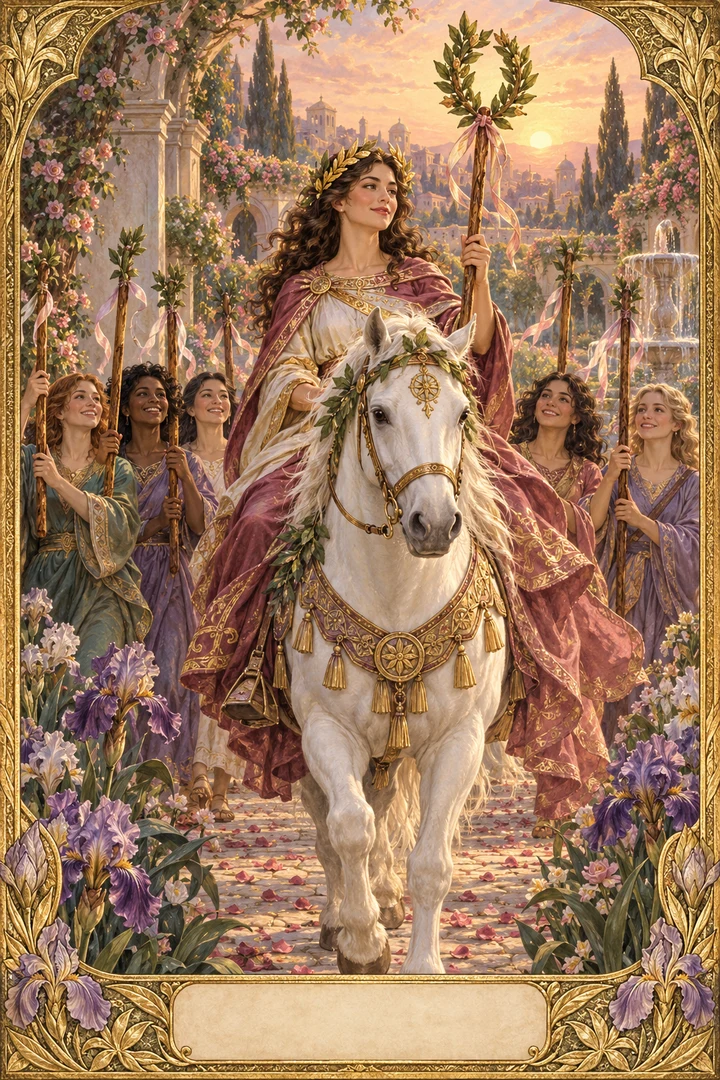
Six of Wands
Let recognition reach you, and remember the people behind the visible moment.
Read the full guide ↗
King of Wands
A direction becomes trustworthy when the person setting it also carries responsibility.
Read the full guide ↗