Four of Wands: upright, reversed, love & yes or no
A welcome you can stand inside, with room to mark what you have made together.
If this feels familiar
You may be the person who remembers to make a place warm for others. You are allowed to enjoy the welcome too. Something does not need to be flawless before it can be shared. If you often organise the gathering, notice whether you also get to sit down. A milestone can be acknowledged in a way that fits your energy, even if that means a quiet moment rather than a party.
A line to keep
What we have made deserves a moment of welcome.
- Upright meaning
- Welcome · shared milestone · a stable base · celebration · belonging
- Four of Wands reversed
- An uneasy welcome · private celebration · unsettled foundations · different expectations
Upright meaning
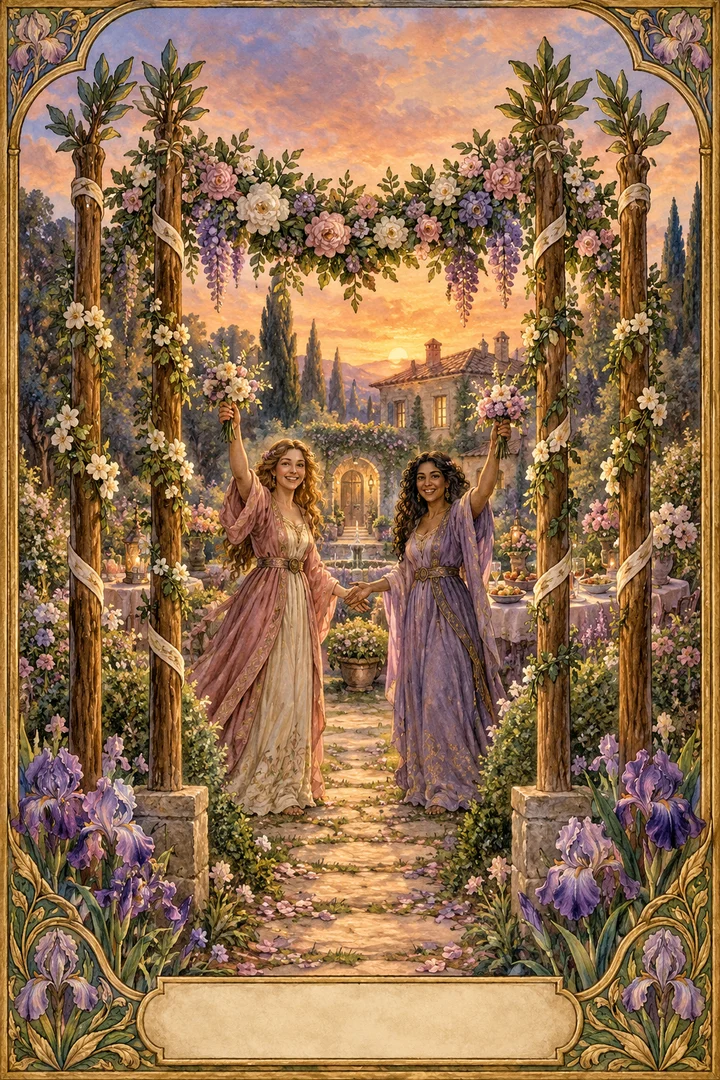
Four staffs and a garland make an open threshold. A milestone can be small: finishing a shared task, finding a rhythm at home or making someone welcome. Pause to recognise the support behind it. The card often points to a stable base you have built together, whether that is a household, a friendship or a team. It does not require a grand event. A quiet acknowledgment can be enough. Notice who helped you get here, and let yourself enjoy the welcome too.
After moving into a room, invite a friend for tea before everything is perfectly arranged. A welcome can begin with somewhere to sit and an honest sense of relief. You do not need matching mugs or a finished shelf to mark the step.
Four of Wands reversed
A gathering or household may look settled while someone feels left out. You may prefer a private celebration. Check what makes welcome tangible rather than requiring everyone to enjoy the same ritual. Reversed, the theme can turn inward: a milestone you have not acknowledged, a foundation that feels unsteady or expectations that do not match. It is not a literal opposite. Ask what would make belonging feel real for you, and whether the current form of celebration actually fits.
You attend a family dinner but spend the evening helping in the kitchen and miss the toast. Later, you mark the occasion alone with a favourite song. The private ritual is valid; you can also tell someone what would help you feel included next time.
Four of Wands in love and relationships
Ask what home and shared occasions mean to each person. A joyful meeting does not itself establish commitment, marriage or safety; notice the everyday agreement behind it. In love, the Four of Wands can highlight a sense of belonging or a milestone you want to celebrate together. It may also reveal different expectations about what home looks like. The card does not guarantee a wedding or reunion. It invites you to talk about the small rituals that make a relationship feel like a base.
You and your partner realise you both want a weekly dinner without phones. You try it for a month and check in. The ritual becomes a way to mark your shared life, not a test of the relationship.
Four of Wands: yes or no?
A conditional yes to a welcome or celebration when you want it and the practical arrangements are clear. Clarify the invitation if you feel pressure to participate. In a yes/no convention, upright often leans yes to marking a milestone or accepting a welcome. Reversed, pause and check whether the celebration fits your energy or whether the foundation needs attention first. Tarot readers do not share one universal yes/no rule, and the card cannot guarantee a specific outcome.
For ‘Should I host a small gathering?’, an upright yes can support it if you have the capacity. For ‘Will everyone enjoy it?’, the card cannot promise that. Reversed, you might choose a quieter acknowledgment instead.
A yes/no lean is a storytelling convention, not a probability or reliable prediction. Check real information before acting, especially about safety, money or another person's intentions.
Work, study and creative life
Mark a team's completed step and credit the people who made it possible. A celebration becomes hollow when unfinished responsibilities or uneven workloads cannot be discussed. At work or study, the Four of Wands can point to a stable team, a finished project or a welcoming environment. It asks you to recognise the support behind the result. If the foundation feels shaky, name what is missing before raising a toast. A genuine pause can strengthen the base for the next step.
After a project launch, you suggest a short team lunch and thank each person for a specific contribution. You also note one process that still needs attention, so the celebration does not paper over the next task.
How this card differs from nearby cards
The Four of Wands marks a shared base or occasion; the Three of Cups celebrates companionship; the Ten of Pentacles looks at foundations across a household and time. The Four is often about a threshold you cross together, while the Three is more about friendship and social joy. The Ten considers legacy and long-term stability. These are different questions rather than guaranteed stages.
Common misreadings
The garland does not guarantee a wedding, reunion or a perfect home. Belonging can be built with friends, chosen family or a private ritual. The card is not evidence of another person's feelings, and it does not promise that a celebration will resolve underlying tensions. Keep the interpretation near an experience you recognise rather than turning the garland into a contract.
Reading lens, not a verdict
These readings use symbols to reflect on experiences you recognise. They cannot establish events, financial outcomes or another person's private feelings. Reversed meanings explore how a theme may be internal, blocked or overused; they are a separate reference, since the one-card draw uses upright cards. Yes/no interpretations are conditional editorial conventions, not guarantees or a universal rule.
Traditional symbolism
The traditional Four of Wands shows four upright staffs topped with a garland of flowers, often with two figures celebrating beneath it. Selfetti keeps the four leafy wooden wands and the abundant floral garland, but sets them in a garden where two adult friends raise small bouquets in a warm homecoming welcome. A distant garden house suggests celebration without wedding symbolism. The open floral gateway is a threshold you can step through, not a barrier. The flowers and garden belong to our original setting; they do not add a separate prediction to the card.
A question to keep
What small milestone would I like to acknowledge, and with whom?
One small experiment
Mark one completed step with a small ritual. Thank someone specifically, and choose a form of celebration that fits your energy.
Questions worth asking
Does Four predict marriage?
No. The Four of Wands can symbolise a shared milestone or a sense of home, and marriage is one possible context. It does not guarantee a wedding or commitment. Look at the everyday agreements and rituals that already exist between you.
Can the reversed Four describe a private celebration?
Yes. Reversed, the card can fit a celebration you prefer to keep private, or a gathering that feels uneasy. It may also point to a milestone you have not acknowledged. Check what kind of welcome feels genuine for you.
How is it different from Three of Cups?
The Three of Cups often highlights friendship, community and social joy. The Four of Wands adds a sense of a stable base or threshold, such as a homecoming or a shared achievement. The Three is more about the company; the Four is about the place you build together.
What if home does not feel welcoming?
The card does not promise that every home is warm. If your home feels unsettled, the Four can invite you to notice what is missing and what small change might help. Belonging can also be found with friends, chosen family or a private ritual.
How to use this interpretation
These are symbolic prompts, not measured personality traits or predictions. Keep a real example beside any interpretation; you can disagree. Do not infer another person's feelings, health or financial outcomes from a card or sign.
Sources and method
V&A · Tarot · Selfetti · A. E. Waite · 1910
Historical image reference: A. E. Waite, The Pictorial Key to the Tarot (1910), illustrated by Pamela Colman Smith. The contemporary readings, life examples, recognition passages and keepsake lines are Selfetti's own editorial interpretation, including the conditional yes/no and reversed themes. Our original celestial garden illustrations adapt the traditional scenes with inclusive figures; ornamental flowers and frames do not add predictions. The one-card draw uses upright cards; reversed meanings are a separate reference.
Selfetti ·
Keep exploring
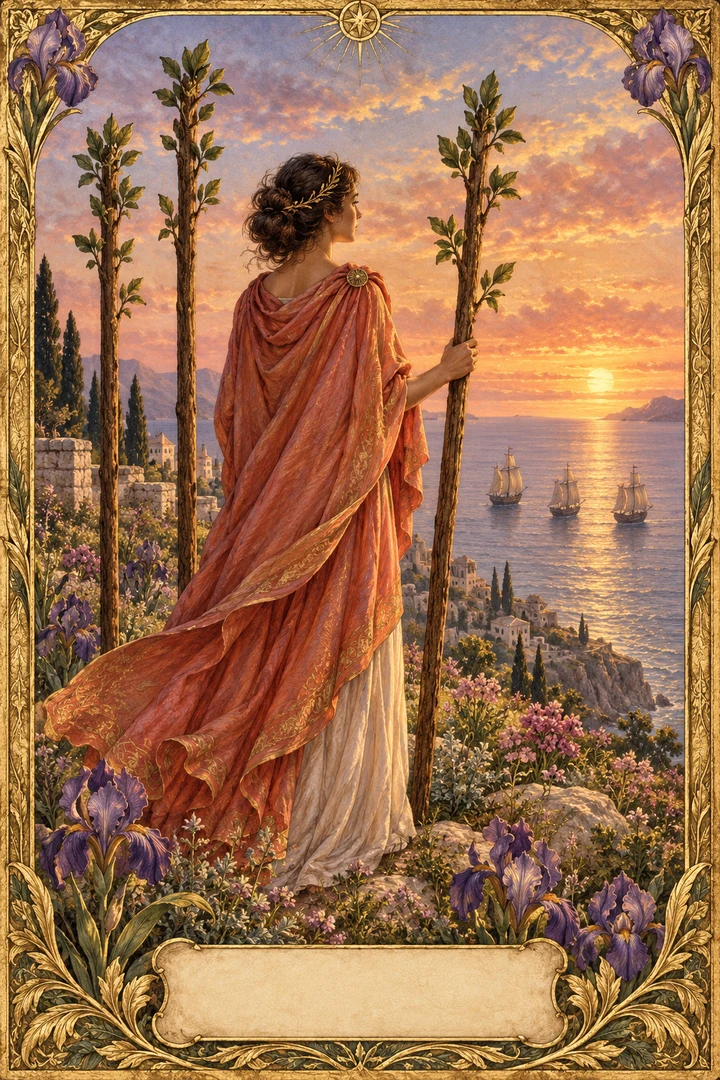
Three of Wands
Letting a first effort meet the world, and noticing what comes back.
Read the full guide ↗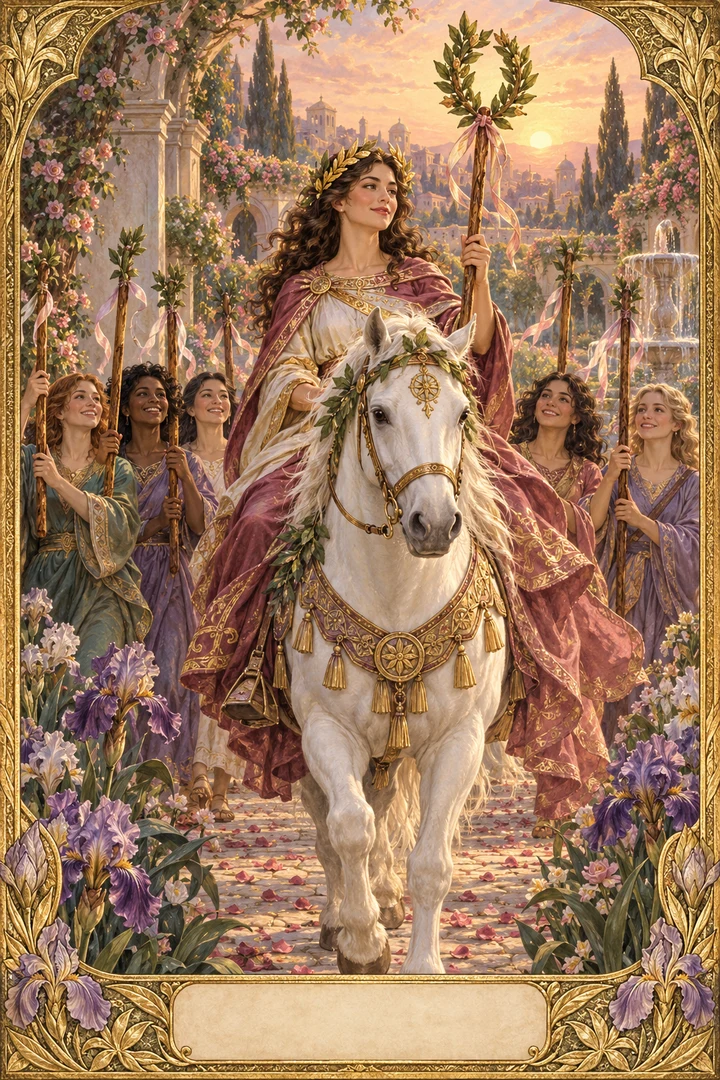
Six of Wands
Let recognition reach you, and remember the people behind the visible moment.
Read the full guide ↗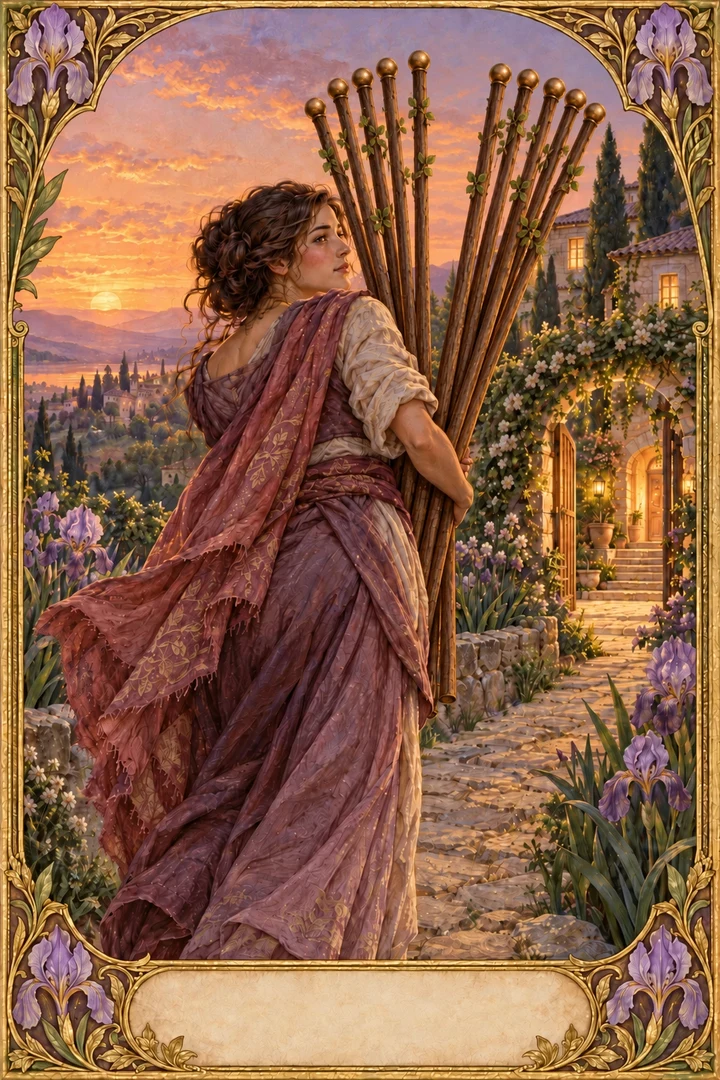
Ten of Wands
What you carry can be important and still be too much for one person.
Read the full guide ↗