Knight of Cups: upright, reversed, love & yes or no
Let a lovely intention become a considerate invitation, with room for someone else's answer.
If this feels familiar
You may be willing to make the first warm gesture and imagine something lovely to share. That effort can feel exposed when you do not know the answer. Keep the part of the intention that cares about the person, including their freedom to choose. A simpler offer may carry that care especially well.
A line to keep
I can let care take a form someone can receive.
- Upright meaning
- Invitation · creative devotion · affection in action · considerate approach · follow-through
- Knight of Cups reversed
- Idealisation · promises ahead of action · missed needs · intention needing clarity
Upright meaning
Upright, the Knight of Cups is often associated with an invitation, romance or pursuing an ideal with feeling. Make the theme useful by examining the action that carries the intention. A beautiful offer needs a real time, an appropriate scale and room to decline. Enthusiasm becomes more considerate when it includes attention to what the recipient wants, rather than only how you imagined giving.
Instead of saying ‘I will take you somewhere amazing’, ask whether the person would enjoy a particular outing and suggest a realistic date. An invitation can be thoughtful without keeping all the details secret or making refusal awkward.
Knight of Cups reversed
Reversed, the ideal may have run ahead of the practical offer. Promises can sound warm while remaining vague, or a gesture may suit the giver better than the recipient. Check what has been agreed and what has actually happened. You may need to reduce the promise, ask about a preference or acknowledge that your intention was not received as you hoped.
You plan an elaborate surprise for somebody who has asked for quiet time. Pause and ask what would feel welcome. Revising the plan can be a way of respecting the person rather than protecting the beauty of your original idea.
Knight of Cups in love and relationships
In love, the Knight can frame making an affectionate approach and keeping it connected to consistent behaviour. Reversed, compare the promise with follow-through rather than reading charm as certainty. The card cannot identify a future partner or certify anybody's sincerity. A caring intention should be able to hear the other person's preference.
If you offer another date, include a day you can keep. If the recipient chooses a quieter plan, notice whether you can enjoy adapting the offer. Warmth can have an ordinary practical form.
Knight of Cups: yes or no?
Upright may lean yes to a thoughtful invitation or creative approach when the intention is clear and the action realistic. Reversed invites clarifying the promise and the recipient's needs first. A yes to making an offer does not imply a yes from the person receiving it.
For ‘Should I invite them?’, one specific, respectful offer may fit. For ‘Will they accept?’, their answer remains unknown. Reversed, review whether you are offering something they might welcome or asking them to take part in your ideal scene.
A yes/no lean is a storytelling convention, not a probability or reliable prediction. Check real information before acting, especially about safety, money or another person's intentions.
Work, study and creative life
For work and study, the Knight can stand for pursuing a creative idea with commitment. Translate the appealing vision into a task and an agreement others can examine. Reversed, check whether enthusiasm has produced promises beyond your capacity or whether the idea's presentation is more developed than the work.
Pitch a small first version with a scope and date you can meet. Ask which part would be most useful to the team. A beautiful proposal can stay connected to a deliverable rather than growing with every conversation.
How this card differs from nearby cards
The Page of Cups gives a small feeling expression. The Knight turns an intention into an approach. The Two of Cups adds mutual response. The Knight of Swords highlights speed and direction; this Knight asks about emotional pace and how an offer lands.
Common misreadings
The Knight does not guarantee a romantic partner, proposal or ideal person. Court names can describe ways of acting, not fixed identities. Charm is one observable quality; reliability needs its own evidence over time.
Reading lens, not a verdict
These readings use symbols to reflect on experiences you recognise. They cannot establish events or another person’s private feelings. Reversed meanings explore different ways a theme may be held, blocked or overused; they need not be a simple opposite. Yes/no readings are conditional conventions rather than guarantees.
Traditional symbolism
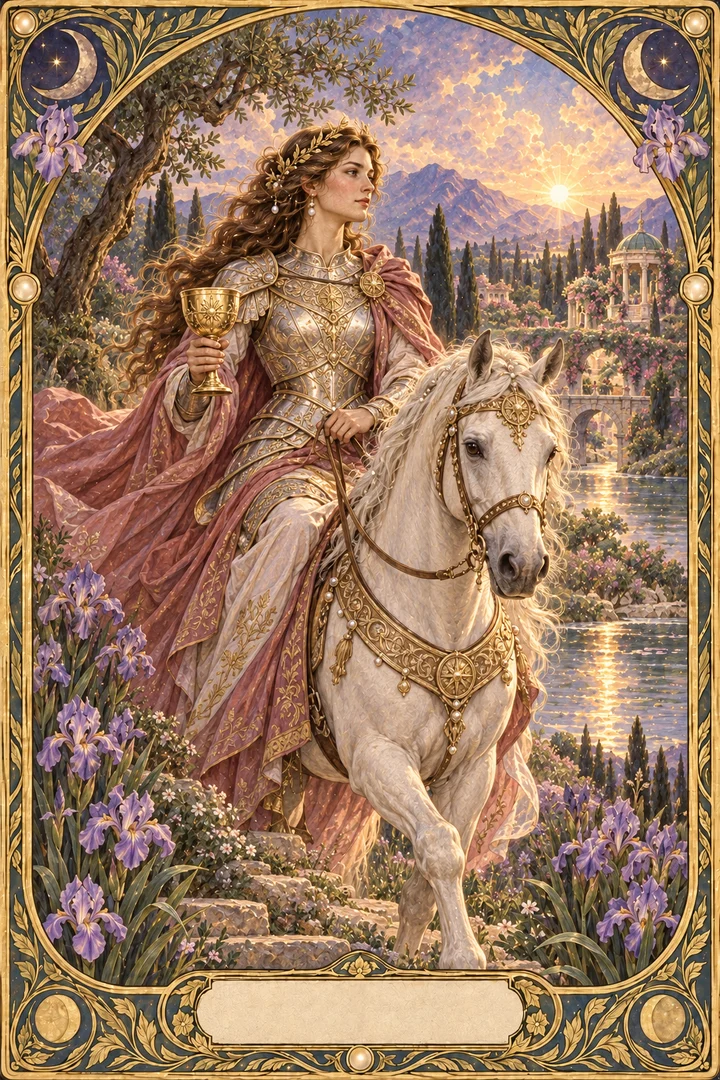
The traditional Knight of Cups approaches on a pale horse while holding one cup, with water in the landscape. Selfetti keeps a calm rider and horse beside a stream in the garden. The unhurried approach offers a visual contrast with the speed of the Knight of Swords. Our reading uses that pace to ask whether an invitation can be received comfortably.
A question to keep
What would make this invitation comfortable to receive?
One small experiment
Give one offer a realistic time and scope. Ask about the recipient's preference and leave a straightforward way to decline.
Questions worth asking
Does the Knight of Cups mean a romantic offer?
An invitation or affectionate approach is a common association. It cannot establish that an offer will arrive or identify who would make it. Read the actual exchange.
What does the reversed Knight of Cups mean?
Here it can fit idealisation or a promise that needs practical clarity. Compare what is said with what is agreed and done, without diagnosing somebody from the card.
How is it different from the Page of Cups?
The Page concerns a first small expression. The Knight concerns carrying an intention into action. Sincerity and dependable follow-through can each need attention.
Can this card apply to creative work?
Yes. A beautiful idea can become a proposal or first version with a realistic scope. Use the theme to connect devotion to work others can examine.
How to use this interpretation
These are symbolic prompts, not measured personality traits or predictions. Keep a real example beside any interpretation; you can disagree. Do not infer another person's feelings, health or financial outcomes from a card or sign.
Sources and method
V&A · Tarot · Selfetti · A. E. Waite · 1910
Historical image reference: A. E. Waite, The Pictorial Key to the Tarot (1910), illustrated by Pamela Colman Smith. Selfetti uses the traditional image as a starting point. The contemporary interpretations, including reversed and conditional yes/no readings, life examples, recognition passage and keepsake line are our own editorial treatment. Our original illustrations adapt the scenes with a celestial garden setting and inclusive adult figures.
Selfetti ·
Keep exploring
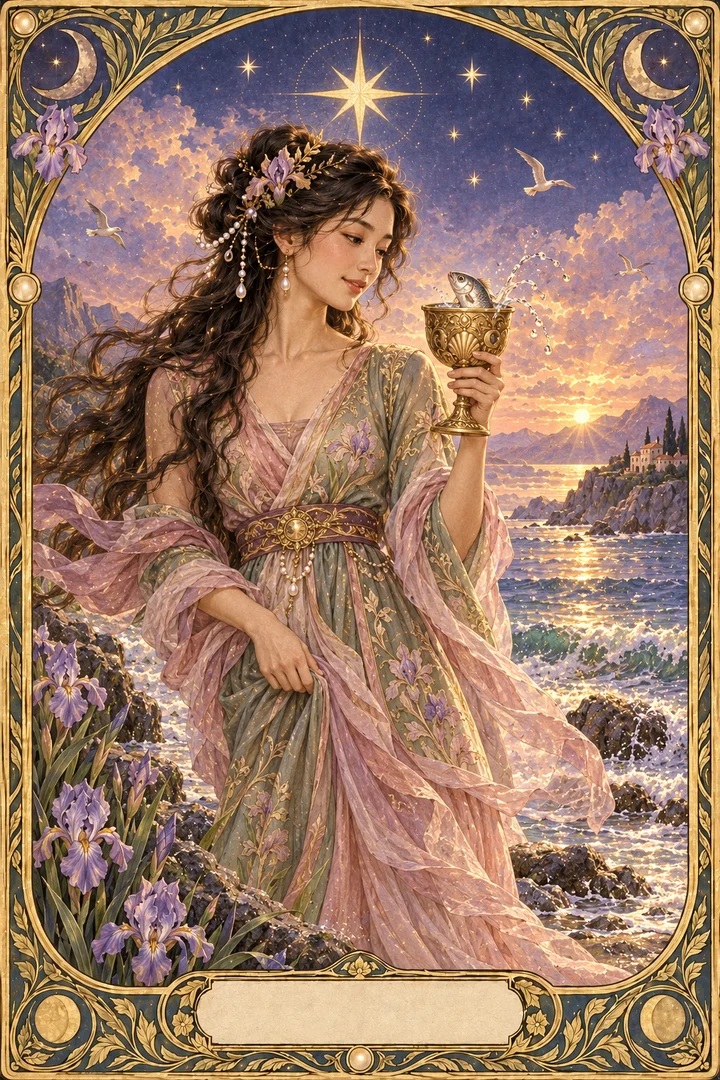
Page of Cups
A small feeling catches your attention. Give its first expression a gentle place to begin.
Read the full guide ↗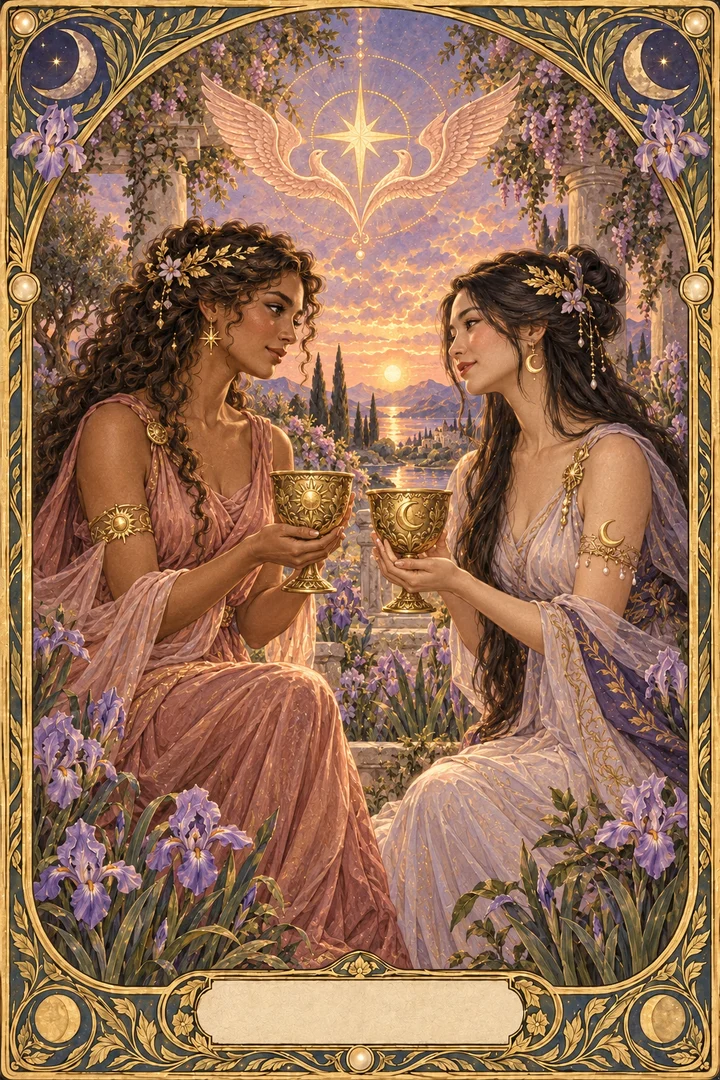
Two of Cups
Meeting at the same height: mutual attention, affection and enough room for two different people.
Read the full guide ↗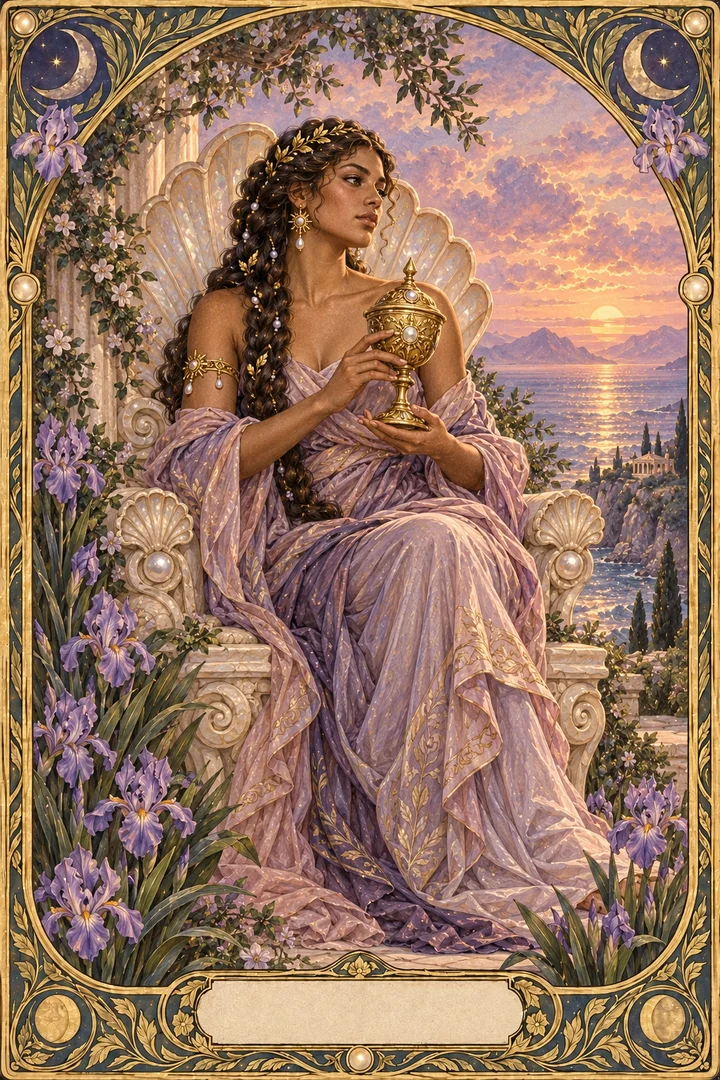
Queen of Cups
Careful attention, a cup held close and a shore of your own. Listening can have a boundary.
Read the full guide ↗