Page of Cups: upright, reversed, love & yes or no
A small feeling catches your attention. Give its first expression a gentle place to begin.
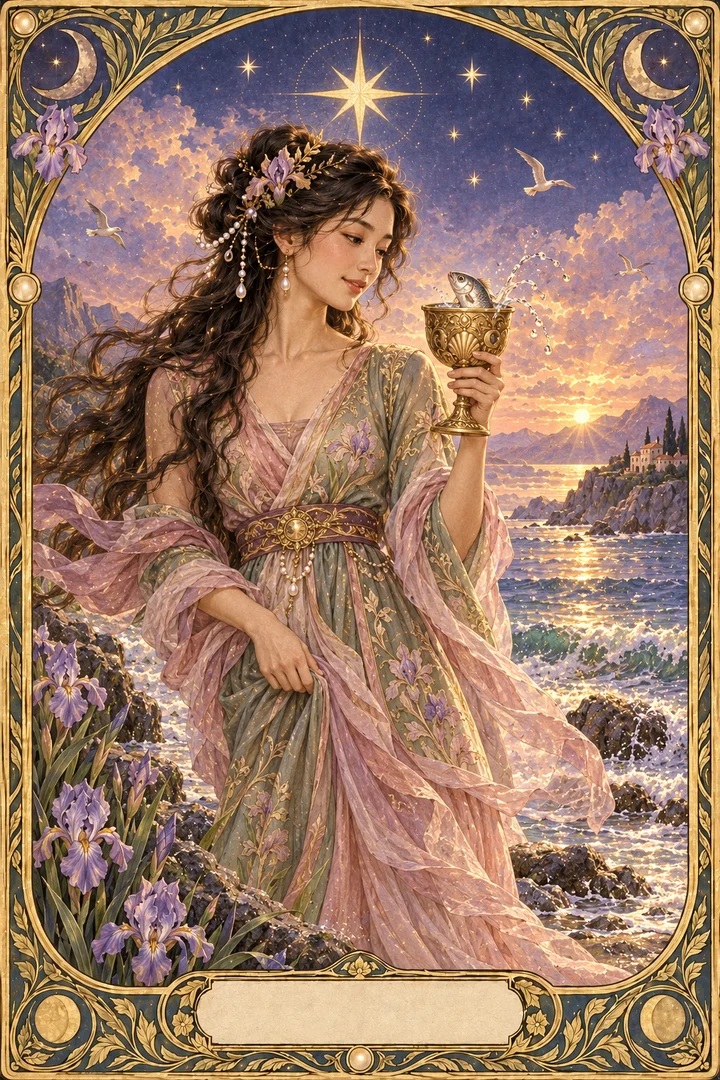
If this feels familiar
You may make the small gestures that are easy to overlook: sending a song, remembering a favourite colour or offering a drawing that is still unfinished. Those gestures can make somebody feel remembered. Your sincerity does not have to grow into a grand performance before it is allowed to be visible.
A line to keep
A small sincere gesture can be enough to begin.
- Upright meaning
- Creative curiosity · a small expression · surprise · sincerity · emotional learning
- Page of Cups reversed
- Embarrassment · feeling held back · impulse · expression needing time
Upright meaning
Upright, the Page of Cups often brings a theme of fresh emotional expression and creative curiosity. A compliment, an unfinished sketch or a tentative invitation can give a feeling a visible form. Keep the expression proportionate to what you know. You can begin without asking the response to settle your worth or the entire future of the idea. A little surprise may deserve attention before you know what to do with it.
You notice a colour combination you want to draw. Make a small sketch before deciding whether it is good enough to share. The curiosity can have a few minutes without becoming a test of your talent.
Page of Cups reversed
Reversed, you may feel embarrassed about expressing something sincere, or an impulse may need more thought before it becomes a message. Ask whether the hesitation is protecting privacy, anticipating judgment or pointing to an unclear intention. A smaller expression can help. If you are about to promise more than you mean, give the words time to become accurate.
You write a long affectionate message after one enjoyable conversation. Read it again and ask what you actually want to offer now. A simple invitation may express the interest more honestly than a statement about an imagined future.
Page of Cups in love and relationships
In love, the Page can frame a modest gesture and the vulnerability of making it. Reversed, give awkwardness room while keeping the other person's comfort in view. The fish cannot predict a message, a proposal or another person's hidden feelings. Your own sincerity can be visible without making a response compulsory.
‘I enjoyed talking with you. Would you like to get coffee next week?’ offers both warmth and a clear question. Leave the recipient time and space to answer, including declining.
Page of Cups: yes or no?
Upright often leans yes to a sincere, modest beginning that respects the situation. Reversed invites a pause to clarify intention or reduce the scale of a gesture. The condition concerns what you can offer honestly; it does not guarantee an enthusiastic reply or a successful creative result.
For ‘Should I share this first sketch?’, yes may fit a supportive reader and a specific request for feedback. Reversed, you might keep it private for another revision. Either can be a deliberate choice rather than a verdict on your ability.
A yes/no lean is a storytelling convention, not a probability or reliable prediction. Check real information before acting, especially about safety, money or another person's intentions.
Work, study and creative life
For work and study, the Page may prompt a creative trial, an early idea or learning through a small expression. Reversed, notice whether fear of looking inexperienced prevents any draft from appearing. Choose a reader and a question that fit the early stage of the work.
Show one rough layout to a trusted colleague and ask whether its order makes sense. Feedback on a particular detail is easier to use than asking whether the whole idea proves you are creative.
How this card differs from nearby cards
The Ace of Cups gives feeling an opening. The Page gives a small feeling expression. The Knight carries an invitation into action. The Page of Swords brings curiosity through asking and checking. You may need both a sincere gesture and a clearer understanding of its context.
Common misreadings
The Page does not predict a romantic message, pregnancy or an immature person. The inherited title need not describe literal age. Read it as a theme of learning and expression rather than assigning a permanent role to somebody.
Reading lens, not a verdict
These readings use symbols to reflect on experiences you recognise. They cannot establish events or another person’s private feelings. Reversed meanings explore different ways a theme may be held, blocked or overused; they need not be a simple opposite. Yes/no readings are conditional conventions rather than guarantees.
Traditional symbolism
The traditional Page of Cups holds a cup with a fish appearing inside, beside the sea. Selfetti keeps the fish, one cup and the waterside figure in a luminous floral setting. The unexpected visitor offers an image for curiosity and a surprising feeling. The Page is represented as an adult; the court theme is a way of attending that any adult can explore.
A question to keep
What small expression would feel honest to offer?
One small experiment
Write, make or say one modest thing that reflects your actual interest. Leave room for its response and for your own next revision.
Questions worth asking
Does the Page of Cups mean a message is coming?
Messages are a familiar association, but a card cannot establish that one will arrive. You can use the theme to consider your own expression or invitation.
What does the reversed Page of Cups mean?
Here it can fit embarrassment, held-back feeling or impulse that needs reflection. Ask whether a smaller or more accurate expression would help.
Does the Page represent a young person?
It can be read that way in some traditions. Selfetti uses the court theme as a way any adult can explore curiosity and expression, rather than deciding a person's age or character.
How is the Page different from the Knight of Cups?
The Page attends to a first small expression. The Knight carries an invitation or ideal into a considerate action. A sincere idea and dependable follow-through are related but different things.
How to use this interpretation
These are symbolic prompts, not measured personality traits or predictions. Keep a real example beside any interpretation; you can disagree. Do not infer another person's feelings, health or financial outcomes from a card or sign.
Sources and method
V&A · Tarot · Selfetti · A. E. Waite · 1910
Historical image reference: A. E. Waite, The Pictorial Key to the Tarot (1910), illustrated by Pamela Colman Smith. Selfetti uses the traditional image as a starting point. The contemporary interpretations, including reversed and conditional yes/no readings, life examples, recognition passage and keepsake line are our own editorial treatment. Our original illustrations adapt the scenes with a celestial garden setting and inclusive adult figures.
Selfetti ·
Keep exploring
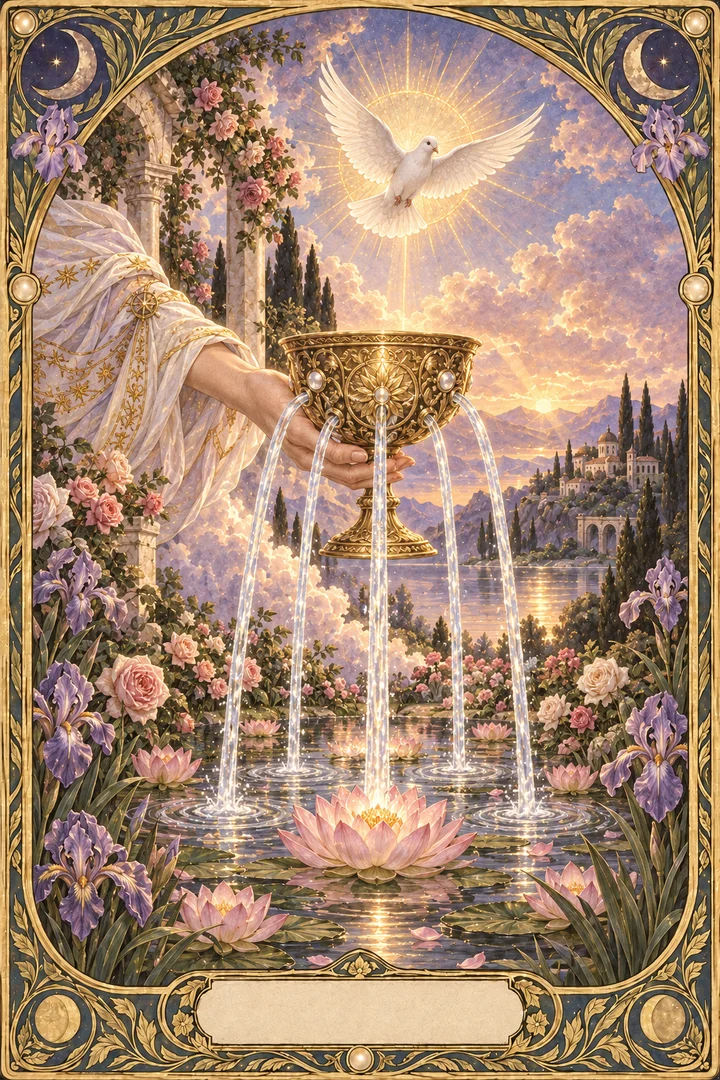
Ace of Cups
A tender beginning: noticing a feeling, offering it a few words and making room to receive care.
Read the full guide ↗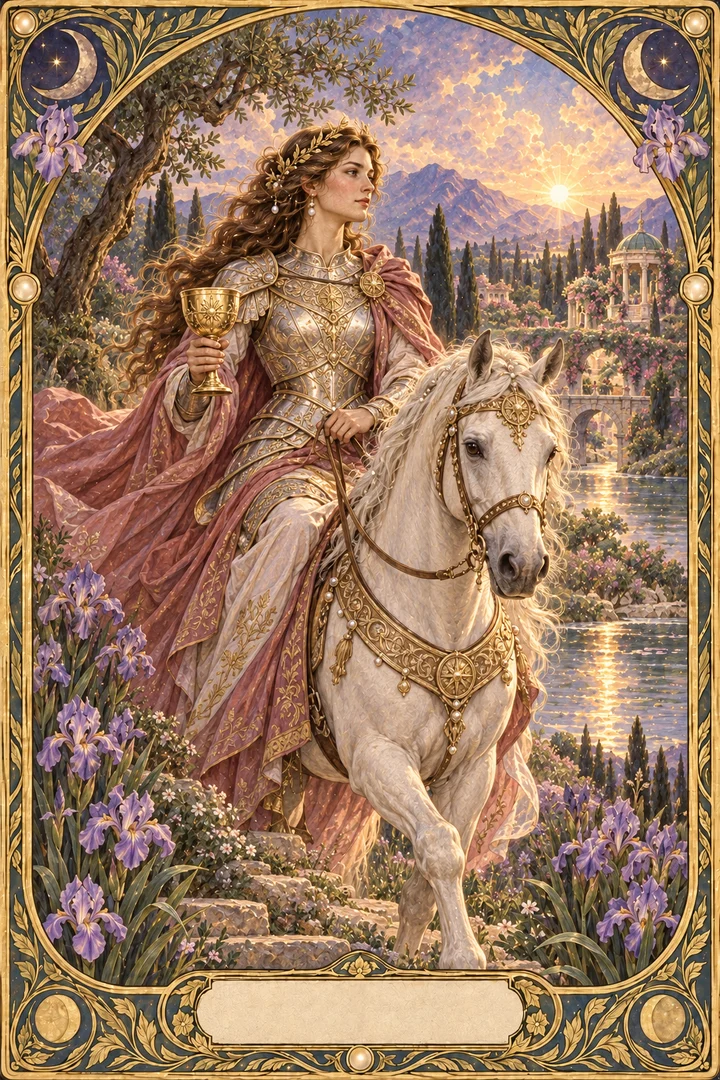
Knight of Cups
Let a lovely intention become a considerate invitation, with room for someone else's answer.
Read the full guide ↗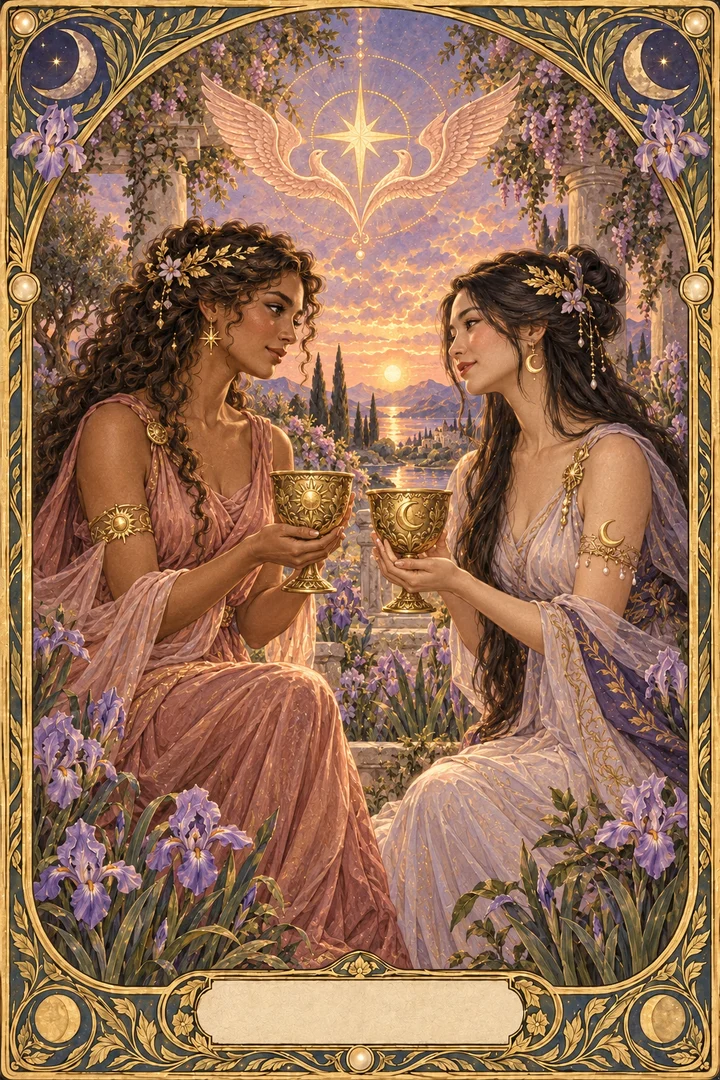
Two of Cups
Meeting at the same height: mutual attention, affection and enough room for two different people.
Read the full guide ↗