Knight of Wands: upright, reversed, love & yes or no
Enthusiasm becomes useful when it has a direction and a place to slow down.
If this feels familiar
You may come alive when there is something new to try. That energy is valuable without having to carry every project alone. You might notice yourself volunteering first, talking faster, or feeling deflated when the interesting part ends and the maintenance begins. A little structure can give your interest somewhere to return. Choosing one direction does not extinguish the spark; it gives the spark a place to become something you can actually keep.
A line to keep
My energy deserves a direction I can keep.
- Upright meaning
- Initiative · adventurous energy · movement · courage · a purposeful trial
- Knight of Wands reversed
- Haste · uneven follow-through · a scattered direction · an impulse to check
Upright meaning
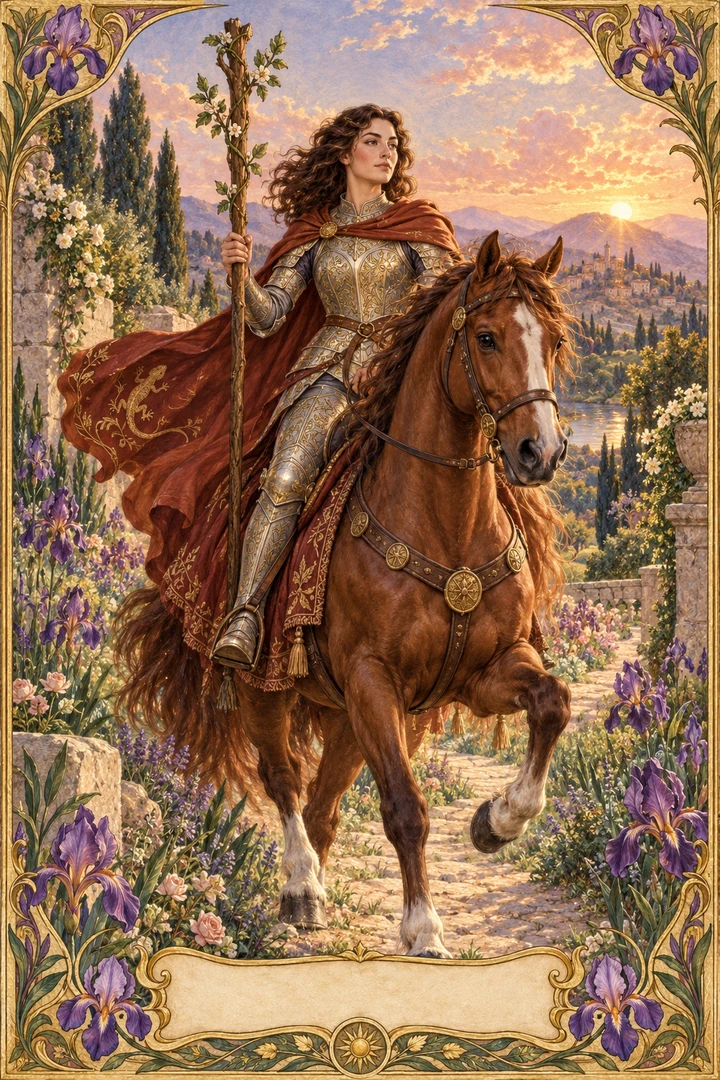
The Knight of Wands is often read as active, adventurous energy: the impulse to begin, to try something bold, to move before every detail is settled. The horse and living staff give the Knight momentum, but momentum is not the same as a plan. You may feel a genuine spark of courage and still need to choose where it is going. Boldness can sit beside a check of the route, the cost and other people's consent. A purposeful trial is different from a blind leap: it has a boundary, a first attempt and a way to notice what happens next.
You want to host a creative evening. Instead of announcing a weekly series, you invite a small group to a clear one-hour trial, with the place and materials already arranged. You name what you will bring and what you will not, then ask whether the time works for them.
Knight of Wands reversed
Reversed, the Knight can fit excitement that outruns preparation, or a burst of enthusiasm that fades once routine begins. You may have made a promise at the speed of the feeling and now find the follow-through uneven. Slow the promise to a pace you can actually keep. If you have changed your mind, tell the people affected rather than leaving them to guess. A scattered direction is not a character flaw; it is often a signal that the plan needs one clear next step instead of five.
You told a friend you would help them move, then realised the date clashes with a work deadline. Rather than going quiet and hoping they forget, you message early: ‘I overcommitted. I can help on Saturday morning for two hours, or I can cover the van cost instead.’
Knight of Wands in love and relationships
In love, the Knight brings lively contact, attraction and the pleasure of someone who makes plans. That energy can be enjoyable while reliability is still unknown. State the pace you want and notice whether plans are kept over time. The card cannot label someone a player or prove their intention; it describes a style of approach, not a verdict on a person. Reversed, watch for haste in you as much as in them. If you have promised more contact than you can sustain, say so before the gap becomes a silence.
After two good dates, you say, ‘I like this and I want to keep seeing you, but I need slower weeks than this.’ You are naming your pace without demanding a commitment or treating their enthusiasm as proof of anything.
Knight of Wands: yes or no?
In a yes/no convention, upright leans toward a conditional yes: a considered adventure or trial with a workable route. The condition is that the practical details are clear enough to begin. Pause if speed is hiding unclear agreements, cost or capacity. Reversed, the answer is more likely ‘not yet’ or ‘smaller first’. Neither orientation guarantees an outcome, and tarot readers do not share one universal yes/no rule.
For ‘Should I sign up for the course?’, an upright yes can support it if you have checked the dates and the fee. For ‘Will it change my career?’, the card cannot say. Reversed, you might try one module or a free session before committing.
A yes/no lean is a storytelling convention, not a probability or reliable prediction. Check real information before acting, especially about safety, money or another person's intentions.
Work, study and creative life
At work and in study, the Knight supports moving one idea into a bounded experiment. Early excitement is useful for starting, less useful for estimating time. Confirm responsibilities and a follow-up before making a large promise. Reversed, check whether you have taken on several directions at once or volunteered for something you cannot finish. A short trial with a clear owner and a review date protects both your reputation and your energy.
You propose a new format for team updates. Rather than committing to it permanently, you suggest running it for three weeks, with one person responsible for notes and a ten-minute review at the end to decide whether to continue.
How this card differs from nearby cards
The Page explores; the Knight acts; the King takes responsibility for direction over time. The Knight of Wands is closer to the first committed move than to mastery or endurance. The Eight of Wands depicts movement and messages rather than a person's style of action, so it can describe a flurry of contact without the Knight's personal courage. The Two of Wands weighs a choice before departure; the Knight has already set off.
Common misreadings
The horse does not guarantee travel, relocation or a passionate partner. Court cards describe possible approaches available to any gender, not identifications of a person. The Knight is not automatically reckless, unfaithful or immature; those are stories added to the image. Read the card near an actual decision you are facing, and keep other people's feelings in the realm of what they have told you rather than what the card seems to reveal.
Reading lens, not a verdict
These readings use symbols to reflect on experiences you recognise. They cannot establish events, financial outcomes or another person's private feelings. Reversed meanings explore how a theme may be internal, blocked or overused; they are a separate reference, since the one-card draw uses upright cards. Yes/no interpretations are conditional editorial conventions, not guarantees or a universal rule.
Traditional symbolism
The traditional Knight of Wands rides a rearing horse and holds a living staff, a figure of motion and initiative. Selfetti keeps the horse and the single upright staff but sets the scene in a flower-lined garden path. Our rider is an adult woman in light engraved armour with a flowing russet cape, calm and purposeful rather than combative. The small salamander embroidery and warm distant hills belong to our original setting; they do not add a separate prediction. We read the raised foreleg as energy that is ready to move, and the upright staff as a direction chosen rather than merely inherited.
A question to keep
What would help this enthusiasm become a promise I can honour?
One small experiment
Choose one bounded action and one follow-up. Check the practical details before inviting someone else into the plan.
Questions worth asking
Does the Knight mean travel?
Travel is one possible context, since the Knight is a figure of movement. The card more reliably describes initiative and a chosen direction. If a trip is on your mind, treat it as a practical question of dates, cost and capacity rather than a guaranteed sign.
Is it proof of an unreliable partner?
No. The Knight can describe lively, fast-moving energy, but it cannot establish someone's character or intentions. Notice whether plans are kept and agreements are clear. Reliability is shown over time through behaviour, not read from a single card.
How is it different from the Page?
The Page explores and learns; the Knight acts on what has caught their interest. The Page may gather information or send a first message, while the Knight commits to a direction and moves. Both can be enthusiastic, but the Knight carries more momentum and more responsibility for follow-through.
What makes action more sustainable?
A bounded first attempt, a clear owner and a follow-up date help. So does naming what you will not do. Enthusiasm lasts longer when it has a route, a place to slow down and a way to notice whether the pace still fits your actual capacity.
How to use this interpretation
These are symbolic prompts, not measured personality traits or predictions. Keep a real example beside any interpretation; you can disagree. Do not infer another person's feelings, health or financial outcomes from a card or sign.
Sources and method
V&A · Tarot · Selfetti · A. E. Waite · 1910
Historical image reference: A. E. Waite, The Pictorial Key to the Tarot (1910), illustrated by Pamela Colman Smith. The contemporary readings, life examples, recognition passages and keepsake lines are Selfetti's own editorial interpretation, including the conditional yes/no and reversed themes. Our original celestial garden illustrations adapt the traditional scenes with inclusive figures; ornamental flowers and frames do not add predictions. The one-card draw uses upright cards; reversed meanings are a separate reference.
Selfetti ·
Keep exploring
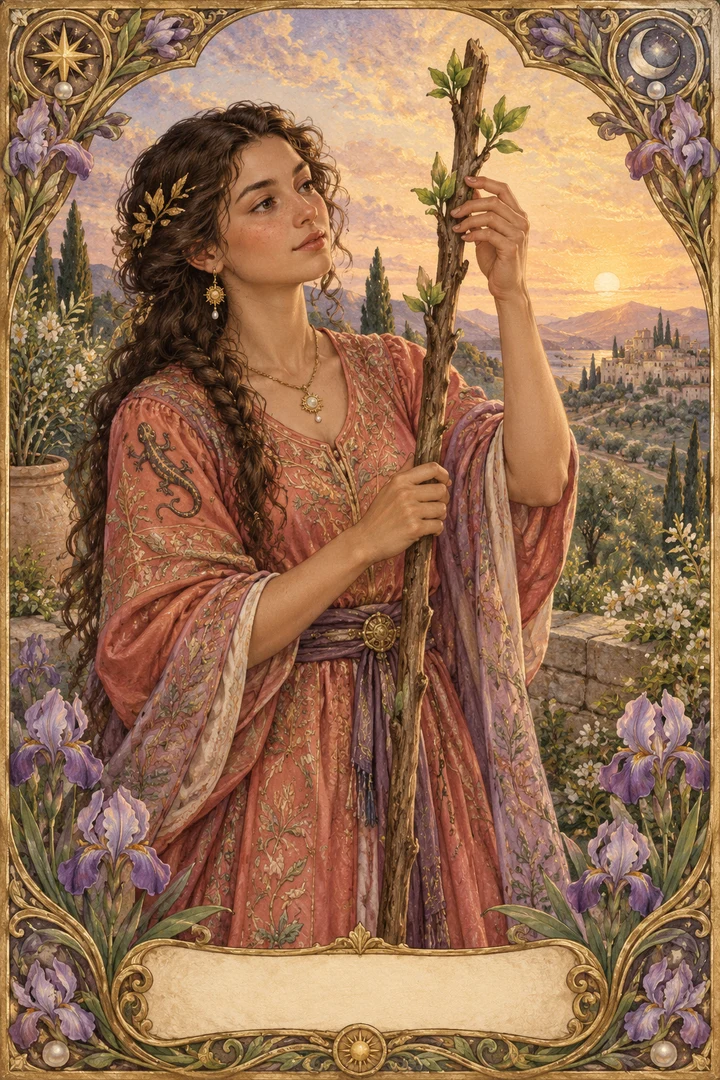
Page of Wands
Curiosity can be taken seriously before you become accomplished.
Read the full guide ↗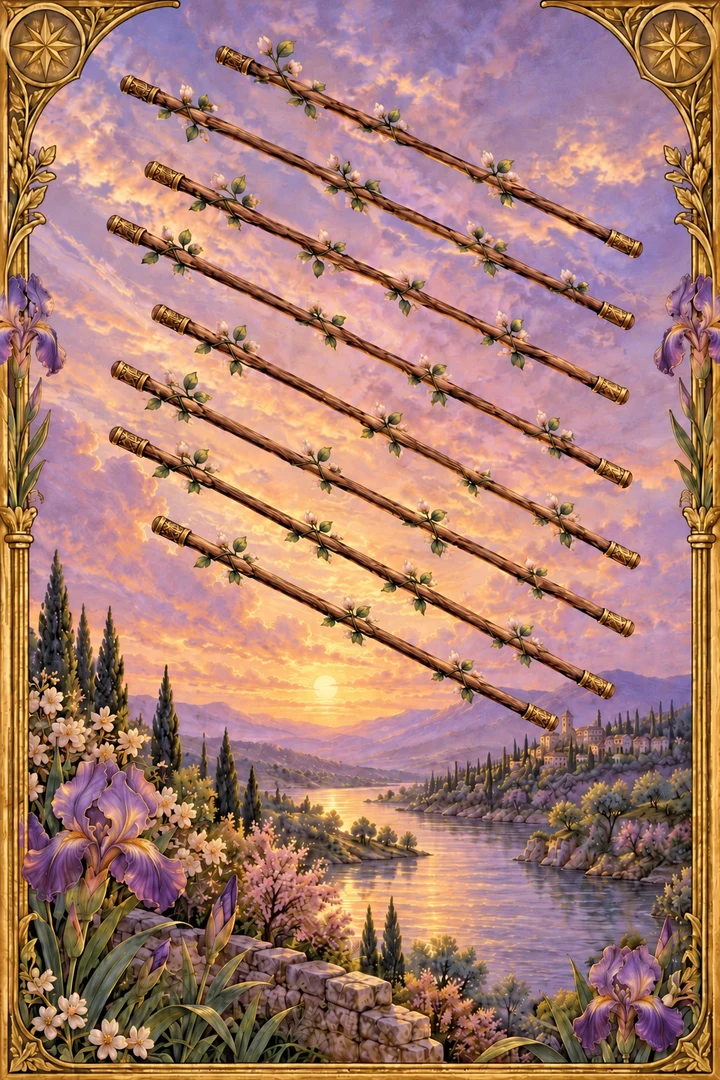
Eight of Wands
When things move quickly, choose a clear direction and a pace you can follow.
Read the full guide ↗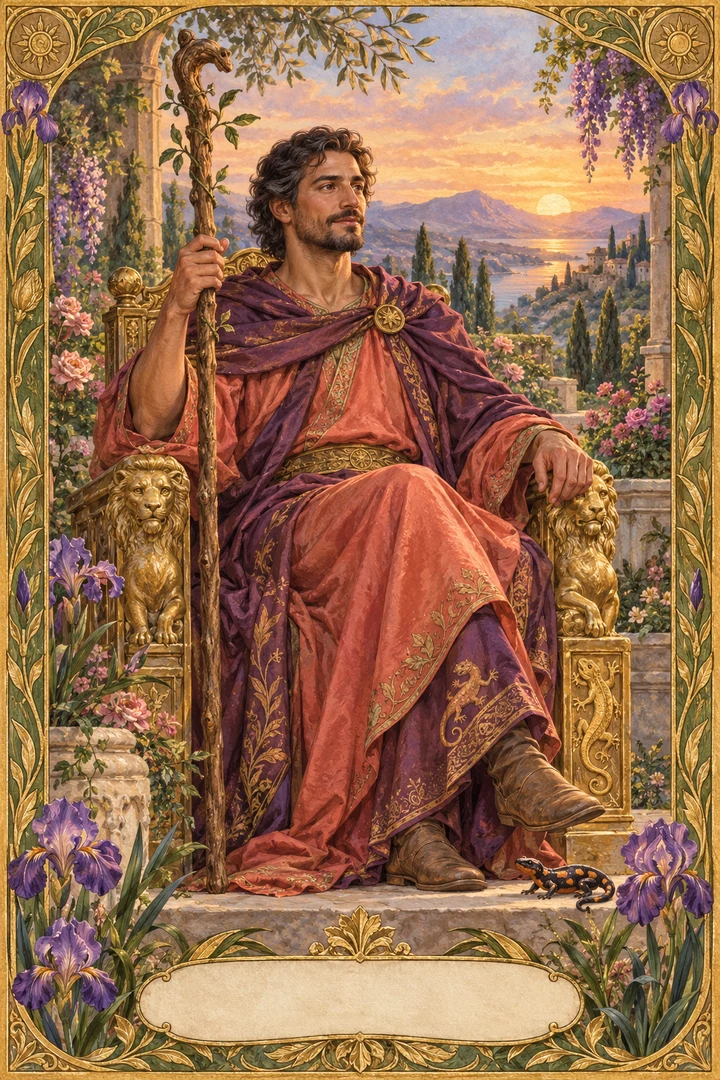
King of Wands
A direction becomes trustworthy when the person setting it also carries responsibility.
Read the full guide ↗