Nine of Wands: upright, reversed, love & yes or no
Experience can protect you; it can also leave you needing a place to rest.
If this feels familiar
Maybe people call you strong because they seldom see what it takes to stay steady. You are allowed a softer place, practical help and an answer that is not another promise to cope. The Nine often belongs to people who have learned to keep going because stopping once felt unsafe. That skill deserves respect, and it does not have to become your whole identity. You can be the one who asks for help, changes the plan, or rests before the fence is tested again. Strength can include a place to put the staff down.
A line to keep
My strength can include somewhere to rest.
- Upright meaning
- Resilience · caution · learned limits · remaining capacity · supported persistence
- Nine of Wands reversed
- Depletion · constant vigilance · difficulty accepting support · a need to pause
Upright meaning
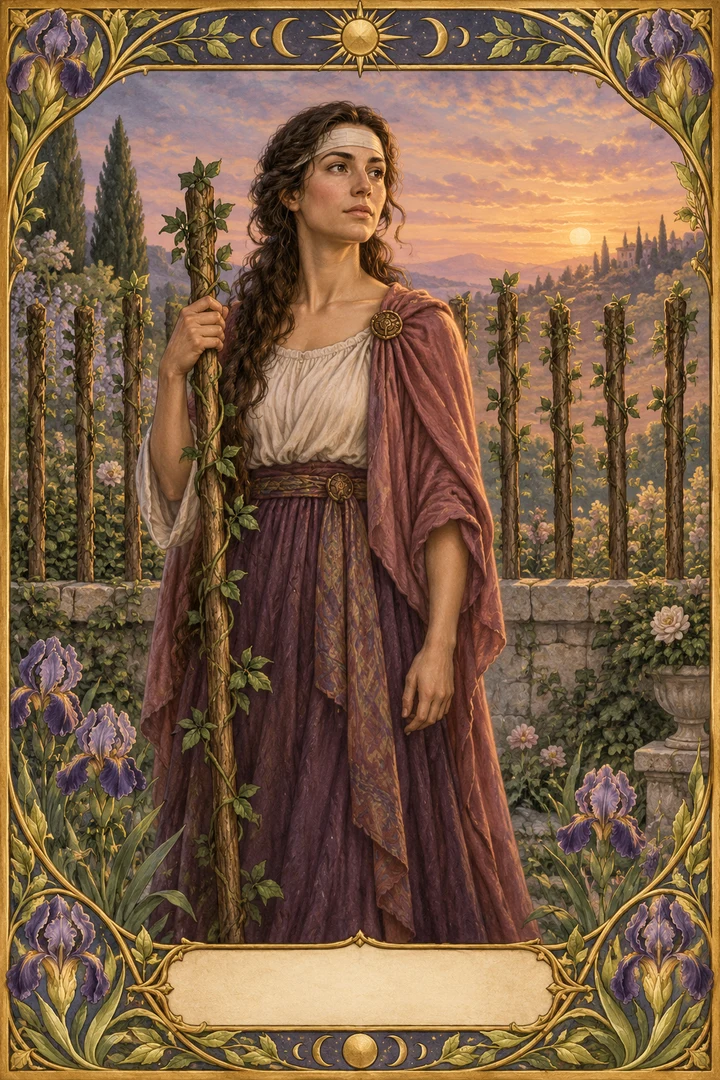
A bandaged figure holds one staff before a fence of eight. You may have reasons to be careful. Check what this situation actually asks for now, rather than preparing for every difficulty you have met before. Experience can protect you, and it can also leave you braced for a fight that is not happening. Notice the difference between a real limit and an old habit of defence. Remaining capacity is not infinite; it is something you can measure and protect. Persistence works better when it includes support and a place to set the staff down.
Before another demanding week, choose one protected evening and ask a colleague to cover one specific handoff. Persistence can include changing the conditions. You might also name one task you will not take on, so the week has a real edge rather than an endless list.
Nine of Wands reversed
Being constantly prepared can use more energy than the task itself. A pause, a smaller commitment or help may be needed. You need not keep going to prove that previous effort mattered. Reversed, the Nine can point to depletion, a vigilance that never switches off, or difficulty accepting support even when it is offered. This is not a literal opposite of resilience; it is resilience running on empty. Ask what would make rest possible without treating it as failure. Sometimes the bravest move is to let someone else hold a staff for a while.
You keep saying you are fine while cancelling plans to recover. Before the next commitment, tell one person, ‘I am running low and need to step back this week.’ Let them take one concrete task, and notice how it feels to be helped rather than merely admired for coping.
Nine of Wands in love and relationships
Past disappointment may explain caution without proving that a new person will repeat it. Choose a pace with room for real observations and a conversation about what helps you feel comfortable. The bandage is not a verdict on anyone new; it is a signal that you have learned to protect yourself. In an established relationship, the Nine can show up as guardedness after a hard season. Say what would make closeness feel safer, and let the other person respond with their own words and behaviour. You do not have to earn care by being endlessly steady.
After a difficult argument, instead of withdrawing completely, you say, ‘I need a quiet evening, and I would like to talk tomorrow when I am less raw.’ This names a limit and keeps the connection open without demanding that either of you pretend the hurt is gone.
Nine of Wands: yes or no?
Continue only if the remaining demand is workable and support is real. A pause or a no can be a sound response when capacity is depleted. In a yes/no convention, upright leans toward a cautious yes with conditions, while reversed leans toward pausing or declining. This is an editorial convention, not a universal rule, and it cannot guarantee an outcome. Check the actual facts of your situation, including time, energy and available help, before treating the card as permission or refusal.
For ‘Should I take on this extra commitment?’, upright might support a yes only if you can name the support you will receive. Reversed might support a no or a not now. The card does not know your calendar; you do.
A yes/no lean is a storytelling convention, not a probability or reliable prediction. Check real information before acting, especially about safety, money or another person's intentions.
Work, study and creative life
Review the remaining work and support before agreeing to another push. A realistic completion plan includes recovery rather than celebrating exhaustion as commitment. The Nine often appears when you are the person others rely on because you have done this before. That reputation can become a trap if it stops you asking for help. Look at what is actually left, what can be delegated, and what can wait. A sustainable plan has room for rest, not just a finish line.
Before saying yes to a new project, list the tasks already on your plate and ask your manager which one should move. If no priority changes, the honest answer may be that the new work cannot be done well without more time or support.
How this card differs from nearby cards
Seven holds a boundary; Nine notices the energy spent holding it; Ten carries too much at once. Four of Swords centres rest rather than guarded persistence. The Nine is not simply ‘keep going’ or ‘give up’. It asks you to weigh what you have already carried against what this moment actually requires. Seven is about defending a position, Nine about the cost of that defence, and Ten about the point where carrying becomes unsustainable. Four of Swords offers a deliberate pause, not a reward for exhaustion.
Common misreadings
The bandage cannot diagnose trauma, illness or a future injury. Resilience does not mean accepting every hardship or refusing help. The Nine is not a prediction that you will be wounded again, and it does not prove that you are strong enough to handle anything. It also does not mean that caution is always wise; sometimes it keeps you from a reasonable risk. Read the card as an invitation to check your actual capacity, not as a command to endure or a warning of inevitable pain.
Reading lens, not a verdict
These readings use symbols to reflect on experiences you recognise. They cannot establish events, financial outcomes or another person's private feelings. Reversed meanings explore how a theme may be internal, blocked or overused; they are a separate reference, since the one-card draw uses upright cards. Yes/no interpretations are conditional editorial conventions, not guarantees or a universal rule.
Traditional symbolism
The traditional Nine of Wands shows a bandaged figure holding one staff before a fence of eight. In Selfetti's evening garden, an adult woman with a forehead bandage holds one leafy staff while eight upright staffs stand behind her. The bandage and fence are recognisable traditional details. The flowers, warm twilight and dignified pose are our own adaptation. We read the guarded stance as caution shaped by experience, without inventing a past event or predicting another hardship. The visible scene leaves room to consider rest and support.
A question to keep
What support would make continuing more humane?
One small experiment
Name one remaining demand, one limit and one specific request for help. Reconsider the commitment if that support is unavailable.
Questions worth asking
Does Nine mean never giving up?
No. The Nine can honour persistence, but it also asks whether continuing is workable. Giving up or pausing can be a sound response when capacity is depleted. The card does not require you to endure indefinitely.
Is the bandage a diagnosis?
No. The bandage is a symbolic image of experience and caution, not a medical diagnosis or a prediction of injury. It cannot tell you anything about your health or future. Use real-world information for health questions.
How is Nine different from Seven?
Seven holds a boundary; Nine notices the energy spent holding it. Seven is about defending a position, while Nine is about the cost of that defence and the need for support or rest. They are different questions, not stages.
Can resting be the right response?
Yes. Rest can be a practical and brave response when vigilance has used more energy than the task itself. It is not failure or weakness. The card invites you to check what support would make continuing more humane.
How to use this interpretation
These are symbolic prompts, not measured personality traits or predictions. Keep a real example beside any interpretation; you can disagree. Do not infer another person's feelings, health or financial outcomes from a card or sign.
Sources and method
V&A · Tarot · Selfetti · A. E. Waite · 1910
Historical image reference: A. E. Waite, The Pictorial Key to the Tarot (1910), illustrated by Pamela Colman Smith. The contemporary readings, life examples, recognition passages and keepsake lines are Selfetti's own editorial interpretation, including the conditional yes/no and reversed themes. Our original celestial garden illustrations adapt the traditional scenes with inclusive figures; ornamental flowers and frames do not add predictions. The one-card draw uses upright cards; reversed meanings are a separate reference.
Selfetti ·
Keep exploring

Seven of Wands
A boundary can be firm without becoming your whole way of meeting the world.
Read the full guide ↗
Ten of Wands
What you carry can be important and still be too much for one person.
Read the full guide ↗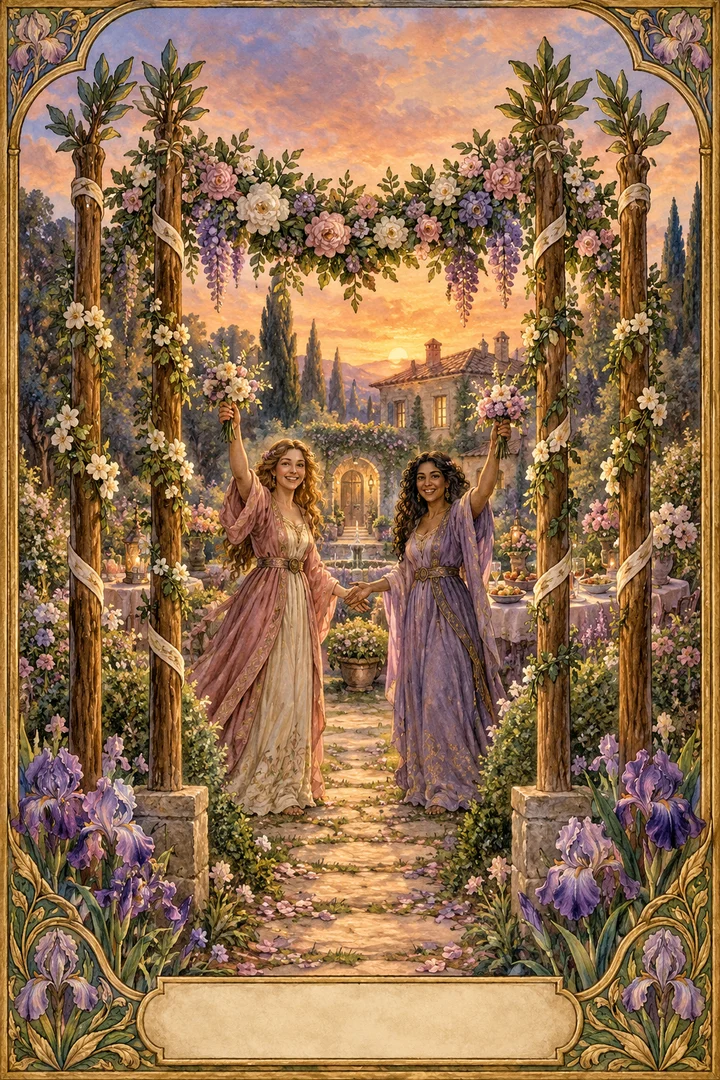
Four of Wands
A welcome you can stand inside, with room to mark what you have made together.
Read the full guide ↗